A few months ago I was spending hours — sometimes an entire weekend — trying to design a single travel poster in Photoshop. Adjusting layers, hunting for the right font, second-guessing every color choice. Then I discovered how to create AI travel posters with ChatGPT. Everything changed.
Then I tried something different.
One prompt. ChatGPT. Thirty seconds.
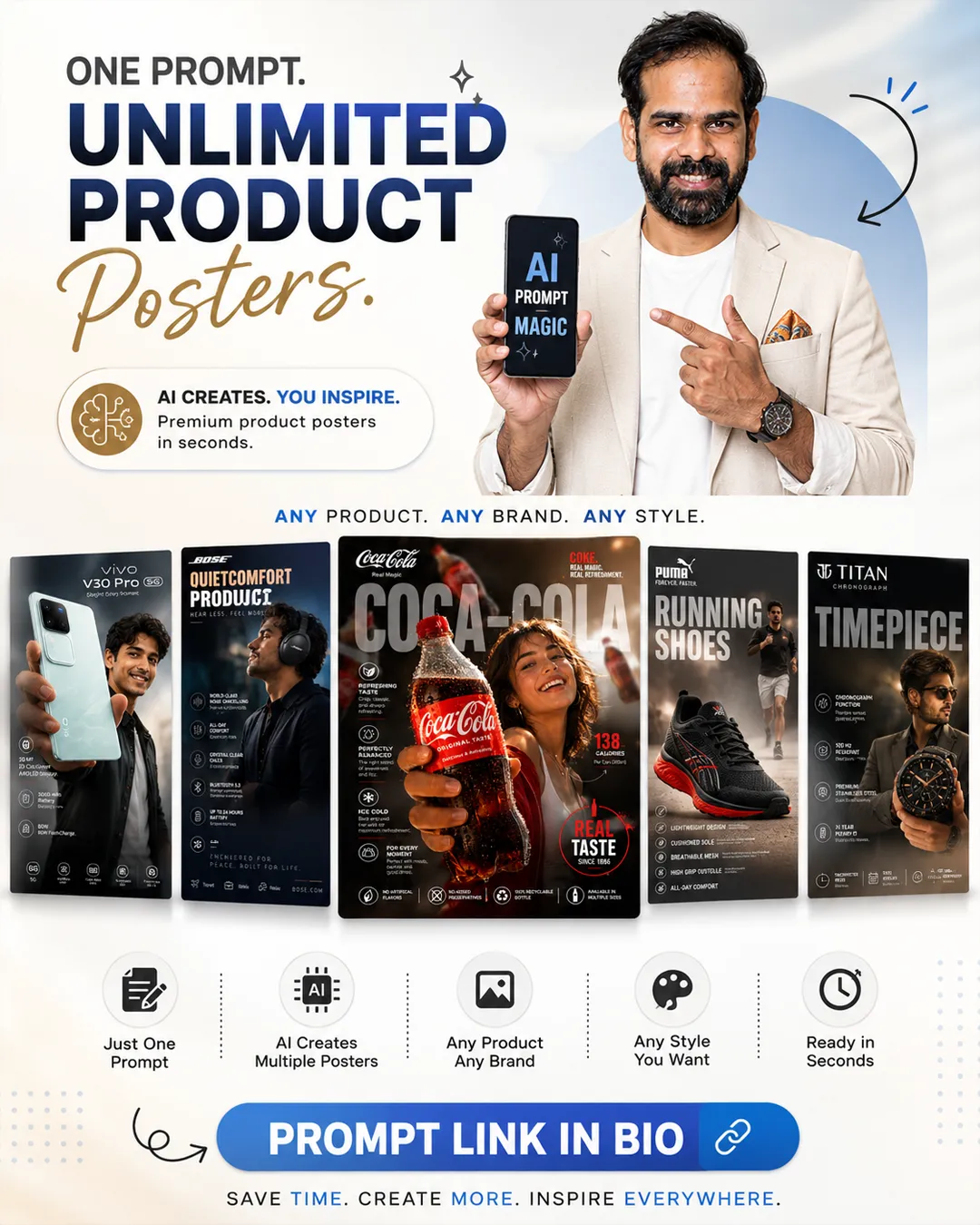
The result looked like it came out of a premium design studio.
I’ve been obsessed with this workflow ever since, and today I’m walking you through exactly how I do it — step by step, no fluff.
The Master Prompt (Copy This Exactly)
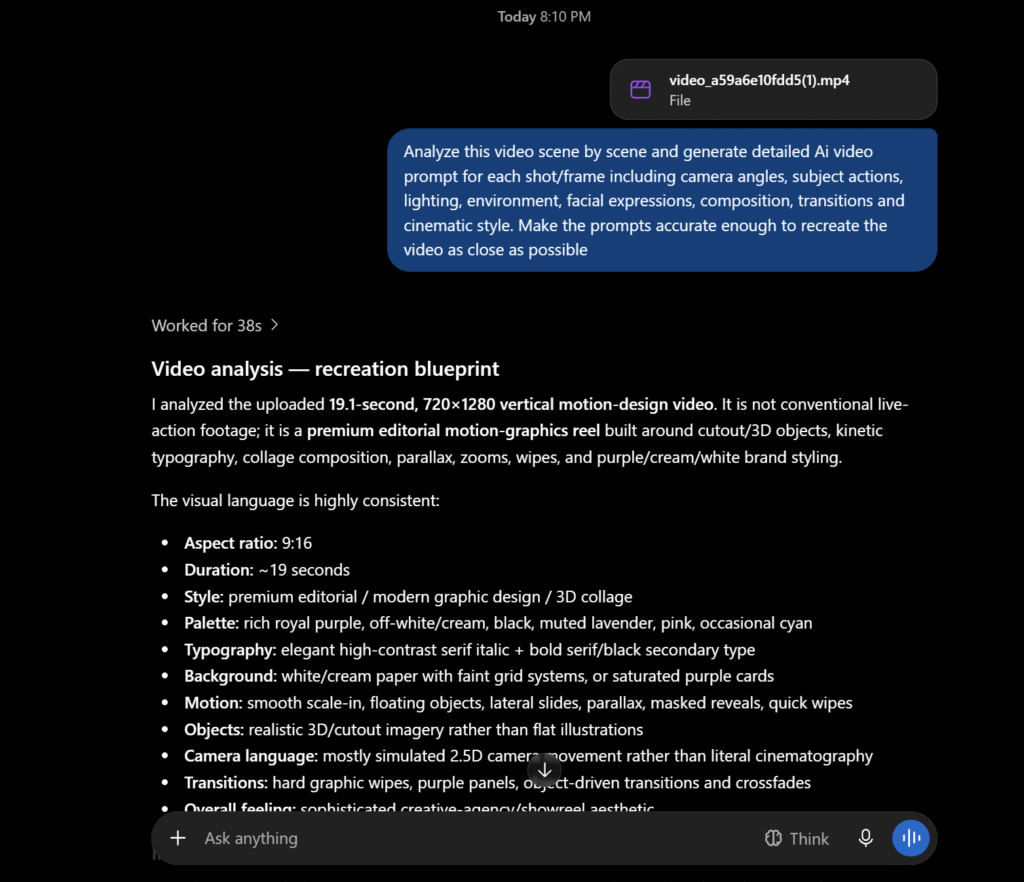
Here’s the prompt I use. Just copy it, replace the location name, and paste it into ChatGPT.
Here is the prompt
Create a cinematic minimalist travel poster of [LOCATION NAME].
Automatically detect and adapt the design language based on the
location's geography, culture, climate, architecture, and emotional
atmosphere.
Design system should auto-generate:
- Appropriate visual style (brutalist / retro-futurism / swiss
modernism / neo-noir / organic minimalism / luxury editorial etc.)
- Matching color palette inspired by the location
- Typography style based on the place's identity
- Natural textures and materials from the environment
- Atmospheric lighting and mood
- Composition with strong negative space
- Iconic landscape or architectural silhouette
- High-end poster layout with cinematic balance
Poster style requirements:
ultra aesthetic, premium graphic design, bold typography integration,
layered textures, subtle grain, editorial composition, realistic
lighting, sophisticated minimalism, visual storytelling, museum-grade
poster design, highly detailed, 8k
Then just swap [LOCATION NAME] with wherever you want.
Note:If copy above button not work, then copy this pormpt manually
Create a cinematic minimalist travel poster of [LOCATION NAME].
Automatically detect and adapt the design language based on the
location's geography, culture, climate, architecture, and emotional
atmosphere.
Design system should auto-generate:
- Appropriate visual style (brutalist / retro-futurism / swiss
modernism / neo-noir / organic minimalism / luxury editorial etc.)
- Matching color palette inspired by the location
- Typography style based on the place's identity
- Natural textures and materials from the environment
- Atmospheric lighting and mood
- Composition with strong negative space
- Iconic landscape or architectural silhouette
- High-end poster layout with cinematic balance
Poster style requirements:
ultra aesthetic, premium graphic design, bold typography integration,
layered textures, subtle grain, editorial composition, realistic
lighting, sophisticated minimalism, visual storytelling, museum-grade
poster design, highly detailed, 8k
I’ve tested this with: Iceland, Kyoto, Dubai, Venice, Rajasthan, Cape Town, New York, Amazon Forest, Jakarta — and honestly every single one came out differently. That’s the part that keeps surprising me.
What You Can Actually Make With This
Before I get into the how, let me show you what the end result looks like. Because I think that’s what made me stop and pay attention when I first discovered this.
Using a single smart prompt, I’ve generated posters like:
Sahara Desert — Brutalist minimalism, all sand tones and heavy geometry
Tokyo — Neo-futurist Japanese editorial, neon bleeding into negative space
Rajasthan — Royal heritage cinematic design, deep ochres and ornate silhouettes
Amazon Forest — Eco-brutalist jungle aesthetic, raw and textured
Venice — Romantic vintage European style, faded and nostalgic
New York — Urban neo-noir skyline, gritty and cinematic
What blew my mind is that I didn’t manually design any of that. The AI reads the location and automatically figures out:
The right typography
The color palette that actually fits the place
The composition and layout
The visual style and atmosphere
The lighting, textures, and mood
Every single poster feels like it belongs to that destination. That’s the part that still gets me.
Most people try to prompt AI images by describing everything manually. “Make a poster of Paris with the Eiffel Tower and blue sky and serif font and…”
That approach is exhausting and the results are usually generic.
What I figured out is that the smarter move is to give the AI a structure — and then let it fill in the creative decisions based on the location itself.
The prompt I use tells the AI to think about:
The location’s identity and cultural DNA
The emotional atmosphere of that place
What design language actually fits (brutalism? retro-futurism? Swiss modernism?)
Typography that matches the place’s personality
Natural textures and materials from that environment
Lighting and mood
Composition with strong negative space
Cinematic, editorial quality
Instead of me describing Tokyo, I let the AI know Tokyo and make the design decisions itself.
That’s the whole secret. And it works every single time.
Generate and See What Comes Back
Paste the prompt. Hit enter. Wait about 10–20 seconds.
What ChatGPT does in that time is actually kind of fascinating. It’s essentially:
Reading the cultural and geographic identity of the location
Deciding which design language fits that place
Building a typography hierarchy that matches
Composing the image cinematically
Adding atmospheric lighting and environmental textures
Putting it all together in a poster layout
Most of the time, the first output is already really good. Sometimes it’s exceptional. Occasionally it needs a small push — which brings me to the next step.
How I Refine When the First Output Isn’t Quite Right
I don’t always get perfection on the first try. But I’ve learned exactly what to add to push the output further.
If the style feels too generic, add one of these:
brutalist minimalism
neo-noir
retro-futurism
editorial luxury
vintage travel poster
Swiss modernism
If the typography feels weak:
oversized condensed typography
bold editorial typography
high contrast typography integration
If the atmosphere feels flat:
cinematic fog
ambient lighting
moody atmosphere
sunset haze
soft volumetric lighting
If the texture feels too clean or digital:
paper grain texture
aged poster texture
subtle film grain
weathered print effect
I usually only need to add one or two of these. The difference is immediately noticeable.
Generate Multiple Styles for the Same Location
This is honestly my favourite part of the whole workflow.
Once you have one poster you like, try generating the same location in completely different visual styles. The results are wildly different — and this is how I build entire carousel series.
Tokyo, for example:
Cyberpunk Tokyo
Brutalist Tokyo
Minimalist Tokyo
Luxury Editorial Tokyo
Neo-noir Tokyo
Sahara:
Brutalist Sahara
Retro travel Sahara
Luxury desert editorial
Minimal monochrome dunes
Each one feels like a completely different creative direction. Same location, totally different emotional story.
For Instagram carousels or Pinterest boards, this approach is gold. You’re not just posting one poster — you’re building a visual world around a destination.
Where I Actually Use These Posters
Most people generate these, post them online, and stop there.
But honestly? Some of my favourite uses have nothing to do with social media.
Home & Living Spaces
Print and frame them as wall art in your bedroom, living room, or hallway
Create a gallery wall around a travel theme — all desert posters, or all Asian cities
Use them as mood board prints above your desk
Print a large format version for an empty accent wall
PC & Desk Setup
Set them as desktop wallpapers — the 4:5 ratio works perfectly on vertical monitor setups
Use them as wallpaper on your phone or tablet lock screen
Print a small framed version and place it next to your monitor for that clean aesthetic setup look
Creative & Work Spaces
Pin them to your studio or office mood board
Use them as visual inspiration references for design projects
Frame a few and hang them in a creative studio or co-working space
Gifts
Print a custom poster of someone’s favourite travel destination as a birthday or anniversary gift
Create a personalised poster of a place that means something to them — where they got married, where they grew up, where they want to go
Digital Products & Side Income
Sell them as downloadable wall art on Etsy
List them on print-on-demand platforms like Redbubble or Society6
Bundle them into destination packs and sell as digital downloads
The quality the prompt generates is high enough to print at large sizes without it looking pixelated. I’ve printed mine at A2 and it held up perfectly.
A Few Things I’ve Learned the Hard Way
Keep the location name short. “Venice” works better than “Venice, Italy, near the Grand Canal.” Let the AI do the interpretation. That’s the whole point.
Don’t over-specify the style upfront. The best outputs I’ve gotten were when I let the AI decide the visual language. When I try to control too much, it gets generic. Trust the prompt structure.
Always use 4:5 aspect ratio. This is the sweet spot for Instagram posts, Pinterest pins, and portfolio showcases. It just looks like a poster.
Go big on typography. If there’s one thing that separates a premium-looking poster from a mediocre one, it’s large, confident typography. Don’t be afraid of it.
Embrace negative space. Empty space isn’t wasted space. It’s what makes a poster feel cinematic and expensive. The AI understands this — let it breathe.
Why AI Travel Posters with ChatGPT Actually Work
I’ve thought about this a lot, because the results consistently surprise me.
What makes these posters feel premium is that they’re pulling from real design principles — not just generating “a pretty picture.” The prompt structure forces the AI to think about:
Graphic design fundamentals
Cinematic composition
Editorial typography systems
Travel nostalgia and emotional resonance
Environmental storytelling
Minimalist layout logic
That combination is why people save these, share these, and ask where they came from. It doesn’t look AI-generated in the way most people expect. It looks designed.
What You Can Actually Do With These
I want to be practical here, because this isn’t just a fun experiment — there are real use cases:
Instagram content — carousels perform incredibly well
Pinterest pins — travel + design is a massive niche there
Print posters — the 8K quality holds up at large sizes
Wall art — I’ve printed a few of mine and they look incredible
Behance / design portfolio — great for showing AI-assisted design work
Travel blogs — custom visuals that actually match your content
YouTube thumbnails — cinematic and eye-catching
Etsy digital products — people sell these as downloadable prints
The workflow is the same for all of them. One prompt, multiple applications.
Final Thoughts
I’ll be real — when I first started experimenting with AI image generation, most of what I made looked like AI. You could tell. It had that uncanny, slightly-off quality that makes people scroll past.
This workflow is different.
The reason it works is because the prompt isn’t asking the AI to “make something pretty.” It’s asking the AI to think like a designer — to read a location, understand its identity, and make intentional creative decisions.
That’s what produces results that feel cinematic, premium, and art-directed.
And the best part? Every location generates something completely unique. I’ve never gotten two posters that feel the same.
Pick a destination you love. Paste the prompt. See what comes back.
Then try the same location in three different styles.
That’s where it gets genuinely addictive.
If you try this, drop your results in the comments — I’d love to see what destinations you’re working with.
Not because the hardware changed. Because the games finally showed up — all at once, like they were waiting for each other.
We’re talking roughly $4 billion in combined development budgets. Franchise revivals that have been dead for 20 years. Studios swinging harder than they ever have. And one game that’s going to swallow the entire fourth quarter like a black hole.
This isn’t a normal year. This might be the most stacked year PlayStation has ever had.
Here’s every upcoming AAA PS5 Games 2026 worth knowing about — release dates, real budgets, honest takes, and my actual opinion on each one.
The one that needs no introduction but deserves one anyway.
GTA 5 came out in September 2013. The iPhone 5 was new. Vine existed. Obama was in his first term.
In those 13 years, GTA 5 sold over 215 million copies, generated more than $8 billion in revenue, and became the second best-selling game in human history behind Minecraft.
Rockstar didn’t release a sequel because they didn’t have to. The game was literally still printing money in 2025.
GTA 6 is now locked in for November 19, 2026 — after slipping from its original May date. Set in Leonida, Rockstar’s fictional Florida. Starring Lucia and Jason — the franchise’s first ever dual protagonist setup and first ever female lead.
Estimated development budget: somewhere between $1 billion and $2 billion. That makes it the most expensive piece of entertainment ever produced. More than any movie. More than any TV show.
Here’s the truth: there is no skepticism here. There is only inevitability.
The first trailer hit 475 million views in 24 hours and broke YouTube’s all-time non-music record. The second trailer broke the first one’s record.
The real question isn’t whether GTA 6 is good. The real question is whether any other publisher is brave enough — or stupid enough — to release a major game within 60 days of November 19th.
Based on the schedule shifts we’ve already seen? The answer is no.
Rockstar didn’t delay GTA 6 six months. They delayed every other studio’s marketing budget six months.
My recommendation: Pre-order it, accept that Q4 2026 belongs to Rockstar, and plan your other purchases around it.
In December 2023, a ransomware group hit Insomniac Games and dumped 1.67TB of internal data onto the dark web. Concept art, story beats, voice files, employee salaries, budget spreadsheets — everything.
Wolverine’s reported development cost: over $300 million. That’s Spider-Man 2 money on a single character.
We knew more about this game in 2023 than the people writing its dialogue.
Releasing September 15, 2026 as a PS5 exclusive. Insomniac’s first ever M-rated game. They’ve explicitly used the word “violent” — which for the studio that made Ratchet and Clank is a significant statement.
Logan is voiced by Liam McIntyre. The game spans multiple continents. Campaign length is reportedly in the 20–25 hour range, which for Insomniac is enormous.
Here’s the kicker: Insomniac is currently developing Wolverine, Venom, and an X-Men game simultaneously. They’ve gone from the Ratchet and Clank guys to a full-blown Marvel factory in under five years.
Their track record is genuinely absurd. Spider-Man, Miles Morales, Rift Apart, Spider-Man 2 — all 85+ Metacritic, all commercial juggernauts. They do not miss.
But they’re also juggling more chainsaws than any first-party studio in PlayStation history. At some point, the math catches up.
Common mistake: assuming Insomniac is bulletproof. They’re not. They’re just very, very good at their jobs under enormous pressure.
If this game disappoints, it’ll be the first time in 20 years Wolverine took damage from something other than himself.
My recommendation: This is a day one for PS5 owners. Full stop.
S-Game is a Beijing studio that’s been working on Phantom Blade Zero for over four years. Reported budget: past $100 million. For a Chinese studio’s first global AAA console release, that’s unprecedented.
They’ve coined the genre “kung fu punk.” I’m choosing to allow it.
Launching September 9, 2026 on PS5 and PC. 30–40 hour single-player action campaign. Combat choreography by Kenji Tanigaki — the action director behind Rurouni Kenshin and Hong Kong cinema’s most insane fight sequences for the last 20 years.
The protagonist Soul moves like Sekiro had a baby with Devil May Cry, and that baby grew up watching Bruce Lee.
The combat looks unreal. Frame data on the demos was tighter than most shipped fighters.
But here’s the thing nobody wants to say out loud: Black Myth: Wukong already proved Chinese AAA can dominate globally. It sold 30 million copies. The bar is now enormous. Phantom Blade has to clear it on its first try.
It’s either Game of the Year or the most beautifully animated localization disaster you’ve ever seen. There is no middle ground.
My recommendation: Wishlist it now. If the launch reviews hit 85+, buy it immediately.
Housemarque — the Finnish studio Sony acquired after Returnal — makes the prettiest pain on PlayStation.
Returnal won a BAFTA, scored 86 on Metacritic, and made roguelikes mainstream. Saros is their next swing, and it’s even more ambitious.
Released April 30, 2026. You play Arjun Devraj, a Sultari enforcer hunting a lost expedition on the planet Carcosa during a permanent solar eclipse. Third-person, roguelike-adjacent, gorgeous, brutal.
Early Metacritic is sitting in the high 80s. The deaths-per-hour leaderboard on PSN is cooking.
Simple rule: if you loved Returnal, you already know what this is. Buy it.
If you bounced off Returnal because it was too punishing — Saros will punish you in new and creative ways. Housemarque clearly didn’t read the room on accessibility, but the people who love this genre are losing their minds in the best way.
It’s the only game on this list where the biggest spoiler is: yes, you will die a lot.
My recommendation: PS5 exclusive, high Metacritic, unique experience. This is exactly what the console needs more of.
IO Interactive spent 15 years turning the World of Assassination trilogy into the best stealth simulator ever made.
Then Bond’s licensors looked at Hitman and said — wait, what if the bald murder guy wore a tuxedo?
And here we are.
Releasing May 27, 2026. Original story. A 26-year-old James Bond earning his 00 status. Not Connery. Not Craig. Their guy — voiced by Patrick Gibson. Fully cinematic, choice-driven mission structure. Gadget customization that screams Hitman loadout system in a tux.
Budget reportedly cleared $200 million. IO’s biggest project ever. They took out a bank loan against the Bond IP to fund it. That’s how confident they are.
Here’s the truth: it feels like Agent 47 in a bow tie. And given how the last two Bond films went, that bar is on the floor.
Worst case scenario — this is still the best 007 thing in 20 years. Best case — it relaunches the entire franchise.
No pressure, IO.
My recommendation: If you’re a Hitman fan, this is a must-play. If you’re a Bond fan who’s been starved since Casino Royale, same answer.
Rebel Wolves is a Polish studio founded by Konrad Tomaszkiewicz — the game director of The Witcher 3: Wild Hunt, the highest-rated RPG of the 2010s.
He left CDPR with a chunk of his Witcher 3 team, raised funding, and immediately announced a dark fantasy open-world RPG.
Sometimes the universe writes the marketing for you.
Releasing September 3, 2026, published by Bandai Namco. You play Coen — a half-vampire, half-human Dawnwalker — set in 14th century Eastern Europe during the Black Death.
The hook, and this is the most interesting RPG mechanic in years: the entire campaign runs on a 30-day in-game clock. Every quest you take costs time. Every side path is a trade-off. When the timer hits zero, the world ends. No save-scumming your way around it.
Common mistake: dismissing this as “just another Witcher clone.” The time pressure mechanic is the most ambitious RPG idea since BG3’s reactivity system.
First game studios always overshoot. But the talent here is the real deal.
If they nail it — this is a generational RPG. It’s basically Witcher 3 if Geralt had a deadline and a vitamin D deficiency.
My recommendation: One of the most interesting new IPs on this entire list. High risk, potentially enormous reward.
The last real Fable game was Fable 3 in 2010. That is 16 years ago.
Microsoft handed the reboot to Playground Games — the Forza Horizon studio — and gave them a reported £100 million+ budget to figure it out.
Fall 2026 release on Xbox Series, PC, and — in Microsoft’s new multiplatform reality — PS5. Yes. Fable on PlayStation. The world is healing.
Open-world action RPG. ForzaTech engine retrofitted for fantasy. Full voice cast led by Richard E. Grant as the narrator. Whoever made that casting call deserves a raise.
Here’s the thing though: Playground has never made an RPG. They make the best racing game on Earth. Forza Horizon 5 sold 40 million copies. But racing and RPG are not adjacent skills. They’re not even in the same building.
The studio has been hiring RPG veterans for five years. But until we see combat that isn’t a pre-rendered trailer, the question marks are real.
If this lands — it’s the comeback of the decade. If it doesn’t — Fable officially becomes the Half-Life 3 of fairy tales.
My recommendation: Wait for reviews. Don’t pre-order this one. Too many unknowns from a studio making their first RPG.
Arc System Works makes the most beautiful 2D fighters on the planet. Guilty Gear Strive — 3 million copies. Dragon Ball FighterZ — 10 million copies. Granblue Fantasy Versus Rising. Their cel-shaded animation pipeline is so good that other studios study it as research material.
Now Marvel handed them the keys.
Releasing August 6, 2026 on PS5 and PC. Four-versus-four tag team fighter — the most ambitious tag system in fighting game history. Confirmed roster so far: Iron Man, Storm, Captain America, Black Panther, Hulk, Dr. Doom, Ghost Rider — with monthly reveals running through summer.
Arc System Works does not miss visually. Every game looks like a hand-drawn anime sequence in motion.
The questions are: rollback netcode — please, please be rollback — and roster size at launch. Marvel vs. Capcom Infinite shipped with 30 characters and got laughed off the internet. Tōkon needs at least 30 day one, and they need to not be Falcon and Falcon-adjacent characters filling slots.
Pray for rollback netcode. Pray harder that Capcom never sees this game’s pre-order numbers.
My recommendation: Fighting game fans — this is the one. Casual players — wait and see how the roster shapes up.
The last mainline Onimusha was Dawn of Dreams in 2006. Twenty years. The franchise has been so dormant that people who weren’t born when the last game came out can now legally drink, vote, and complain about this one online.
Releasing 2026 on PS5, Xbox Series, and PC. Built on RE Engine — the same tech behind RE4 Remake, Monster Hunter Wilds, and Dragon’s Dogma 2.
Set in early-period Japan. The protagonist’s likeness is officially based on Toshiro Mifune — yes, that Toshiro Mifune, the Seven Samurai legend — with the blessing of his estate.
That is the most metal casting decision in modern gaming.
Demonic samurai action, Oni gauntlet combat, the works. Capcom is treating this as a flagship, not a B-tier revival.
Here’s the truth: RE Engine is a war machine and Capcom is on the hottest run any publisher has had in the last decade. RE4 Remake — 90 Metacritic. Monster Hunter Wilds — fastest-selling game in Capcom history. Street Fighter 6 — alive and dominant.
The risk is Onimusha gets treated as third priority while RE9 and Monster Hunter eat the calendar.
Twenty-year-old IP. Dead samurai actor. Demon arm. And somehow this is the most back-to-basics pitch on the entire list.
My recommendation: If you’re a Capcom fan, this is a no-brainer wishlist add. The RE Engine alone guarantees it’ll look and feel incredible.
Capcom has been on the most insane survival horror run in video game history.
RE7 — 14 million copies. RE2 Remake — 16 million. RE3 Remake, RE4 Remake, Village — all over 8 million each. The Resident Evil franchise has now sold over 170 million copies lifetime.
And somehow the streak just kept going.
Released February 27, 2026. You play Grace Ashcroft — an FBI technical analyst in Raccoon City. First-person and third-person toggle — the first time the series has done both at launch.
Reportedly the biggest Resident Evil budget ever. Reviews landed in the high 80s. Sales blew past 5 million in six weeks. The Switch 2 port runs better than it has any right to.
The only complaint anyone has is that the back half leans more action than horror — which is the most Resident Evil complaint imaginable. It’s been happening since RE4 and we’re all still buying it.
Capcom’s current streak is so long that “is the new RE good?” stopped being a question and became a weather report.
My recommendation: Already out. Already good. If you haven’t played it — go now.
Team Ninja has spent the last decade making the same game three different ways. Nioh, Wo Long, Rise of the Ronin. They’re the Soulslike studio that refused to admit they were a Soulslike studio.
With Nioh 3, they finally stopped pretending.
Released February 6, 2026. The headline feature: a switchable combat style system that lets you swap between traditional Nioh stance-based samurai combat and a faster ninja-style toolkit on the fly.
Set in the Sengoku era — again, because Team Ninja will set games in the Sengoku era until the heat death of the universe.
Metacritic: 84. Sold over 2 million in its first month — the franchise’s fastest start ever.
Community consensus: the dual style system is the best combat Team Ninja has ever shipped. It makes Nioh 2 feel like a tech demo.
Simple rule: if you’ve played any Team Ninja game and liked it, Nioh 3 is the best version of that thing you liked.
My recommendation: Already out. Already excellent. Soulslike fans — this is essential.
Bungie hasn’t launched a new IP since Destiny in 2014. Twelve years.
In that time, Destiny 2 generated north of $3 billion and also slowly bled players to Warzone, Apex, and every other live service that didn’t require a PhD to understand.
Sony bought Bungie for $3.6 billion in 2022 specifically so this game would exist.
Released March 5, 2026. $39.99 price point — not free-to-play, which the extraction shooter community both loved and screamed about for six months straight.
Team-based PvPvE extraction shooter set on the abandoned colony of Tau Ceti IV. A reboot of Bungie’s pre-Halo cult classic from 1994.
Here’s the truth: the launch was rough. Reviews split the community like a cleaver. Concurrent player counts are nowhere near Bungie’s internal projections. The art direction is genuinely stunning. The monetization pushback was real.
Two months in, the game is alive. But alive is not what Sony paid $3.6 billion for.
Bungie bet the studio on Marathon. The jury is still out — and the jury is currently arguing on Reddit at 2am.
My recommendation: Wait. Give it three more months. If the player count stabilizes and they fix the monetization, it could become something special. Right now it’s a question mark with great art direction.
This is the Silent Hill nobody asked for, made by a studio nobody saw coming. And that’s exactly why it might be the best one.
No Code — the Glasgow studio behind Stories Untold and Observation — got handed the keys to Silent Hill by Konami and told to go weird.
They are going weird.
Releasing 2026 on PS5, Xbox Series, and PC. Reports point to a March 26, 2026 target before the inevitable slip. Co-developed with Annapurna Interactive — who don’t publish bad games. That’s not an opinion. That’s a documented industry fact.
Konami is publishing three Silent Hill games simultaneously. Townfall, the Silent Hill 2 Remake follow-up — it’s either the greatest horror revival in gaming history or a speedrun back to the 2010s when Konami released pachinko machines instead of games.
The smart money says No Code delivers something genuinely strange and brilliant.
It’s the first Silent Hill in a decade where the studio’s reputation is scarier than the monsters.
My recommendation: If you’re a horror fan — this is the most interesting wildcard on the list. Low expectations, potentially massive payoff.
Lara Croft hasn’t had a new mainline game since Shadow of the Tomb Raider in 2018. Eight years.
Crystal Dynamics spent half that time bouncing between owners. Square Enix sold them to Embracer. Embracer hit a financial wall. Now Amazon Games is publishing the new entry.
Lara Croft is officially a Prime Video subsidiary. We live in a cyberpunk novel.
Crystal Dynamics’ own site lists March 31, 2026. Embracer’s official press release says 2027. Pick your reality.
Set in Northern India. Post-mythical cataclysm. Ancient civilizations awakening. Built in Unreal Engine 5. New combat director. New traversal system. New everything.
Early hands-on say the traversal feels phenomenal — which is 60% of a Tomb Raider game right there.
The risk: Crystal Dynamics hasn’t shipped a AAA game since 2018. The team has turned over significantly. And Amazon Games’ track record is… gestures at New World.
Either Lara’s biggest comeback in 20 years or the most expensive way Amazon has ever found to lose money. Coin flip.
My recommendation: Don’t plan around this for 2026. Treat it as a 2027 game and be pleasantly surprised if it arrives early.
Which Games Are Actually Worth Your Money in 2026?
“If you’re planning to play any of these on PC too — we’ve got you covered on the hardware side.”
Final Thoughts — Is 2026 Actually the Best Year for PS5?
If the upcoming AAA PS5 games 2026 deliver even half of what’s promised — yes, this is the best PlayStation year in a decade.
If even six of these games land the way they’re supposed to, 2026 is generation-defining for PS5 owners. If only three land, it’s still a better year than 2025. And if just GTA 6 lands, Sony’s stock price prints a new all-time high and we all stop pretending the console wars matter.
My personal day ones: Wolverine, Blood of Dawnwalker, and 007 First Light. Everything else I’m waiting on reviews for — like a responsible adult who has been burned by pre-orders before.
The honest reality: at least two or three of these will slip into 2027. GTA 6 will swallow Q4 like a black hole. And Naughty Dog will keep polishing Intergalactic until it’s perfect, which means 2027 at the earliest.
But right now, in 2026? PS5 owners are eating well.
Q1. What are the biggest upcoming AAA PS5 games 2026?
The biggest ones are GTA 6 (November 19), Marvel’s Wolverine (September 15), Phantom Blade Zero (September 9), 007 First Light (May 27), and The Blood of Dawnwalker (September 3). Any one of these alone would make 2026 a solid year. All five in the same year is just unfair to every other console.
Q2. Is GTA 6 actually coming in 2026 or will it slip again?
As of now, November 19, 2026 is the confirmed date. Rockstar already pushed it once from May. A second delay isn’t impossible, but the marketing machine is fully running — trailers, merch, pre-orders. At this point, delaying again would cost them more than shipping it.
Q3. Which PS5 games in 2026 are worth pre-ordering?
Honestly, only pre-order what you’d buy regardless of reviews. That list is short — GTA 6 and Marvel’s Wolverine. Everything else, wait for day one scores. Fable and Tomb Raider especially — too many unknowns to commit money early.
Q4. Are Intergalactic and Tomb Raider: Catalyst actually coming in 2026?
Almost certainly not. Intergalactic has quietly slipped to mid-2027 per multiple industry sources. Tomb Raider: Catalyst has two conflicting release windows from two different companies. Treat both as 2027 games and save yourself the disappointment.
Q5. Is 2026 the best year ever for PS5 gaming?
It’s looking that way. Between GTA 6, Wolverine, Phantom Blade Zero, Dawnwalker, and a handful of already-released hits like RE Requiem and Nioh 3 — the lineup is stacked in a way PS5 hasn’t seen since launch. If even six of these land well, 2026 is generation-defining.
Quick heads up: Avengers: Doomsday hits theatres on December 18, 2026. And yeah — Avengers Doomsday full cast list is absolutely unhinged in the best possible way. We’re talking Avengers, X-Men, Fantastic Four, and Thunderbolts all in one movie. Buckle up.
Okay, let’s be real for a second. After Endgame, a lot of us wondered — can Marvel ever top that? Like, how do you one-up a movie where half the universe got snapped out of existence and then somehow brought back in a three-hour emotional rollercoaster?
Well, Marvel said: hold my Infinity Gauntlet.
Avengers: Doomsday is shaping up to be the most stacked superhero movie ever made. We’re not just talking about the usual MCU crew — we’re talking about characters crossing over from entirely different universes. The Fantastic Four. The original X-Men. And the villain? Oh, just Robert Downey Jr. coming back to the MCU as Doctor Doom.
Yes. That Robert Downey Jr. Tony Stark himself is now the bad guy.
Let’s break down every single confirmed character — heroes, villains, side characters, all of it — so you know exactly who’s showing up when December 18 rolls around.
In This Post
The Villain: Doctor Doom
Let’s start with the most jaw-dropping casting in recent MCU history.
Robert Downey Jr. — Victor von Doom / Doctor Doom
If you told anyone in 2019, right after Endgame, that Tony Stark would be coming back to the MCU as the villain — they’d have laughed you out of the room. But here we are.
RDJ confirmed at San Diego Comic-Con 2024 that he’s returning — not as Iron Man, but as Victor von Doom, aka Doctor Doom. And honestly? The more you think about it, the more brilliant it sounds. Doom is one of Marvel’s most layered, complex villains. He’s not some mindless world-destroyer — he’s intelligent, calculated, and genuinely believes he is the only one who can save the world. Sound familiar? Because that’s basically Tony Stark’s entire personality too.
Joe Russo described Doom as “one of the most complex comic book characters ever created” — and having RDJ bring that to life? We’re not ready.
What’s his deal in this movie? Doom is the central antagonist driving the whole multiversal chaos. Reports suggest he’s got his eyes on Franklin Richards — Reed and Sue’s son who has universe-warping powers — which would explain why the Fantastic Four are so deeply involved in this film.
The Avengers
Chris Hemsworth — Thor
The God of Thunder is back, and based on the teasers, he’s got a lot riding on this one. We got a glimpse of Thor literally praying to Odin for strength — not as a warrior, but as a father figure. With Love (his adoptive daughter from Thor: Love and Thunder) also confirmed in this film, Thor’s arc is looking genuinely emotional this time around.
Anthony Mackie — Sam Wilson / Captain America
Sam’s been carrying the shield since Endgame, and now he’s stepping into his biggest Avengers moment yet. After Brave New World, he’s battle-tested and ready.
Chris Evans — Steve Rogers
Yep. Steve is back. The first Avengers teaser confirmed Evans is reprising his role, and it sounds like this continues directly from where his Endgame story left off — the old man who went back in time to live his life. Exactly how he fits in is still a mystery, but honestly, just having Steve Rogers in a room with Doctor Doom is enough.
Sebastian Stan — Bucky Barnes / Winter Soldier
Bucky’s been through the wringer more than anyone in the MCU. Old friend of Steve, former assassin, current… whatever he is. He’s confirmed and we’re here for it.
Paul Rudd — Scott Lang / Ant-Man
After the chaotic events of Quantumania, Scott deserves a win. He’s one of the most loveable characters in the MCU and now he’s going up against Doctor Doom. Sending thoughts and prayers to Scott Lang.
Benedict Cumberbatch — Doctor Strange
Strange literally broke the multiverse open in No Way Home and Multiverse of Madness. If anyone has to clean up the multiversal mess in Doomsday, it’s him. Confirmed and almost certainly playing a massive role.
Tom Hiddleston — Loki
Loki died. Then he came back. Then he died again. Then he became the literal god holding time together at the end of the Loki series. He has to show up in a movie about colliding universes — and now he’s officially confirmed. The internet collectively lost its mind when this one was announced.
Paul Bettany — Vision
Vision got rebuilt as White Vision at the end of WandaVision. He’s been floating around the MCU without much direction. Doomsday seems like the place where that thread finally gets tied up.
Hayley Atwell — Peggy Carter
The original love of Steve Rogers’ life. Could her appearance be tied to Steve’s return? Almost certainly. Whatever this reunion looks like, it’s going to hit hard.
The Thunderbolts / New Avengers
These guys came together in Thunderbolts* and now they’re being thrown straight into the deep end.
Florence Pugh — Yelena Belova
Yelena is one of the best additions to the MCU in recent years — funny, deadly, and emotionally complex. After Thunderbolts*, she’s basically the emotional backbone of the New Avengers group.
David Harbour — Red Guardian
The big Russian super-soldier who’s equal parts ridiculous and loveable. He’s Yelena’s step-dad, he’s unhinged in the best way, and every scene he’s in is automatically better.
Lewis Pullman — Sentry
The most dangerous new character in the MCU. Sentry is basically Marvel’s Superman — except he’s got a literal dark entity called the Void living inside him. After Thunderbolts*, having him on a team facing Doctor Doom raises enormous questions about whether he can be controlled.
Wyatt Russell — John Walker / U.S. Agent
The morally grey, occasionally terrifying Captain America knock-off. He’s got the strength, the shield, and none of the wisdom. Having him and Sam both in this movie should create some interesting tension.
Hannah John-Kamen — Ghost
One of the most underused MCU characters who finally got her moment in Thunderbolts*. Her phasing abilities make her one of the more tactically useful members of the crew.
Wakanda + Solo Heroes
Letitia Wright — Shuri / Black Panther
Shuri took over the mantle after T’Challa’s passing, and she’s been growing into it ever since. Wakanda’s tech genius and Black Panther — that’s a powerful combo heading into a fight against Doom.
Winston Duke — M’Baku
The Jabari tribe leader and one of the most consistently entertaining characters in the Wakanda saga. Confirmed and presumably bringing his whole energy with him.
Tenoch Huerta Mejía — Namor
The Sub-Mariner is one of Marvel’s most ancient and arrogant characters — and one of the most powerful. After being a villain in Wakanda Forever, his role here is unclear. Ally? Reluctant partner? Wild card? All of the above, probably.
Simu Liu — Shang-Chi
The master of the Ten Rings. Shang-Chi has been criminally underused since his 2021 debut. Hopefully Doomsday gives him a proper showcase.
Danny Ramirez — Joaquín Torres / Falcon
Sam Wilson’s partner and the new Falcon. The MCU is clearly building a full new generation of heroes, and Joaquín is part of that.
The Fantastic Four (Earth-828)
This is where things get multiversal. The Fantastic Four aren’t from Earth-616 — they’re from a separate universe, which means their arrival in this film is basically a universe collision event.
Pedro Pascal — Reed Richards / Mister Fantastic
The smartest man in any room and the leader of the Fantastic Four. His relationship with Doctor Doom in the comics is legendary — they were college rivals. Doom literally blames Reed for a scar on his face. So having these two face off on screen is going to be something special.
Vanessa Kirby — Sue Storm / Invisible Woman
Reed’s wife and arguably the most powerful member of the Fantastic Four. Force fields, invisibility, and one of the strongest wills in the team. Confirmed and expected to play a big role.
Joseph Quinn — Johnny Storm / Human Torch
The Human Torch. Cocky, fast-talking, literally on fire. Joseph Quinn was absolutely magnetic in Stranger Things and the early word on his take on Johnny Storm has been great. He’s going to be a fan favourite.
Ebon Moss-Bachrach — Ben Grimm / The Thing
It’s clobberin’ time. The Thing is Marvel’s most tragic hero in a lot of ways — a man trapped in a rock-covered body, just trying to do right by his friends. Ebon Moss-Bachrach (who was brilliant in The Bear) is an inspired choice for this role.
The X-Men (A Whole Separate Universe)
This is the one that nobody fully expected, and it broke the internet when it was confirmed. The original Fox X-Men cast — Patrick Stewart, Ian McKellen, and the whole gang — are in this movie. Not rebooted versions. The original ones.
Patrick Stewart — Professor Charles Xavier
Professor X was killed off in both Logan and Doctor Strange in the Multiverse of Madness. And yet — here he is, back again. This is the multiverse doing its thing, bringing back a version of Xavier we haven’t seen since the original X-Men trilogy.
Ian McKellen — Magneto
One of the greatest comic book castings in cinema history. Ian McKellen’s Magneto is iconic. The third teaser apparently showed Xavier and Magneto reunited — and yeah, that’s the kind of thing that makes grown adults tear up.
Kelsey Grammer — Hank McCoy / Beast
The big blue furry genius. Grammer played Beast in X-Men: The Last Stand and had a cameo in The Marvels post-credits scene. Now he’s back for real.
Alan Cumming — Nightcrawler
The teleporting, acrobatic mutant from X2. One of the most visually exciting X-Men characters, and Alan Cumming’s performance was one of the highlights of that film. Great to see him back.
James Marsden — Cyclops
Scott Summers, leader of the X-Men, finally back and apparently blasting with full power based on what people saw in teasers. Cyclops always felt underserved in the original trilogy — maybe Doomsday fixes that.
Rebecca Romijn — Mystique
The original shape-shifting mutant before Jennifer Lawrence took over the role in the prequel series. Romijn’s Mystique was genuinely menacing — not entirely sure whether she’s friend or foe here, but that’s kind of Mystique’s whole thing.
Channing Tatum — Gambit
The most unexpected one on the whole list, honestly. Channing Tatum has been trying to play Gambit for over a decade — a standalone Gambit movie was in development for years before it fell apart. He finally got his moment in Deadpool & Wolverine, and now he’s back for Doomsday. The Cajun card-thrower is officially an MCU regular.
Other Confirmed Characters
Kathryn Newton — Cassie Lang
Scott Lang’s daughter, who took on the Stature / Stinger identity in Quantumania. Confirmed via Newton’s own Instagram post from set. She and her dad fighting side by side in an Avengers movie is going to be a sweet moment.
Still Unconfirmed But Rumoured
Sadie Sink — reportedly being eyed for Jean Grey
Tatiana Maslany — She-Hulk rumoured but officially unconfirmed
The movie hasn’t fully revealed its hand yet. There’s also a strong possibility of surprise cameos that won’t be announced at all until the film drops.
Why This Movie Might Be Even Bigger Than Endgame
Here’s the honest take: Avengers: Endgame was a culmination of 22 movies built over 11 years. The stakes were earned because we spent a decade with these characters.
Doomsday is doing something different. Instead of one long-running universe, it’s crashing three different universes together at once — the MCU Avengers from Earth-616, the Fantastic Four from Earth-828, and the original Fox X-Men from their own separate timeline. It’s not just a sequel. It’s a multiversal collision event.
And at the center of it all? A villain played by the actor the MCU was built on — Robert Downey Jr. — in a role that’s the mirror opposite of Tony Stark. Not a hero fighting to save the world, but a conqueror who genuinely believes he is the world’s salvation.
That’s not just good casting. That’s a story built on over 15 years of audience emotional investment.
Whether Marvel pulls it off? We’ll find out December 18, 2026.
Avengers Doomsday Full Cast — Quick Reference
Character
Actor
Universe
Doctor Doom
Robert Downey Jr.
—
Thor
Chris Hemsworth
Earth-616
Captain America (Sam)
Anthony Mackie
Earth-616
Steve Rogers
Chris Evans
Earth-616
Bucky Barnes
Sebastian Stan
Earth-616
Ant-Man
Paul Rudd
Earth-616
Doctor Strange
Benedict Cumberbatch
Earth-616
Loki
Tom Hiddleston
Earth-616
Vision
Paul Bettany
Earth-616
Peggy Carter
Hayley Atwell
Earth-616
Yelena Belova
Florence Pugh
Earth-616
Red Guardian
David Harbour
Earth-616
Sentry
Lewis Pullman
Earth-616
U.S. Agent
Wyatt Russell
Earth-616
Ghost
Hannah John-Kamen
Earth-616
Black Panther (Shuri)
Letitia Wright
Earth-616
M’Baku
Winston Duke
Earth-616
Namor
Tenoch Huerta
Earth-616
Shang-Chi
Simu Liu
Earth-616
Falcon (Joaquín)
Danny Ramirez
Earth-616
Cassie Lang
Kathryn Newton
Earth-616
Love
India Rose Hemsworth
Earth-616
Mister Fantastic
Pedro Pascal
Earth-828
Invisible Woman
Vanessa Kirby
Earth-828
Human Torch
Joseph Quinn
Earth-828
The Thing
Ebon Moss-Bachrach
Earth-828
Professor X
Patrick Stewart
X-Universe
Magneto
Ian McKellen
X-Universe
Beast
Kelsey Grammer
X-Universe
Nightcrawler
Alan Cumming
X-Universe
Cyclops
James Marsden
X-Universe
Mystique
Rebecca Romijn
X-Universe
Gambit
Channing Tatum
X-Universe
Final Thoughts
Look, we’ve had big superhero movies before. But the Avengers Doomsday full cast just hits different. It’s not only about how many characters they’ve crammed in — it’s the history behind them. Every name on that list comes with years of fandom, comic lore, and moments people actually care about.
When Professor X and Iron Man’s actor (now playing the villain) are in the same frame? That’s not just a movie moment. With the Avengers Doomsday full cast, that’s a full-on cultural moment.
Mark December 18, 2026 in your calendar. And maybe start a rewatch of the entire MCU — and the original X-Men trilogy — just to be ready.
FAQ
Got a favourite character you’re hyped to see in Doomsday? Drop it in the comments — we want to know who you’re most excited about!
1. When is Avengers: Doomsday releasing?
December 18, 2026.
2. Who is the main villain?
Doctor Doom, played by Robert Downey Jr.
3. Are the X-Men really in the movie?
Yes, the original cast is returning via the multiverse.
4. Is this connected to the MCU timeline?
Yes, but it also includes multiple universes.
5. Will this be bigger than Endgame?
In scale, yes. In execution, we will have to wait and see.
What is included in the Avengers Doomsday full cast?
The Avengers Doomsday full cast includes heroes and villains from multiple Marvel universes, such as the Avengers, Fantastic Four, X-Men, and Thunderbolts. Major characters feature Doctor Doom (Robert Downey Jr.), Thor, Captain America, Doctor Strange, and returning X-Men like Professor X and Magneto, making it the most expansive Marvel lineup ever assembled.
Finding the best AC under 35000 can feel overwhelming with so many brands and features available. The good news is that you do not need to overspend to enjoy powerful cooling and reliable performance. Modern inverter ACs in this price range offer excellent energy efficiency, smart features, and durable build quality.
This comprehensive guide will help you choose the best AC in India for 2026, understand key buying factors, and compare the top models from trusted brands like Voltas, Godrej, Lloyd, Samsung, and Haier.
New to AC buying altogether? Start with our complete AC Buying Guide first.
In This Post
Why Choose an AC Under ₹35,000?
Budget-Friendly Cooling
Ideal for homeowners and renters seeking efficient cooling without stretching their budget.
Offers excellent value with essential features like inverter compressors and convertible modes.
Improved Energy Efficiency
Many models come with 3-star and 4-star BEE ratings, ensuring reasonable electricity consumption.
Reliable Performance from Trusted Brands
Established brands provide dependable service networks and durable components such as 100% copper condensers.
Images sourced from Amazon. All copyrights belong to their respective owners.
If your priority is simple—strong cooling without any drama—this is the one. It delivers higher real cooling than most in this range, so rooms up to 170–180 sq. ft. cool faster and more evenly. The airflow is strong, build quality is solid with full copper components, and it skips unnecessary features to focus on performance. Add a reliable service network and straightforward warranty, and you get an AC that just works when it matters.
Images sourced from Amazon. All copyrights belong to their respective owners.
If you want to save on electricity without paying extra upfront, this one makes a lot of sense. You’re getting a 4-star AC at almost 3-star pricing, which is rare, and that directly translates into lower power bills over time. Cooling is solid for standard rooms (up to ~150 sq. ft.), nothing extreme but reliable, and features like i-Sense help direct cooling where you actually are. The biggest win here is the strong, no-nonsense warranty, which most brands don’t match in this range. It’s not about flashy features—it’s about balanced performance with long-term savings.
Images sourced from Amazon. All copyrights belong to their respective owners.
If you’re someone who likes extra features without spending extra money, this AC makes sense. Cooling is standard (~1.36 ton), so it works well for rooms up to 150 sq. ft., but the real focus here is usability. You get things like Ice Clean technology for self-cleaning and 6-in-1 convertible modes, which give you more control than most ACs in this range. It’s not the strongest in cooling or warranty, and you don’t get Wi-Fi, but for the price, it packs in more functionality than expected. It’s a feature-first choice for budget buyers who want a bit more than just basic cooling.
Images sourced from Amazon. All copyrights belong to their respective owners.
If you want an AC that feels a bit more modern and convenient, this is where Samsung stands out. Cooling is slightly better than most (~1.38 ton), but the real advantage is comfort and control—you get 4-way air swing for more even cooling and Wi-Fi connectivity to control everything from your phone. It also runs quieter than most in this range, which you’ll notice at night. It does cost a little more, and you still don’t get air filters, but the strong warranty and smart features make it a solid choice if you want more than just basic cooling.
Images sourced from Amazon. All copyrights belong to their respective owners.
If you’re looking for something a bit different in this price range, Haier goes in a slightly more tech-focused direction. Cooling is pretty standard at around 1.36 ton, so it works well for rooms up to 150 sq. ft. Nothing surprising there. Where it stands out is the twin inverter compressor, which helps the AC run smoother and adjust better to load. You also get features like frost self-clean and an outdoor cleaning mode, which actually help keep performance consistent over time. The build quality is solid overall, no major complaints. The only thing you need to be careful about is the warranty—it’s not as straightforward as others, so read the terms properly. If you’re okay with that, this is a good option for getting more tech at a similar price.
Inverter compressors adjust power consumption based on cooling demand.
Provides faster cooling and future-proofs your purchase if you move to a larger room.
Additional Costs to Consider
Expense
Estimated Cost
Stabilizer
₹1,500 – ₹2,000
Installation Charges
₹1,000 – ₹1,500
Outdoor Unit Stand
₹500 – ₹1,000
Extra Copper Piping
As required
Pro Tip: Always ensure the installer performs vacuuming of copper pipes before the first use to maximize efficiency and lifespan.
How to Choose the Right AC for Your Home
Assess Room Size
Ensure the AC capacity matches your room dimensions for optimal performance.
Evaluate Energy Efficiency
Consider long-term electricity savings when comparing star ratings.
Check Warranty and After-Sales Service
A strong service network is essential for maintenance and repairs.
Compare Features vs Price
Avoid paying extra for features you may not use.
Conclusion
Choosing the best AC under 35000 in India is easier when you focus on cooling capacity, energy efficiency, warranty, and essential features. The Voltas 1.5 Ton 3-Star Inverter AC stands out as the best overall option due to its powerful cooling and reliability. However, if energy efficiency or smart features are your priority, Godrej and Samsung offer excellent alternatives.
Evaluate your room size, usage pattern, and budget to make a confident and informed decision that keeps you comfortable throughout the summer.
FAQs
1. Which is the best AC under 35000 in India?
The Voltas 1.5 Ton 3-Star Inverter AC is widely considered the best due to its powerful cooling and reliability.
2. Is a 3-star AC sufficient for home use?
Yes, a 3-star AC is ideal for moderate usage of 4–6 hours per day during the summer months.
3. How much electricity does a 1.5 ton inverter AC consume?
On average, it consumes between 0.8 to 1.5 units per hour, depending on usage and efficiency.
4. Do I need a stabilizer for an inverter AC?
Although many ACs support stabilizer-free operation, using a stabilizer is recommended for protection against voltage fluctuations.
5. Which AC brand offers the best warranty?
Godrej and Samsung typically provide some of the most comprehensive warranty packages in this price range.
Buying an AC feels simple… until you actually try.
Tonnage, star ratings, inverter vs non-inverter, ISEER, copper coils — suddenly everything feels like a tech exam you never signed up for.
Don’t worry. I’ll make this simple.
This guide to the Best 1.5 Ton 5 Star AC in India 2026 is based on real testing — not spec-sheet reading or unboxing videos. Every AC mentioned here was actually purchased, installed, and used to give you an honest and reliable recommendation.
New to AC buying altogether? Start with our complete AC Buying Guide first.
Let’s get into it.
In This Post
Best 1.5 Ton 5 Star AC in India 2026
Here’s the ranking — based on real usage, real testing, real rooms.
Images sourced from Amazon. All copyrights belong to their respective owners.
Best for: Rooms up to 150–155 sq ft | Budget: ~₹42,000
Let’s start with Carrier.
The first thing to know — the actual cooling capacity here is 1.36 tons. Not 1.5. So if your room is larger than 155 sq ft, just skip this one.
Here’s where it gets interesting — Carrier compensates with a solid ISEER rating of 5.6, which is very good. Lower cooling capacity, but more efficient use of the electricity it draws.
You get Carrier’s AI Flexi Cool inverter tech with convertible 6-in-1 modes, ranging from 0.8 ton to 1.7 ton in theory.
Common mistake: Getting excited about the 1.7 ton “turbo” mode. At full blast, this AC will run at that mode for only 20–25 minutes before automatically dropping back to auto. So don’t expect sustained high-capacity cooling.
That said — in the right room size (150–155 sq ft), this AC performs brilliantly. Tested it in a challenging setup with more open area than a normal room, and it handled the load well.
Quality check passed: 100% copper condenser and tubes — verified by opening the unit before installation. Carrier’s Aqua Clear coating on outdoor coils and Hydro Blue coating on indoor coils are genuinely good anti-corrosion protection.
You also get dual filtration — HD filter + PM 2.5 filter — and auto-clean technology that actually works.
The one real con: No Wi-Fi. Carrier mentions “AI mode” but without connectivity, it’s more of a marketing label than a real feature.
Noise level: Around 40 decibels in real use (company claims 38 dB).
Warranty: 1-year comprehensive | 5 years on PCB | 10 years on inverter compressor
My recommendation: If your room is 150 sq ft or under and your budget is around ₹42,000 — this is a solid buy. If your room is bigger, look at the options below.
Images sourced from Amazon. All copyrights belong to their respective owners.
Best for: Rooms up to 160–165 sq ft | Budget: ~₹47,500
LG is LG. Six years of buying and testing their ACs, and the consistency never disappoints.
Cooling capacity here is 1.42 tons — same as last year’s model, but the ISEER has improved significantly to 5.7. How? The compressor hasn’t changed much — it’s the motor that’s been upgraded. Same cooling, less electricity. That’s the right kind of progress.
LG’s Dual Rotary Inverter Compressor is one of the best in this price range. Tested extensively across rooms and multiple years — performance doesn’t degrade over time. Noise levels don’t increase. That long-term consistency is rare.
Here’s where it gets interesting: LG gives you four-way air swing. This sounds like a small feature. It’s not. When you use it in a bedroom — where the AC placement is rarely perfect — four-way swing means the cold air actually reaches every corner. You’ll feel the difference the first week.
Also get: AI convertible 6-in-1 modes (40% to 110%), Virat mode (LG’s name for the turbo boost we discussed), Gold Fin Plus and Ocean Black Protection on coils, auto-clean, smart diagnosis.
Quality check: Inner grooved copper tubes — a detail most brands skip. The refrigerant passes through faster, meaning slightly better cooling efficiency. Verified before installation.
The cons — and I’ll be direct:
No Wi-Fi. In 2026. That’s a real miss. If you want Wi-Fi on LG, you’re paying ₹2,500 extra for a separate model — which already puts it above Blue Star pricing.
Also no PM 2.5 filter — just the standard HD filter. For Indian air quality, that’s a gap.
Noise level: LG claims 31 decibels. Ambient noise in a room is already 37–38 dB, so you literally cannot measure 31 dB. What this means in practice: you can barely hear it’s on.
Warranty: 1-year comprehensive | 5 years on PCB (both indoor and outdoor — important detail) | 10 years on compressor
Note on gas charging warranty: Only covered for the first year. After that, gas top-ups are at your expense.
My recommendation: If cooling performance and long-term reliability are your priority, and Wi-Fi is not a deal-breaker — LG is an excellent choice for rooms up to 165 sq ft.
Images sourced from Amazon. All copyrights belong to their respective owners.
Best for: Rooms up to 165–170 sq ft | Budget: ~₹46,500
Last year this was my #1. This year it’s tied at #2 with LG — and honestly, it could easily be argued as the better pick of the two.
Cooling capacity: 1.45 tons — the highest among the #2 and #3 picks. Tested it in a 170 sq ft room. It handled it. That’s not what the spec sheet says is recommended — that’s what actually happened in the test.
ISEER of 5.63 — incredibly good for the capacity it’s delivering.
The AI Pro inverter compressor with 5-in-1 convertible modes (40% to 110%) works flawlessly. Quality check before installation: 100% copper tubes, compressor blanket covering — everything top notch. Anti-corrosive Blue Fins on indoor and outdoor coils — proper chemical coating, not marketing.
What Blue Star gets right that LG doesn’t:
Wi-Fi. Built-in. Works with Alexa, Google Assistant, and the Blue Star app. No extra cost, no separate model needed.
And the warranty — this is where Blue Star genuinely pulls ahead. 5-year comprehensive warranty (covering all technical faults, except plastic parts and remotes). That kind of assurance at this price is rare. Plus 10 years on the compressor.
Four-way air swing — yes, same as LG. Both have it.
The one real con: No PM 2.5 filter. Just a basic dust filter. In 2026, in Indian cities, this is genuinely frustrating. Blue Star, if you’re reading this — please fix it.
Noise level: Very quiet. Comfortable for bedrooms.
My recommendation: If you want Wi-Fi, a stronger warranty, slightly more cooling capacity, and a room up to 170 sq ft — Blue Star edges ahead of LG. The only thing LG does better here is the PM 2.5 filter (which Carrier has, but Blue Star and LG don’t offer at this tier).
Images sourced from Amazon. All copyrights belong to their respective owners.
Best for: Rooms up to 160–165 sq ft | Budget: ~₹48,000–50,000
This is where it gets interesting.
Cooling capacity dropped this year — 1.42 tons, down from a full 1.5 tons last year. That’s disappointing on paper.
But here’s the truth: it doesn’t matter. Because this is Daikin. The technology they pack into that 1.42-ton capacity makes it perform like other brands’ 1.5-ton units. Tested it. Compared it. The result is unbeatable cooling in its room size range.
Swing Inverter Compressor technology, 100% copper condenser coils, Coanda air flow — all verified before installation. Quality is just what you expect from a Japanese brand that’s been doing this longer than most.
New addition in 2026: PM 2.5 filter + Active Carbon filter. Both. That’s a significant upgrade for air quality inside your room — especially in Delhi, Mumbai, or any metro.
The honest con: No convertible modes. Daikin’s philosophy is that convertible modes make an inverter AC behave like a non-inverter — and they’re not wrong in principle.
But here’s the thing — as a user, having that option is convenience. We can choose not to use it. Brands taking that choice away from us, even with good intentions, is still a limitation.
This has been a Daikin con for 5 years. It’s still a Daikin con in 2026.
Also no Wi-Fi — which in 2026 feels increasingly like a miss at this price point.
Noise level: Claims 34 dB. Essentially silent in practice.
Voltage range: 130V–285V. Very good.
Warranty: Standard — 1-year comprehensive, 5 years PCB, 10 years compressor.
My recommendation: If your priority is pure, reliable, Japanese-quality cooling — Daikin is still one of the best you can buy. Room size up to 165 sq ft. Accept the lack of convertible modes and Wi-Fi if those aren’t essential for you.
Images sourced from Amazon. All copyrights belong to their respective owners.
Best for: Rooms up to 170+ sq ft | Budget: ~₹48,000–50,000
If you’re going to spend ₹48,000–50,000, this is where I’d personally put that money.
Cooling capacity: 1.45 tons — same as last year, but this year Panasonic made significant internal changes.
ISEER: 5.8 — the best in this entire list. More cooling capacity AND better efficiency. That’s not easy to pull off.
Here’s what’s new in 2026:
The indoor blower has been upgraded — physically larger. Air flow has jumped to 730 cubic feet per minute (from around 500–550 earlier). That is a massive increase. You feel it the moment you turn it on.
Also upgraded to 18-in-1 convertible modes — from 40% to 110%, at every 10% step. Delhi summer? Use 100%. Kerala humidity? Drop to 60%. Mumbai monsoon? 70%. The AC stays the same; you adjust it to your city and your needs.
Features that actually matter:
Wi-Fi built-in — and the mAir app is genuinely the best AC companion app available. You can create sleep profiles, set family member preferences individually, control via Alexa or Google Assistant.
Dust Buster — when you switch off the AC, the outdoor unit runs the fan in reverse to clean dust and sediment off the outdoor coils automatically. No other AC in this list does this.
Four-way air swing — same as LG and Blue Star.
Shield Blue Technology — chemical coating on both indoor and outdoor coils. Quality verified before installation. Top notch.
Noise level reduced to 34 dB this year (was 36–38 dB last year). Effectively silent.
Voltage range: 100V–290V. The widest range in this list.
The con — and it’s a small one:
The indoor unit is slightly larger than other brands because of the bigger blower. Not a dealbreaker, but worth noting for tight wall spaces.
Warranty: 1-year comprehensive | 5 years PCB | 10 years compressor.
My recommendation: If you want the best of everything — cooling capacity, efficiency, Wi-Fi, app quality, air flow, and smart features — Panasonic is the answer. It’s the one AC in this list where I genuinely have no major complaints.
Final Decision Guide — Pick Your AC in 60 Seconds
If your room is under 155 sq ft and budget is ₹42,000: → Go with Carrier. No overthinking needed.
If your room is 155–165 sq ft and Wi-Fi doesn’t matter: → LG. Best long-term reliability, incredibly quiet, inner grooved copper tubes.
If your room is 155–170 sq ft and you want Wi-Fi + strong warranty: → Blue Star. Better warranty than LG, Wi-Fi included, slightly more cooling capacity.
If you want Japanese build quality and don’t need Wi-Fi or convertible modes: → Daikin. Pure cooling performance, PM 2.5 + Active Carbon filter, unbeatable reliability.
If you want the absolute best and you’re willing to pay for it: → Panasonic. Best ISEER, highest airflow, best app, Dust Buster, 18-in-1 modes. The complete package.
Before You Pick Any AC — Read These 3 Points First (Best 1.5 Ton 5 Star AC in India 2026)
Most people skip this part. That’s exactly why they regret their purchase later.
Star Ratings Changed in 2026 — Here’s What That Actually Means
Here’s the truth: the star rating system was completely revised in January 2026.
Any AC that was rated 5-star in 2025 is now technically a 4-star AC under the new norms. The government raised the bar.
The new 2026 five-star ACs consume slightly less electricity while delivering the same cooling. Sounds great, right?
But here’s the practical part — the actual savings difference between a 2025 model and a 2026 model is not dramatic enough to justify a ₹4,000–5,000 price premium.
Simple rule: If you find a 2025 model of the Best 1.5 Ton 5 Star AC in India 2026 at a significant discount right now — just buy it. Don’t let the star label on the box make the decision for you. Your electricity savings won’t cover that price gap anytime soon.
Room Size Is Not Just Square Footage
You’ve seen this everywhere on Flipkart and Amazon:
Up to 100 sq ft → 1 Ton AC
Up to 150 sq ft → 1.5 Ton AC
Forget that. It’s oversimplified.
For a 1.5 Ton 5-Star AC, the right room size depends on:
Sun exposure — Does your room get direct afternoon sun? That changes everything.
Ceiling height — High ceilings = more volume = more load on the AC.
How packed the room is — Furniture, people, electronics all add heat load.
How often the door opens — A bedroom is different from a living room with foot traffic.
My recommendation: Don’t just go by square footage. Factor in these variables before deciding your tonnage.
We’ve covered room size calculation in detail in our complete AC guide — worth a read before you decide.
Cooling Capacity ≠ Tonnage Category
This is where most people get fooled.
Every brand will call their AC “1.5 Ton.” But the actual cooling capacity inside that 1.5 Ton label varies brand to brand. One brand’s 1.5 Ton might actually cool at 1.36 tons. Another might deliver 1.45 tons.
Here’s the truth: 1.5 Ton is a category, not a fixed spec. Always check the actual cooling capacity in the technical details — not just the headline tonnage.
I’ll tell you the exact cooling capacity for every AC in this list. That’s what will actually help you decide.
How to Use Your Inverter AC the Right Way
Still confused about inverter ACs? Let’s make this simple.
Non-inverter ACs are basically extinct in the residential market now. 99% of brands don’t even make them anymore. So whatever your old mechanic told you about “inverter ACs having expensive repairs” — that advice is from another era. Move on.
Here’s where it gets interesting —
Every inverter AC today comes with convertible modes. You’ll see 5-in-1, 6-in-1, 8-in-1. Don’t get excited about those numbers — it’s mostly marketing.
What actually matters is how you use it:
When you turn on your AC in peak summer, your walls are hot. The room has absorbed heat all day. If you start the AC on auto mode, it’ll take forever to cool down.
Common mistake: Turning on the AC at normal mode and then complaining it doesn’t cool fast enough.
The right way:
Start on Turbo/Boost/Virat mode (whatever your brand calls it) — full capacity for 20–30 minutes.
This cools down your hot walls fast.
Then switch to Auto mode.
The inverter compressor takes over, maintains the temperature, and saves electricity.
That’s it. That simple habit will make any good inverter AC perform significantly better.
Before Installation — Don’t Skip These Steps
Copper Pipe Vacuuming
When your AC gets installed, insist on vacuuming the copper pipes before the unit is switched on.
If the installation team says they don’t have a vacuum pump — stop them. That’s a red flag. Don’t let them proceed without it. Skipping this step can damage your AC over time.
Budget for Extra Costs
Your AC price is not your total cost. Here’s a realistic breakdown:
AC price — what you see online
Installation charges — up to ₹1,500 (always use the brand’s authorized installer; warranty depends on it)
Extra copper pipe — if your indoor and outdoor units are more than 3 meters apart, you’ll pay extra per foot
Stabilizer — ₹2,000–2,500
Total extra budget to keep aside: ₹4,000–5,000 over and above the AC price.
Do You Actually Need a Stabilizer?
Every brand will tell you their inverter AC has built-in voltage stabilization. And that’s true — to a point.
But if there’s a voltage surge in your home and your ₹47,000 AC gets fried, the brand may not honor the warranty claim.
A ₹2,000–2,500 stabilizer is cheap insurance for an expensive appliance. Just buy it.
What About Samsung, Mitsubishi, and Voltas?
Fair question.
Mitsubishi and General are genuinely excellent ACs and could easily compete for the title of the Best 1.5 Ton 5 Star AC in India 2026. Their build quality and cooling performance are hard to fault.
But here’s the catch — they’re not easily available on platforms like Amazon or Flipkart, and their service networks are strongest in Tier 1 cities.
If you live in a Tier 2 or Tier 3 city, make sure you check service availability and spare parts access before making the purchase.
The product might be outstanding; the after-sales experience could be the real challenge.
Samsung will be covered separately — it deserves its own detailed review.
Voltas is a different category and price point — worth considering if budget is the primary constraint.
One Last Thing
If I had to recommend just one thing from this entire Best 1.5 Ton 5 Star AC in India 2026 guide — get the tonnage and room fit right. Everything else is secondary.
A ₹50,000 AC in the wrong room size will always underperform a ₹42,000 AC in the right room size.
That’s the one mistake that no brand, no warranty, and no feature can fix.
Get that right. Everything else falls into place.
Frequently Asked Questions (FAQs)
1. Which Is the Best 1.5 Ton 5 Star AC in India (2026)?
Panasonic offers the best combination of performance, efficiency, and smart features, closely followed by Daikin.
2. Is it worth buying a 2026 model over a 2025 model?
If the price difference exceeds ₹4,000–₹5,000, a 2025 model can provide better value with minimal efficiency compromise.
3. What room size is suitable for a 1.5 Ton AC?
Typically, 150–170 sq. ft., depending on sunlight exposure, insulation, and ceiling height.
4. Do I need a stabilizer for an inverter AC?
Yes. Although many ACs support stabilizer-free operation, an external stabilizer offers additional protection against voltage fluctuations.
5. Which brand provides the best warranty?
Blue Star stands out with its 5-year comprehensive warranty, offering significant peace of mind.
Prices mentioned are approximate at time of testing. Always check current prices and available offers before purchasing. Use authorized brand installers to keep your warranty valid.