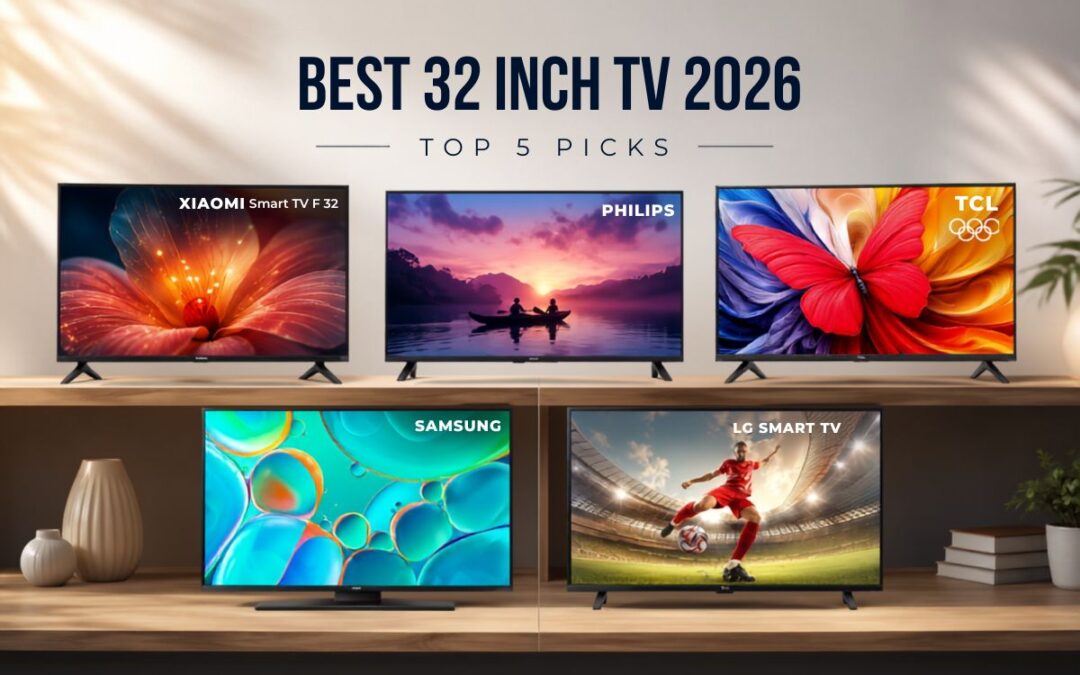
Buying a best 32 inch tv 2026 feels simple… until you actually start comparing.
LED or QLED? Android TV or Google TV? Everyone’s talking specs, nobody’s telling you what actually matters.
Here’s the truth: at this budget, brand and operating system decide your experience more than anything else on the spec sheet. Let’s make this simple.
In This Post
LED vs QLED: What Actually Changes
Common mistake: people assume QLED is always “better enough” to pay extra for.
Both panels use LED backlighting. QLED just uses more, smaller LEDs, which means sharper, slightly richer picture quality.
Simple rule: if the price gap is small, go QLED. If it’s not, don’t lose sleep over it. At 32 inches, from normal sofa distance, the difference is noticeable, not dramatic.
The Operating System Decides More Than You Think
This is where most people get it wrong.
Whatever remote you’re holding, the OS decides how fast Netflix opens, how smooth scrolling feels, and how many apps you can actually install.
Here’s the breakdown:
LG (WebOS) / Samsung (Tizen): Fast, smooth, snappy. Smaller app store, but all the big OTT apps (Netflix, Prime, JioHotstar, SonyLIV) are covered.
Android TV: Older tech. Mostly shows up in budget TVs. Skip if you can.
Google TV: The newer, faster version of Google’s OS. Full Play Store access, better performance.
My recommendation: if you use a set-top box and stick to the main apps, Samsung or LG is fine. If you’re an app-explorer who wants everything, Google TV is the safer pick.
If you don’t want to think too much: just check the box says “Google TV,” not “Android TV.”
Metal build, Bluetooth remote with OTT hotkeys and voice command. 20W speakers, VA QLED panel with a bezel-less, premium look.
HD Ready, 60Hz, HDR10 + HLG, plus Xiaomi’s Vivid Picture Engine 2, picture quality punches above the price here.
If you don’t want to think too much: this is basically the same price as the Philips above but with a QLED panel. That alone tips it in Xiaomi’s favor for most people.
Final Take: best “picture quality per rupee” pick on this list.
HD Ready VA panel, 60Hz, HDR10 + HLG, with Samsung’s Mega Brightness tech genuinely making a visible difference.
Here’s the truth: Samsung’s real edge isn’t the panel, it’s the warranty. 1 year on the product + 1 year on the panel = 2 years total. Plus pan-India service you can actually rely on.
Final Take: if you want a TV that “just works for years” with zero after-sales stress, this is it.
The Magic Remote here is genuinely a step up, AI-powered, Bluetooth, OTT hotkeys, voice command.
Full HD panel, 60Hz, and the newest processor in this list, the Alpha 5 AI Processor Gen 9, plus Copilot and Google Gemini features baked in.
Sounds fancy, but honestly you won’t use the AI features daily. What you will notice is how smooth and premium the whole experience feels.
Common mistake: paying full price without checking the cheaper variant. The Rs. 13,999 HD Ready model with a normal remote gets you the same panel and processor, just a simpler remote and lower resolution.
Final Take: best overall experience if budget allows. Best value if you grab the HD Ready variant instead.
If the price difference is small, yes. At larger screen sizes it matters more, but even at 32 inches you’ll notice sharper colors and better contrast.
Should I buy Android TV or Google TV?
Google TV, every time, if it’s an option. Android TV is older tech mostly found in budget models and feels noticeably slower.
Which brand has the best after-sales service?
Samsung and LG have the strongest pan-India service network. Philips and Xiaomi are solid in metros but can be patchy in rural areas.
Is Full HD necessary in a 32 inch TV?
Not essential, but it does look sharper for closer viewing distances. The TCL and LG are your Full HD options here.
Which is the best 32 inch TV 2026 for most buyers?
The TCL 32-inch QLED Google TV is the best 32 inch TV 2026 for most people thanks to its QLED display, Full HD resolution, Google TV interface, and excellent value. If your budget is lower, the Xiaomi and Samsung models are also strong alternatives.
Final Take
If you don’t want to think too much: Xiaomi QLED at Rs. 13,499 gives you the best picture-quality-per-rupee.
If you want zero after-sales headaches: Samsung, no contest.
If budget stretches: LG’s HD Ready variant at Rs. 17,990, same processor, same premium feel, lower price.
Welcome to your refrigerator buying guide 2026 — written for the person who opened 12 tabs and still has no idea what to buy.
Single door, double door, frost-free, inverter compressor, convertible, star rating, capacity — suddenly everything feels messy.
Here’s the truth: most people don’t buy the wrong refrigerator because they’re careless. They buy the wrong one because nobody explained the basics properly.
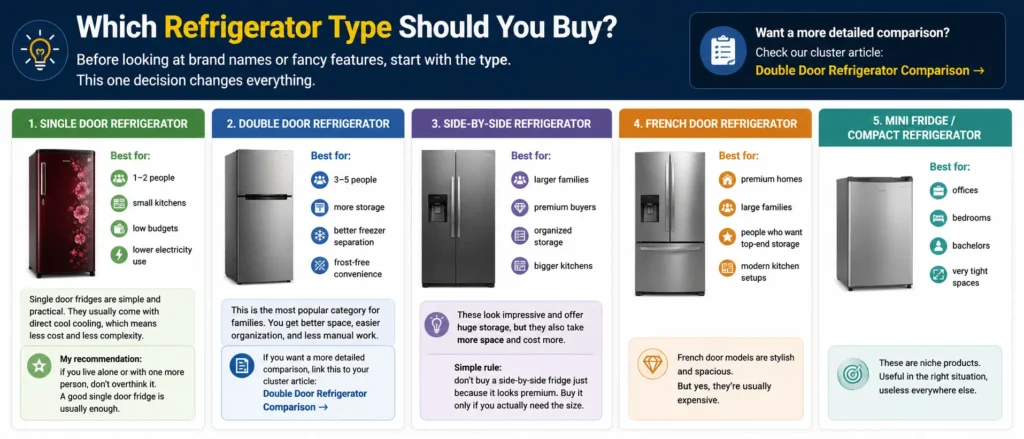
Refrigerator Buying Guide 2026: Which Type Should You Actually Buy?
Before looking at brand names or fancy features, start with the type. This one decision changes everything.
Single Door Refrigerator
Best for:
1–2 people
small kitchens
low budgets
lower electricity use
Single door fridges are simple and practical. They usually come with direct cool cooling, which means less cost and less complexity.
My recommendation: if you live alone or with one more person, don’t overthink it. A good single door fridge is usually enough.
Double Door Refrigerator
Best for:
3–5 people
more storage
better freezer separation
frost-free convenience
This is the most popular category for families. You get better space, easier organization, and less manual work.
Side-by-Side Refrigerator
Best for:
larger families
premium buyers
organized storage
bigger kitchens
These look impressive and offer huge storage, but they also take more space and cost more.
Simple rule: don’t buy a side-by-side fridge just because it looks premium. Buy it only if you actually need the size.
French Door Refrigerator
Best for:
premium homes
large families
people who want top-end storage
modern kitchen setups
French door models are stylish and spacious. But yes, they’re usually expensive.
Mini Fridge / Compact Refrigerator
Best for:
offices
bedrooms
bachelors
very tight spaces
These are niche products. Useful in the right situation, useless everywhere else.
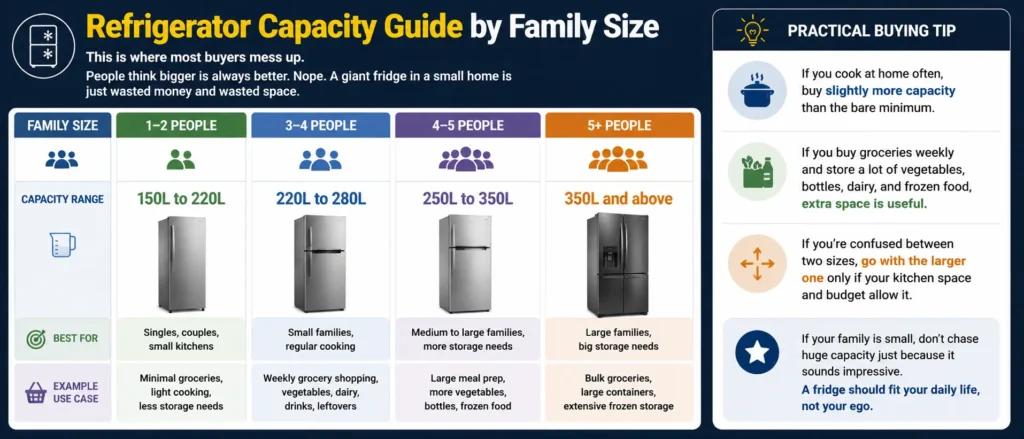
Refrigerator Capacity Guide by Family Size
This is where most buyers mess up.
People think bigger is always better. Nope. A giant fridge in a small home is just wasted money and wasted space.
Simple capacity rule
1–2 people: 150L to 220L
3–4 people: 220L to 280L
4–5 people: 250L to 350L
5+ people: 350L and above
If your family is small, don’t chase huge capacity just because it sounds impressive.
A fridge should fit your daily life, not your ego.
Practical buying tip
If you cook at home often, buy slightly more capacity than the bare minimum.
If you buy groceries weekly and store a lot of vegetables, bottles, dairy, and frozen food, extra space is useful.
If you’re confused between two sizes, go with the larger one only if your kitchen space and budget allow it.
Capacity planning is a step most refrigerator buying guides 2026 recommend getting right before anything else.
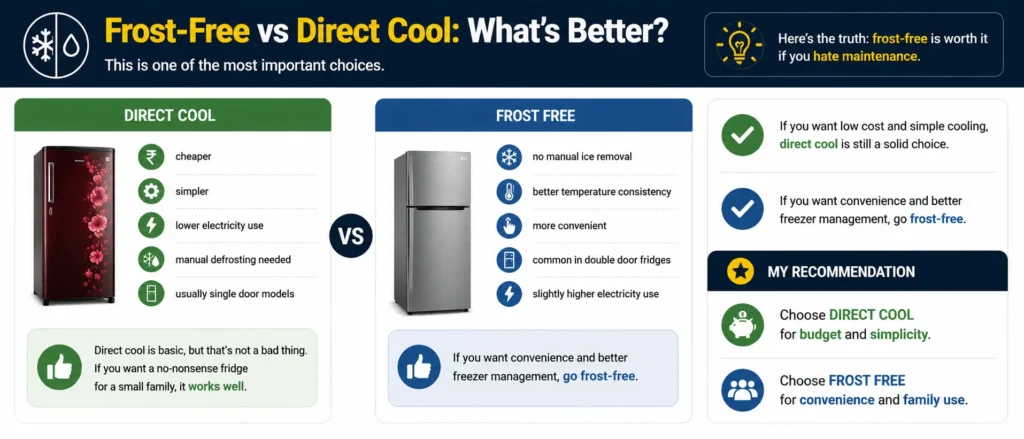
Frost-Free vs Direct Cool: What’s Better?
This is one of the most important choices.
Direct Cool
cheaper
simpler
lower electricity use
manual defrosting needed
usually single door models
Direct cool is basic, but that’s not a bad thing. If you want a no-nonsense fridge for a small family, it works well.
Frost Free
no manual ice removal
better temperature consistency
more convenient
common in double door fridges
slightly higher electricity use
Here’s the truth: frost-free is worth it if you hate maintenance.
If you want convenience and better freezer management, go frost-free.
If you want low cost and simple cooling, direct cool is still a solid choice.
My recommendation:
choose direct cool for budget and simplicity
choose frost free for convenience and family use
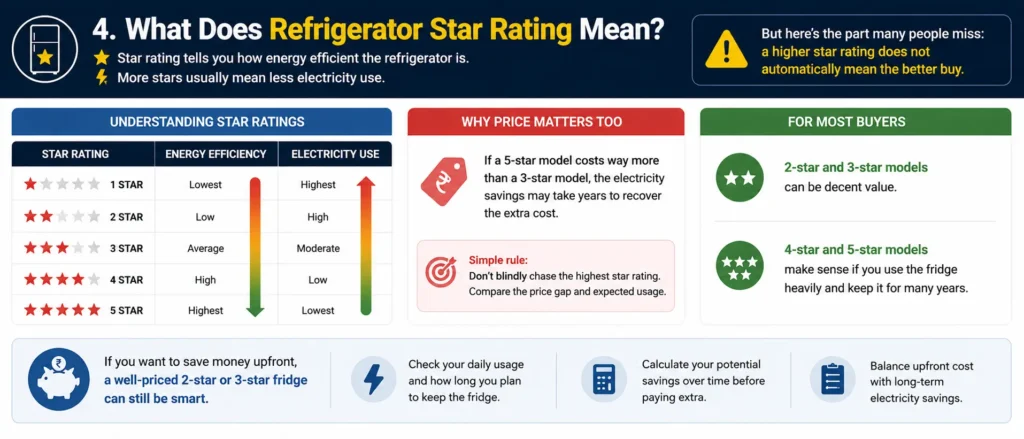
What Does Refrigerator Star Rating Mean?
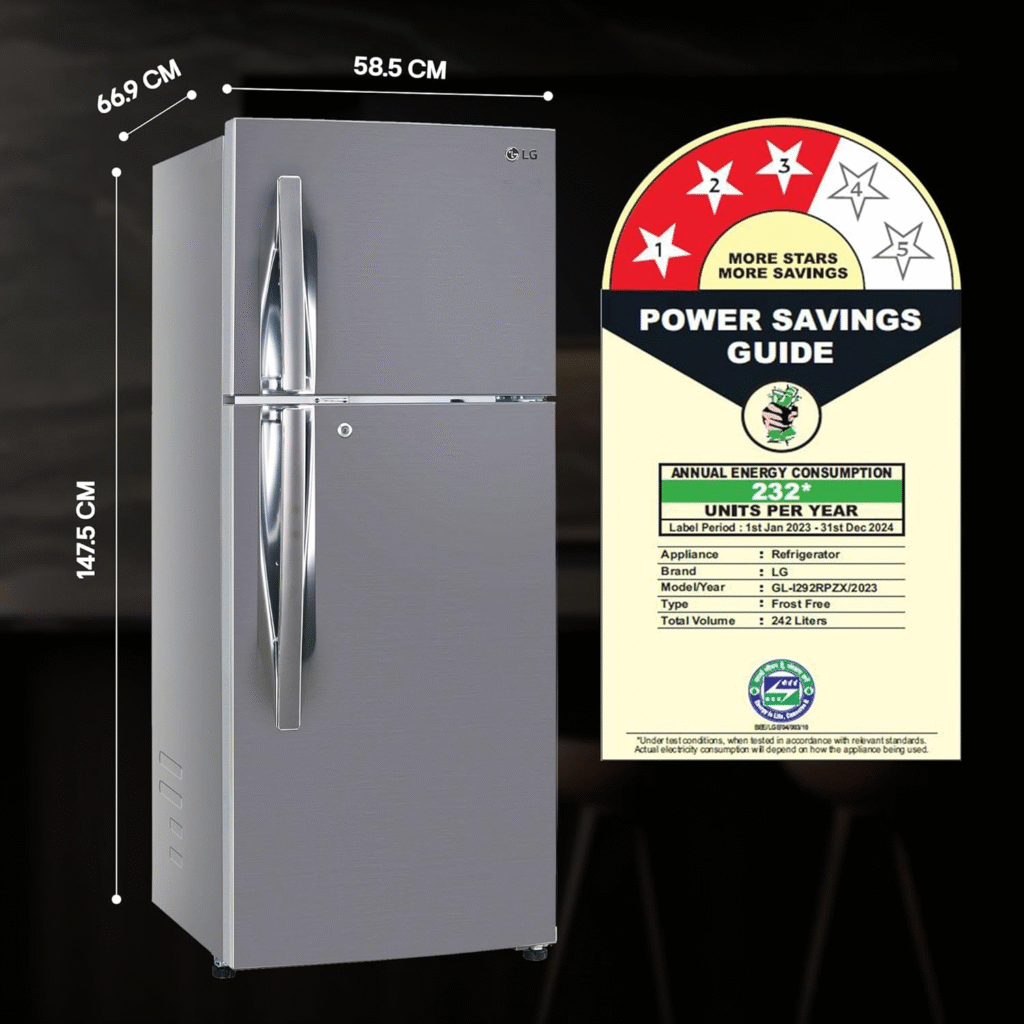
Star rating tells you how energy efficient the refrigerator is.
More stars usually mean less electricity use.
But here’s the part many people miss: a higher star rating does not automatically mean the better buy.
Why? Because price matters too.
If a 5-star model costs way more than a 3-star model, the electricity savings may take years to recover the extra cost.
Simple rule:
Don’t blindly chase the highest star rating. Compare the price gap and expected usage.
For most buyers:
2-star and 3-star models can be decent value
4-star and 5-star models make sense if you use the fridge heavily and keep it for many years
If you want to save money upfront, a well-priced 2-star or 3-star fridge can still be smart.
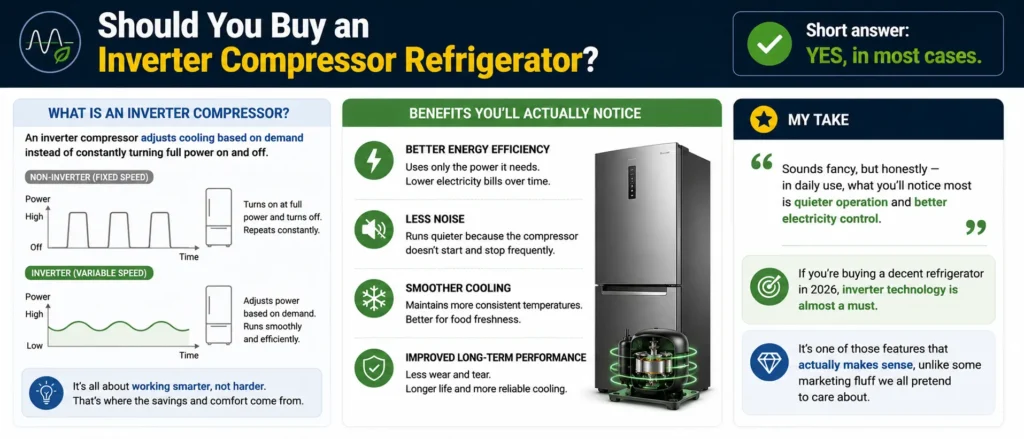
Should You Buy an Inverter Compressor Refrigerator?
Short answer: yes, in most cases.
An inverter compressor adjusts cooling based on demand instead of constantly turning full power on and off.
That means:
better energy efficiency
less noise
smoother cooling
improved long-term performance
Sounds fancy, but honestly — in daily use, what you’ll notice most is quieter operation and better electricity control.
My take: If you’re buying a decent refrigerator in 2026, inverter technology is almost a must.
It’s one of those features that actually makes sense, unlike some marketing fluff we all pretend to care about.
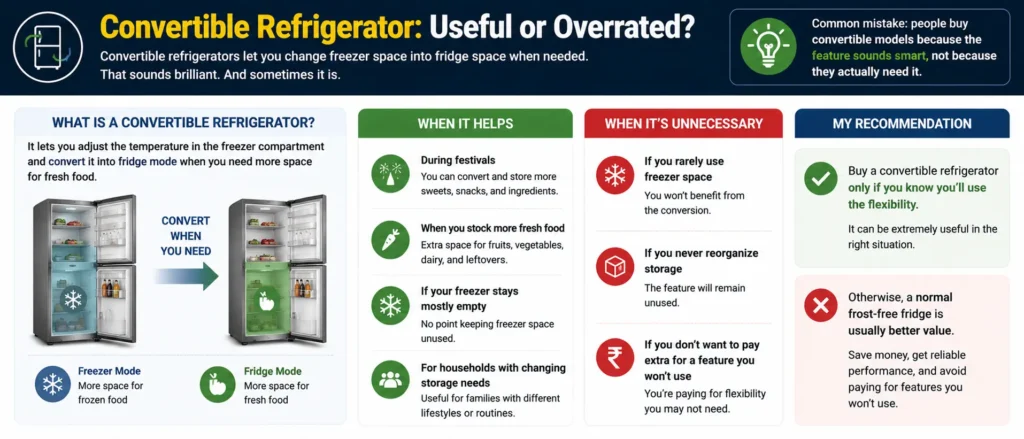
Convertible Refrigerator: Useful or Overrated?
Convertible refrigerators let you change freezer space into fridge space when needed.
That sounds brilliant. And sometimes it is.
When it helps
during festivals
when you stock more fresh food
if your freezer stays mostly empty
for households with changing storage needs
When it’s unnecessary
if you rarely use freezer space
if you never reorganize storage
if you don’t want to pay extra for a feature you won’t use
Common mistake: people buy convertible models because the feature sounds smart, not because they actually need it.
This is one of the most overlooked tips in any refrigerator buying guide 2026.
My recommendation: Buy a convertible refrigerator only if you know you’ll use the flexibility.
Otherwise, a normal frost-free fridge is usually better value.
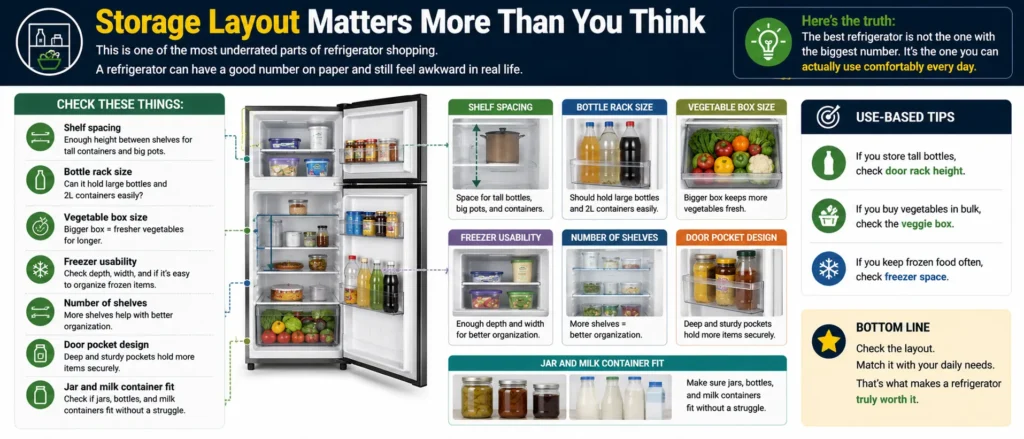
Storage Layout Matters More Than You Think
This is one of the most underrated parts of refrigerator shopping.
People look at capacity in liters and assume that’s enough. Not really.
A refrigerator can have a good number on paper and still feel awkward in real life.
Check these things:
shelf spacing
bottle rack size
vegetable box size
freezer usability
number of shelves
door pocket design
jar and milk container fit
Here’s the truth: the best refrigerator is not the one with the biggest number. It’s the one you can actually use comfortably every day.
If you store tall bottles, check door rack height. If you buy vegetables in bulk, check the veggie box. If you keep frozen food often, check freezer space.
That’s the stuff that matters.
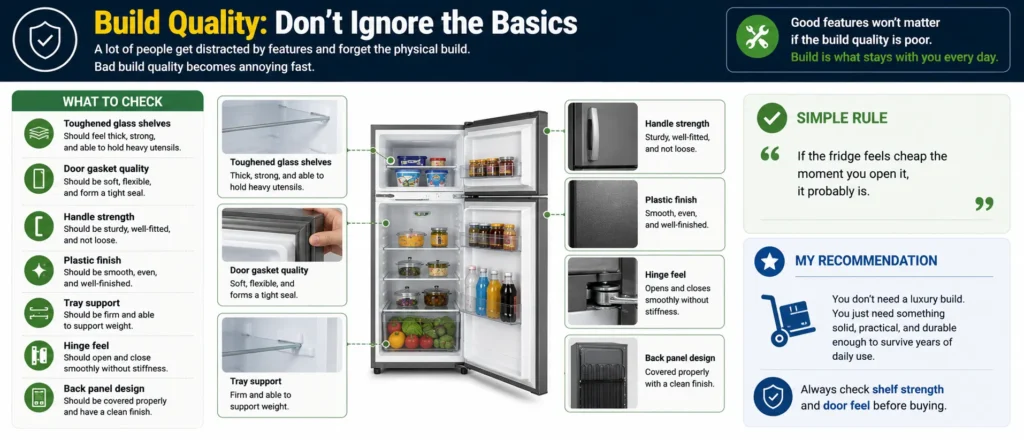
Build Quality: Don’t Ignore the Basics
A lot of people get distracted by features and forget the physical build.
Bad build quality becomes annoying fast.
What to check
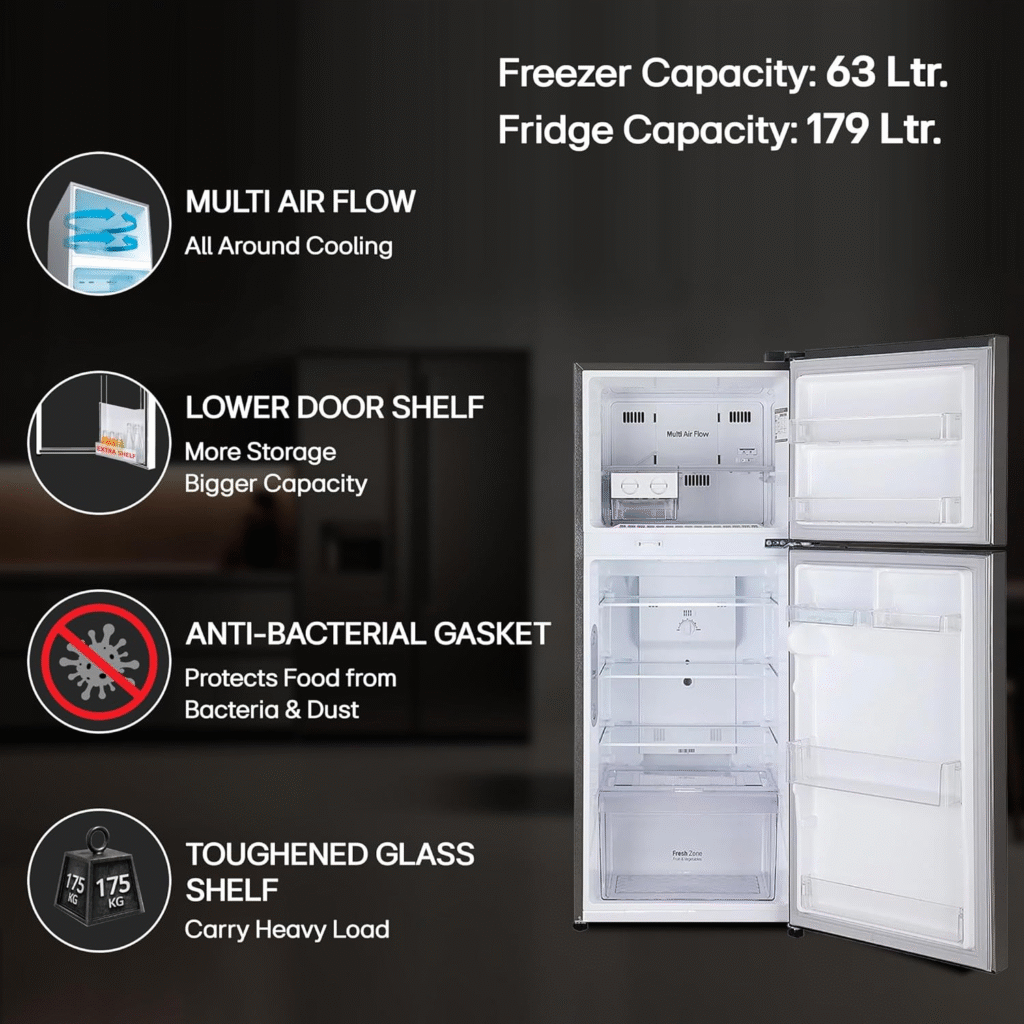
toughened glass shelves
door gasket quality
handle strength
plastic finish
tray support
hinge feel
back panel design
Simple rule: if the fridge feels cheap the moment you open it, it probably is.
You don’t need a luxury build. You just need something solid, practical, and durable enough to survive years of daily use.
Build quality is one factor most refrigerator buying guide 2026 checklists forget to mention — but it matters more than most specs.
My recommendation: Always check shelf strength and door feel before buying.
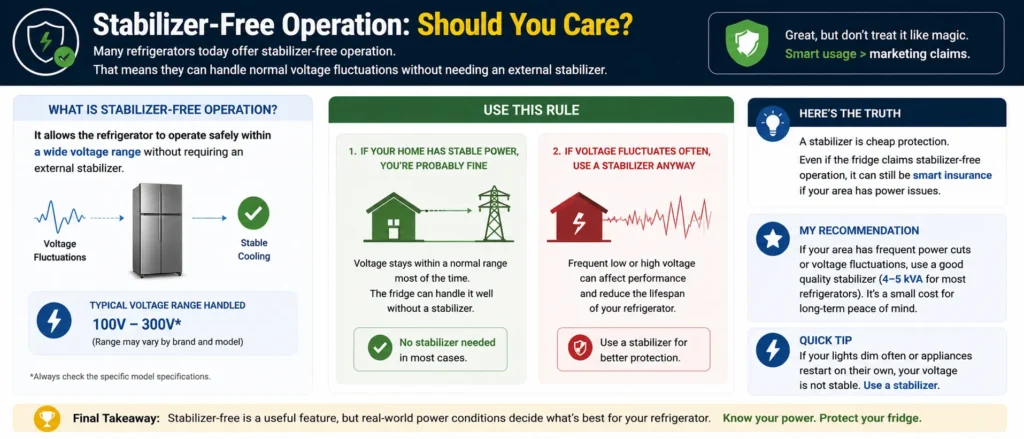
Stabilizer-Free Operation: Should You Care?
Many refrigerators today offer stabilizer-free operation.
That means they can handle normal voltage fluctuations without needing an external stabilizer.
Great, but don’t treat it like magic.
Use this rule:
if your home has stable power, you’re probably fine
if voltage fluctuates often, use a stabilizer anyway
Here’s the truth: a stabilizer is cheap protection.
Even if the fridge claims stabilizer-free operation, it can still be smart insurance if your area has power issues.
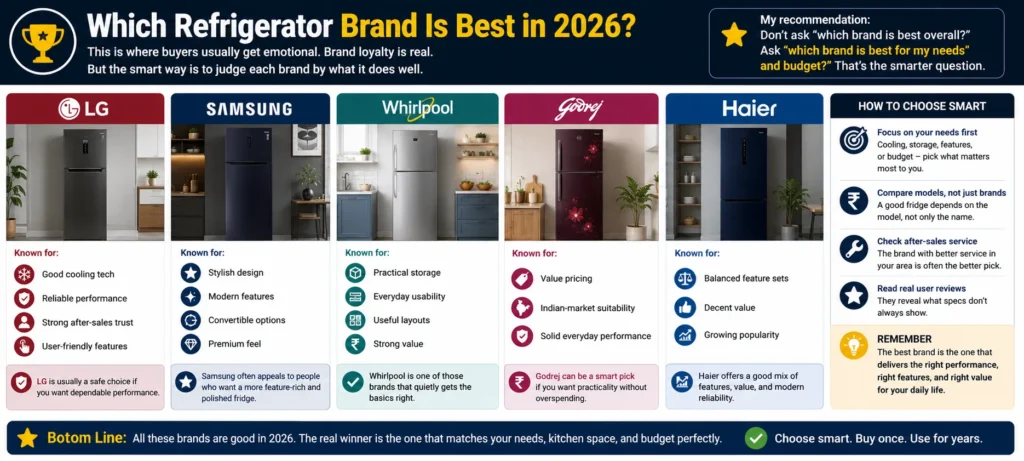
Which Refrigerator Brand Is Best in 2026?
This is where buyers usually get emotional. Brand loyalty is real.
But the smart way is to judge each brand by what it does well.
My recommendation: Don’t ask “which brand is best overall?” Ask “which brand is best for my needs and budget?”
That’s the smarter question.
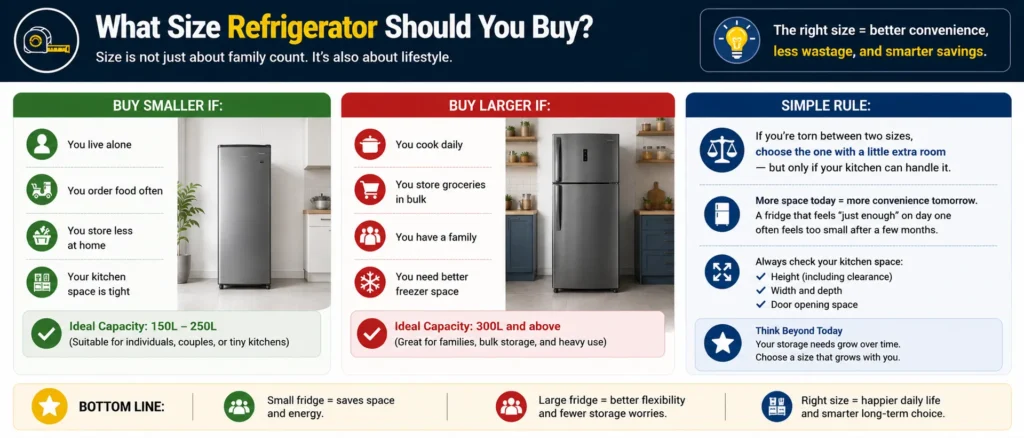
What Size Refrigerator Should You Buy?
Size is not just about family count. It’s also about lifestyle.
Buy smaller if:
you live alone
you order food often
you store less at home
your kitchen space is tight
Buy larger if:
you cook daily
you store groceries in bulk
you have a family
you need better freezer space
Simple rule: If you’re torn between two sizes, choose the one with a little extra room — but only if your kitchen can handle it.
A fridge that feels “just enough” on day one often feels too small after a few months.
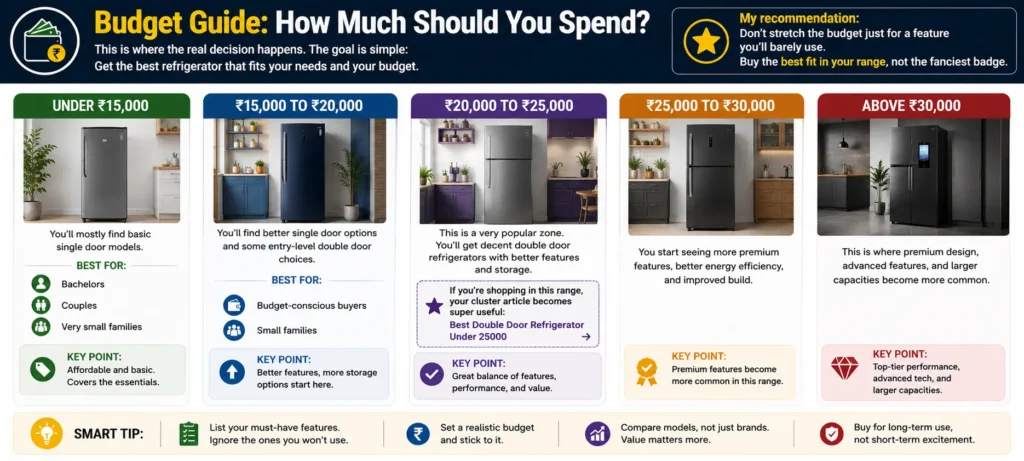
Budget Guide: How Much Should You Spend?
This is where the real decision happens.
Under 15,000
You’ll mostly find basic single door models. Best for:
bachelors
couples
very small families
15,000 to 20,000
You’ll find better single door options and some entry-level double door choices. Best for:
budget-conscious buyers
small families
20,000 to 25,000
This is a very popular zone. You’ll get decent double door refrigerators with better features and storage. If you’re shopping in this range, your cluster article becomes super useful:
Best Double Door Refrigerator Under 25000
25,000 to 30,000
You start seeing more premium features, better energy efficiency, and improved build.
Above 30,000
This is where premium design, advanced features, and larger capacities become more common.
My recommendation: Don’t stretch the budget just for a feature you’ll barely use. Buy the best fit in your range, not the fanciest badge.
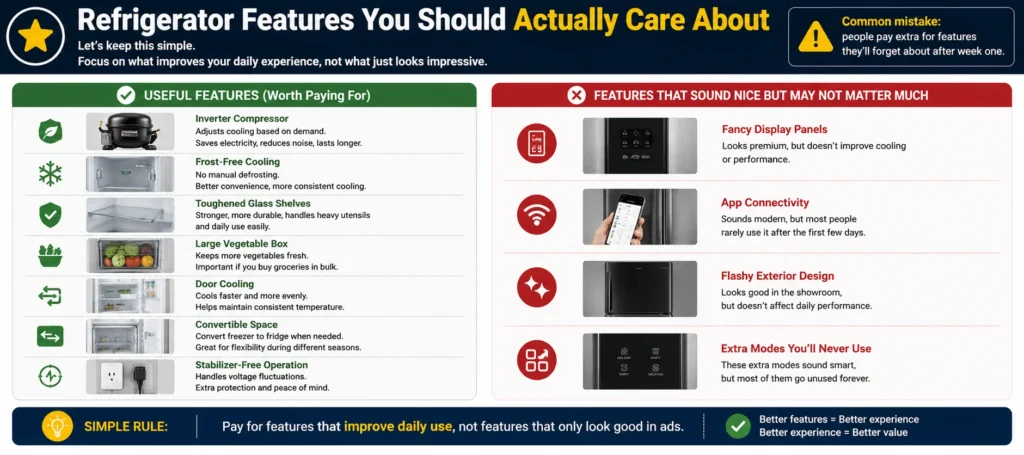
Refrigerator Features You Should Actually Care About
Let’s keep this simple.
Useful features
inverter compressor
frost-free cooling
toughened glass shelves
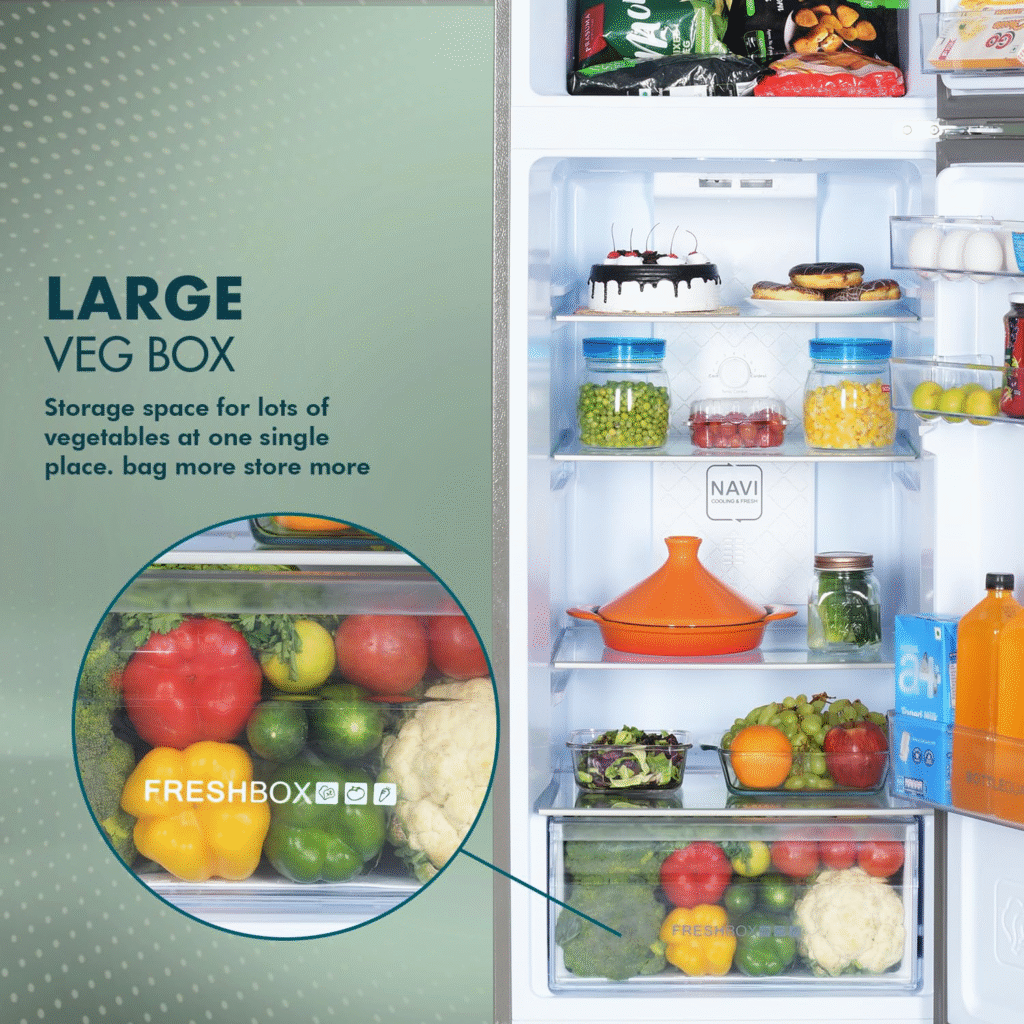
large vegetable box
door cooling
convertible space
stabilizer-free operation
Features that sound nice but may not matter much
fancy display panels
app connectivity
flashy exterior design
extra modes you’ll never use
Common mistake: people pay extra for features they’ll forget about after week one.
Simple rule: Pay for features that improve daily use, not features that only look good in ads.
Refrigerator Buying Checklist
Before you buy, check these points one by one.
Checklist
family size
available kitchen space
fridge type
capacity
star rating
inverter compressor
frost-free or direct cool
shelf quality
bottle storage
vegetable box size
freezer layout
brand service support
warranty
voltage handling
total price
If you can answer all of these clearly, you’re ready to buy.
If not, pause. A little research now saves a lot of regret later.
Final Recommendation
Here’s the short version.
If you want a refrigerator in 2026, don’t start with brand hype. Start with your actual need.
The simple decision formula:
small family = single door or compact double door
medium family = double door
large family = side-by-side or bigger capacity
low budget = direct cool or entry-level frost-free
convenience first = frost-free + inverter
extra flexibility = convertible only if you’ll use it
If I had to give one piece of advice, it would be this: Get the capacity and layout right first. Everything else is secondary.
Because a fridge that fits your life will always feel like a better buy than a “premium” one that doesn’t.
FAQ
Which refrigerator is best for a family of 3 to 4 people?
A double door refrigerator with around 220L to 280L capacity is usually a good fit.
Is frost-free better than direct cool?
Yes, if you want convenience. Direct cool is still fine if you want lower cost and simpler cooling.
Is a 3-star refrigerator good enough?
Yes, a 3-star refrigerator is a solid choice for many buyers. It balances energy savings and price well.
Should I buy a convertible refrigerator?
Only if you think you’ll actually use the flexible storage space.
Which brand is most reliable?
LG, Samsung, Whirlpool, Godrej, and Haier all have strong options. The best one depends on your budget and usage.
What does the star rating on a refrigerator mean?
The star rating shows how energy efficient the refrigerator is. A higher star rating usually means lower electricity use.
Is an inverter compressor worth it?
Yes, in most cases. An inverter compressor helps save electricity, reduces noise, and improves cooling performance.
Do I need a stabilizer for my refrigerator?
If your area has frequent voltage fluctuations, a stabilizer is a smart safety measure even if the refrigerator offers stabilizer-free operation.
What is the most important thing to check in a refrigerator buying guide 2026?
The most important thing to check is capacity — measured in litres — based on your family size. A family of 4 typically needs 300–400 litres. After that, look at energy star rating, cooling technology (inverter vs non-inverter), and warranty terms before making a final decision.
First, don’t panic about the 2026 star rating change
If you’re searching for the best double door refrigerator under 25000, don’t panic if a 2026 model shows a lower star rating than its 2025 version.
The star rating system changed in 2026, so a 2-star label doesn’t automatically mean the fridge is bad. Cooling can still be strong, and the fridge can still do its job well.
If the yearly electricity difference is only around 30 to 40 units, paying extra just for a better-looking label usually doesn’t make sense.
Buy the fridge that fits your budget and usage, not the one that only looks better on paper.
In This Post
Convertible vs non-convertible: do you actually need it?
Simple rule: if you don’t regularly need to turn freezer space into fridge space, you probably don’t need convertible technology.
That feature sounds impressive. And yes, it is useful for some people. But for most families, it’s just one of those “nice to have” things.
If you’re not going on long vacations or don’t have a very specific storage pattern, a non-convertible fridge is completely fine.
Here’s the truth: if a convertible model costs a lot more than a non-convertible one, you’re paying extra for a feature you may never use.
My recommendation: only pay for convertible if you know you’ll actually use it.
Don’t get trapped in the 2025 vs 2026 fear game
This is where most people get played.
If the 2025 version and 2026 version are basically the same fridge from the inside, why pay more just for the newer year?
That’s the real question.
If a 2025 model saves you money and the only difference is a small yearly electricity gap, it can still be the smarter buy.
If you don’t want to think too much: choose the one that gives you better value right now, not the one that just sounds newer.
Best picks from the transcript
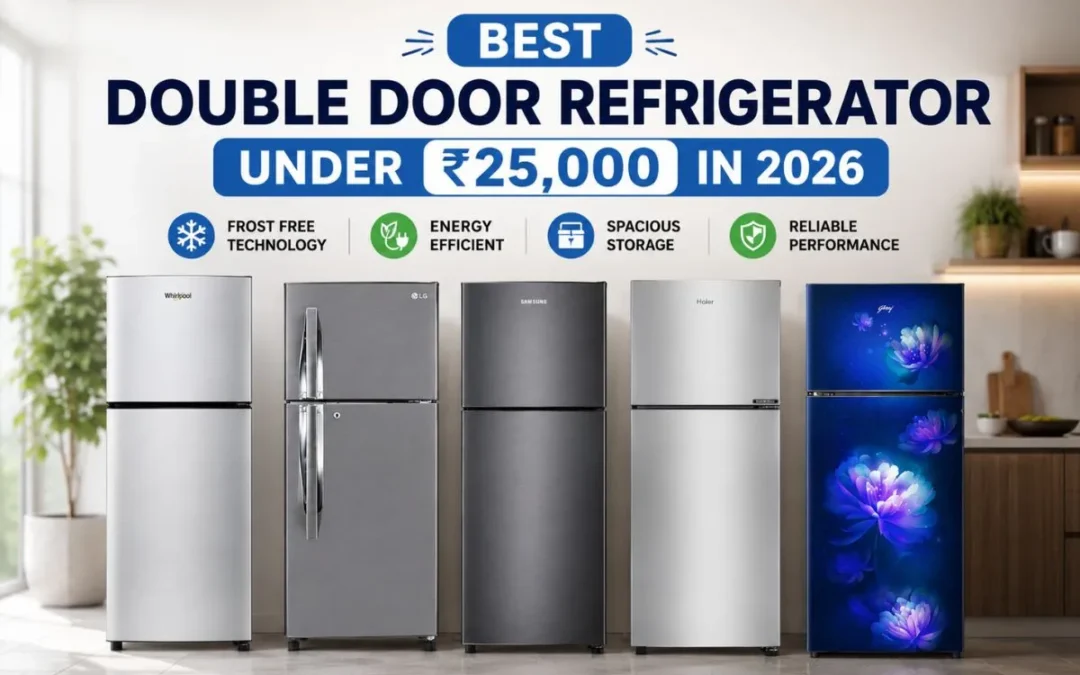
The video compares five fridges and splits them into three groups. I’ll keep the same ranking style and explain the real buying logic.
Images sourced from Amazon. All copyrights belong to their respective owners.
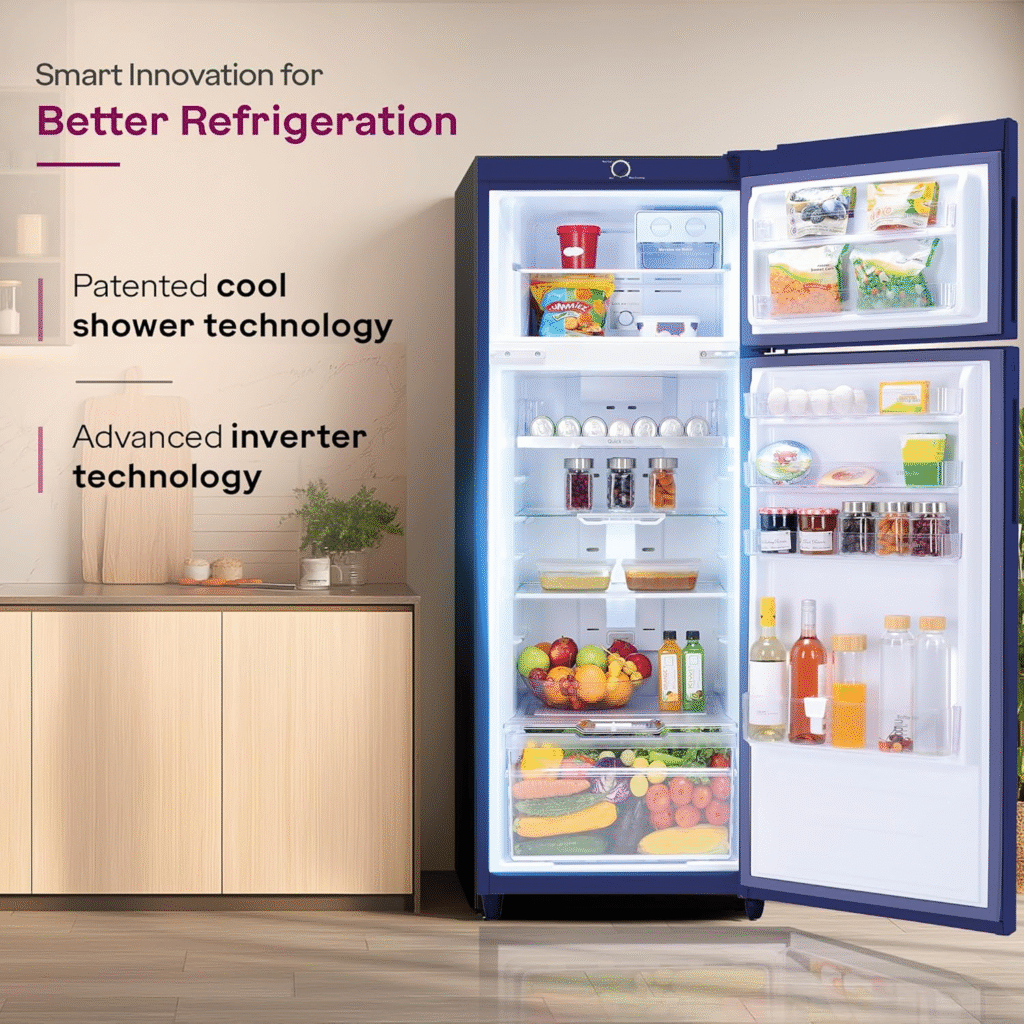
This is a solid 2026 model and a genuinely good buy.
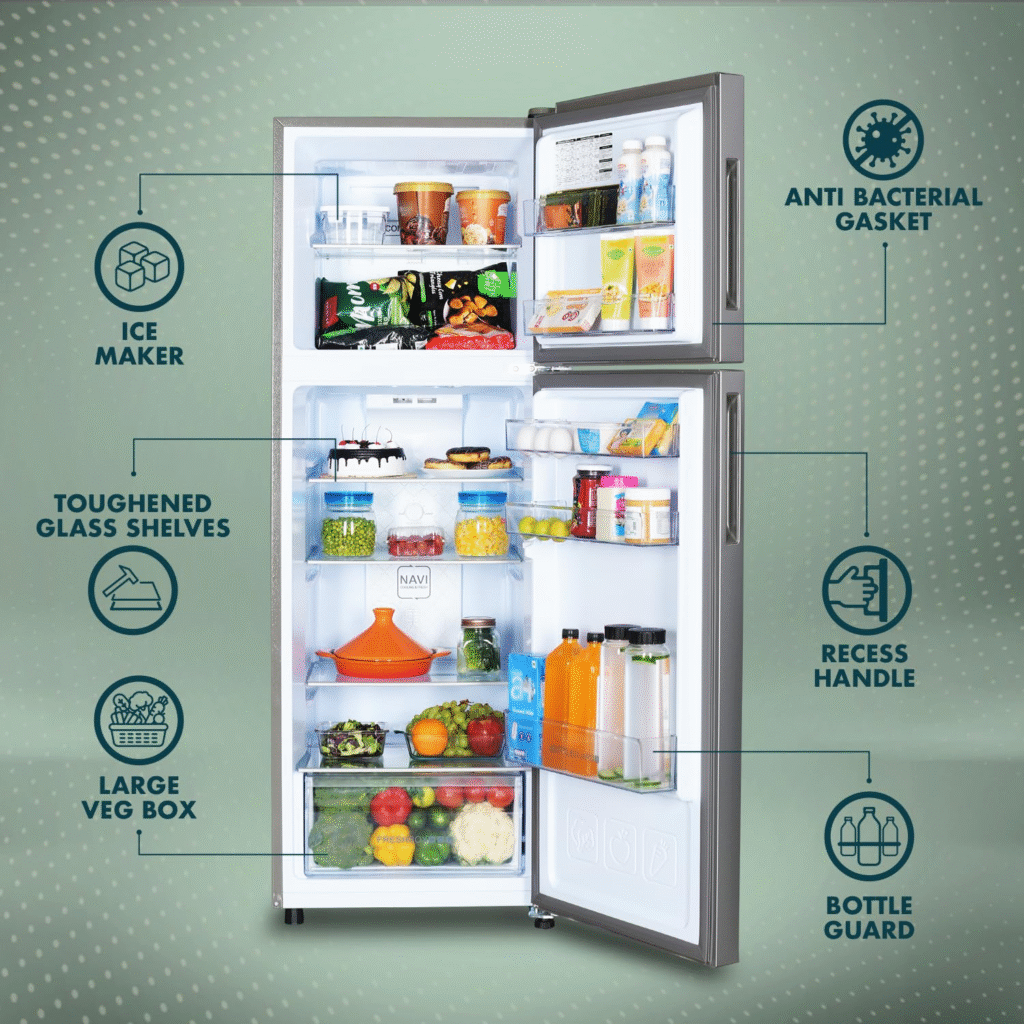
It comes with an inverter compressor, stabilizer-free operation, and toughened glass shelves. The build feels clean and reliable.
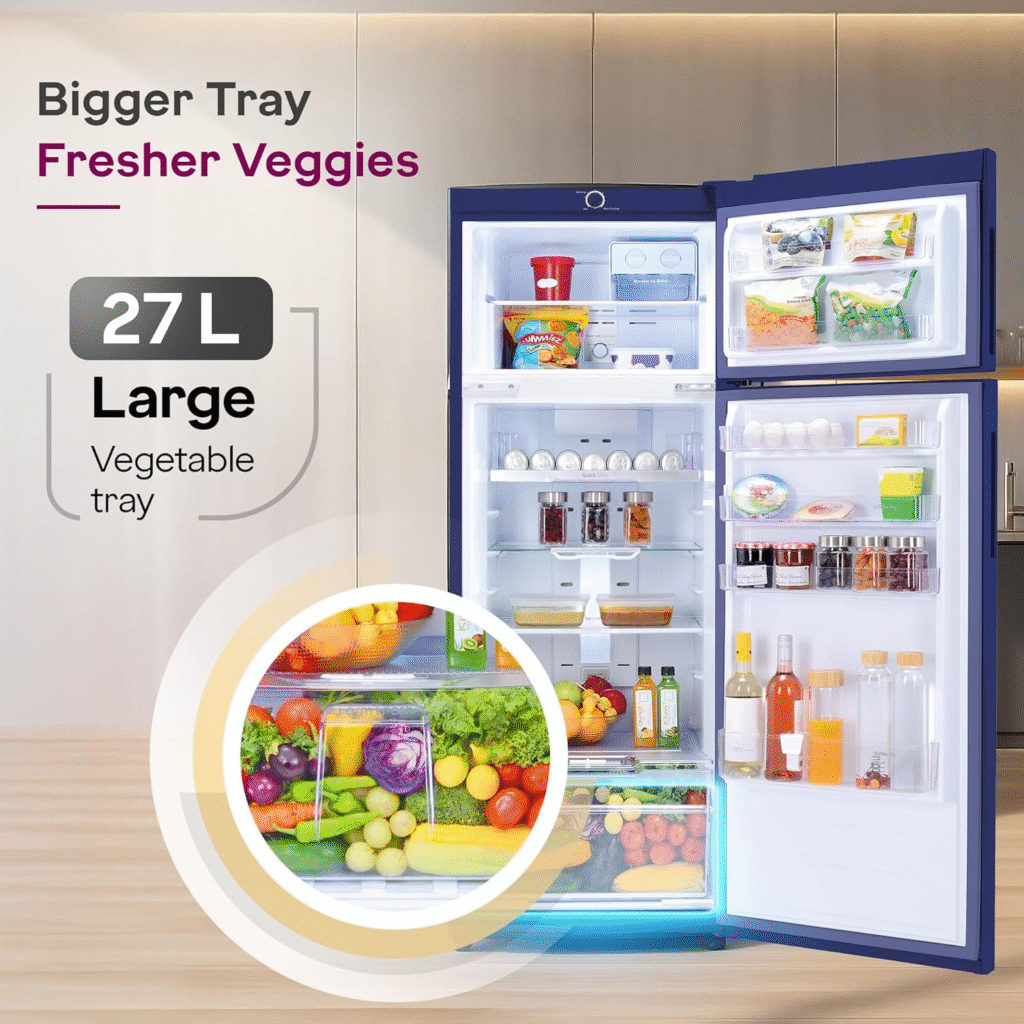
One thing that stands out is the vegetable box. It’s larger than most in this segment, so if your household stocks a lot of vegetables, that’s a real practical win.
The internal layout gives you slightly more fridge space, which works well for everyday use.
The plastic finish is transparent white, which honestly feels a bit more premium than what you usually see at this price point.
The catch The last bottle shelf is missing. So you’re looking at around 5 bottles max. If your household keeps a lot of water bottles chilled at all times, that’s the one thing to keep in mind.
My take If you want a larger vegetable box, clean build quality, and a reliable inverter model, Godrej is a strong pick.
Check current price and availability here. Amazon Link: Click Here
Images sourced from Amazon. All copyrights belong to their respective owners.
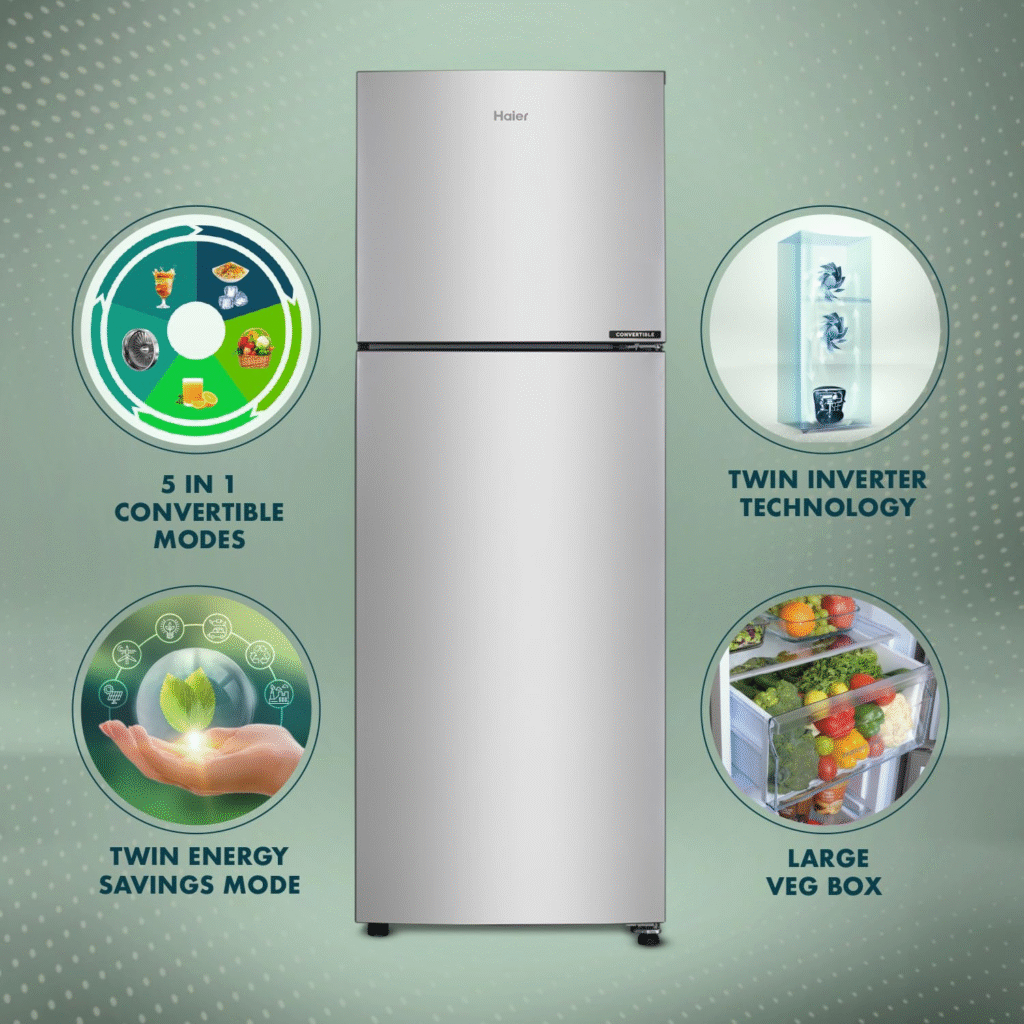
Also a 2026 model, also inverter, also solid.
Haier gives you a slightly more balanced internal layout compared to most fridges in this range. The freezer space is slightly more generous, which works well if you freeze a lot of food regularly.
Toughened glass shelves, stabilizer-free operation, clean back panel. Everything you’d expect from a good modern fridge is here.
The plastic finish is light grey. It’s not a dealbreaker by any means, but it does feel slightly less premium than transparent white finishes.
The catch Same issue as the Godrej. The last bottle shelf is missing. Practically, you’re managing around 5 bottles max.
My take If you want a well-balanced layout and solid freezer space, Haier is a safe and reliable buy. You won’t regret it.s more like “which feature do you actually care about?”
Check current price and availability here. Amazon Link: Click Here
Images sourced from Amazon. All copyrights belong to their respective owners.
This one looks the part.
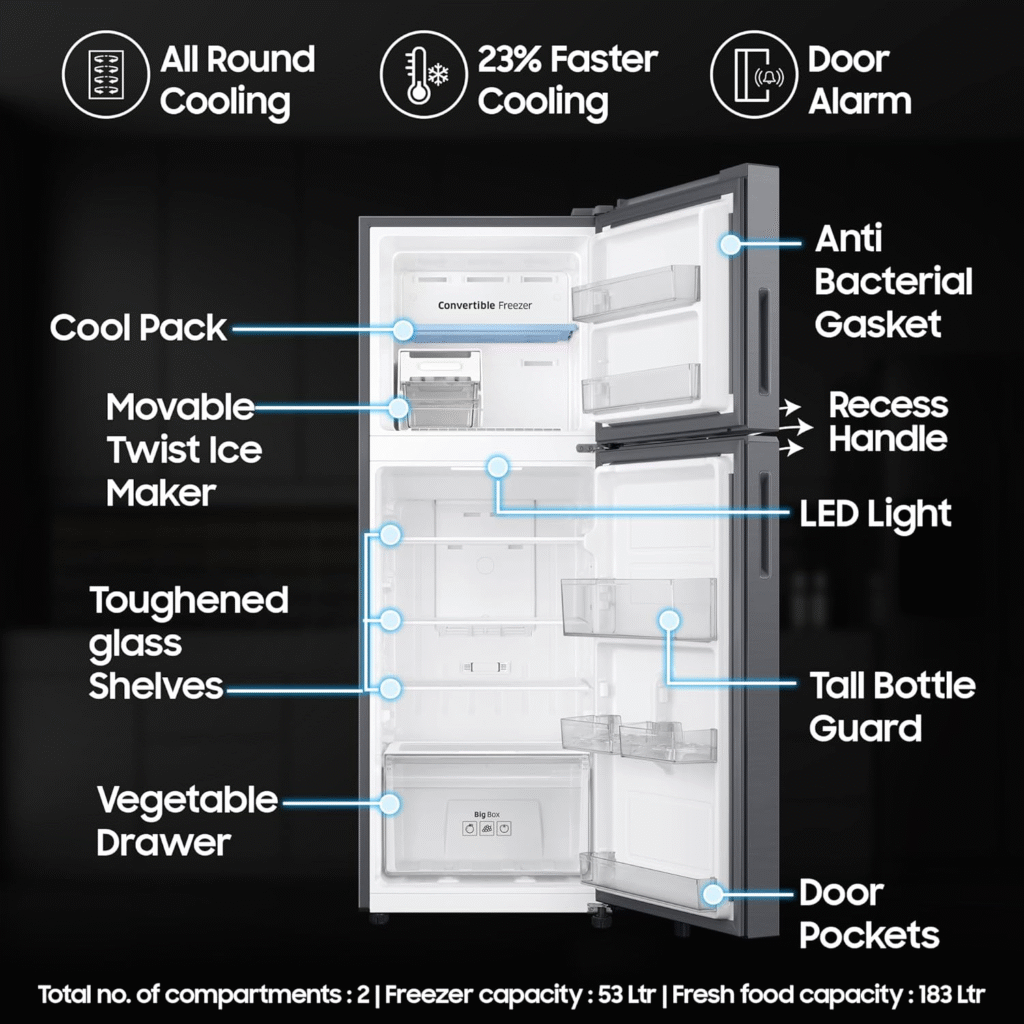
Samsung has gone with a more modern, premium design here. The recessed handle gives it a cleaner look, and the overall build feels more new-age compared to most fridges in this segment.
It comes with an inverter compressor and stabilizer-free operation. Available in both 2-star and 3-star variants, though the electricity difference between the two isn’t huge enough to stress over.
The big win here is the convertible functionality. This is a 3-in-1 convertible model. So you can shut the freezer off, convert the freezer into extra fridge space, or adjust modes based on what you actually need. If your storage needs change through the year, that flexibility is genuinely useful.
Door space is managed well here, so bottle storage is more practical than it looks.
Check current price and availability here. Amazon Link: Click Here
Images sourced from Amazon. All copyrights belong to their respective owners.
LG plays it classic, and it works.
The handle style is more traditional, which some people will find familiar and some will find old-school. But the design isn’t really the story here.
The real strength of this fridge is Door Cooling Plus. Cooling doesn’t just come from the back panel. It also comes from the door area. That means bottles and items stored in the door actually cool faster. It’s a small thing on paper but a real difference in daily use.
Inverter compressor, stabilizer-free operation, full shelving with no odd compromises. The freezer space is also on the generous side for this segment.
The catch The last door shelf isn’t really designed for water bottles. So practically, you’re still working with around 5 bottles max.
My take If consistent cooling, Door Cooling Plus, and solid freezer space matter to you, LG is a dependable choice. It’s not flashy, but it delivers where it counts.
Check current price and availability here. Amazon Link: Click Here
Images sourced from Amazon. All copyrights belong to their respective owners.
Here’s the winner from the transcript.
And honestly, it makes sense.
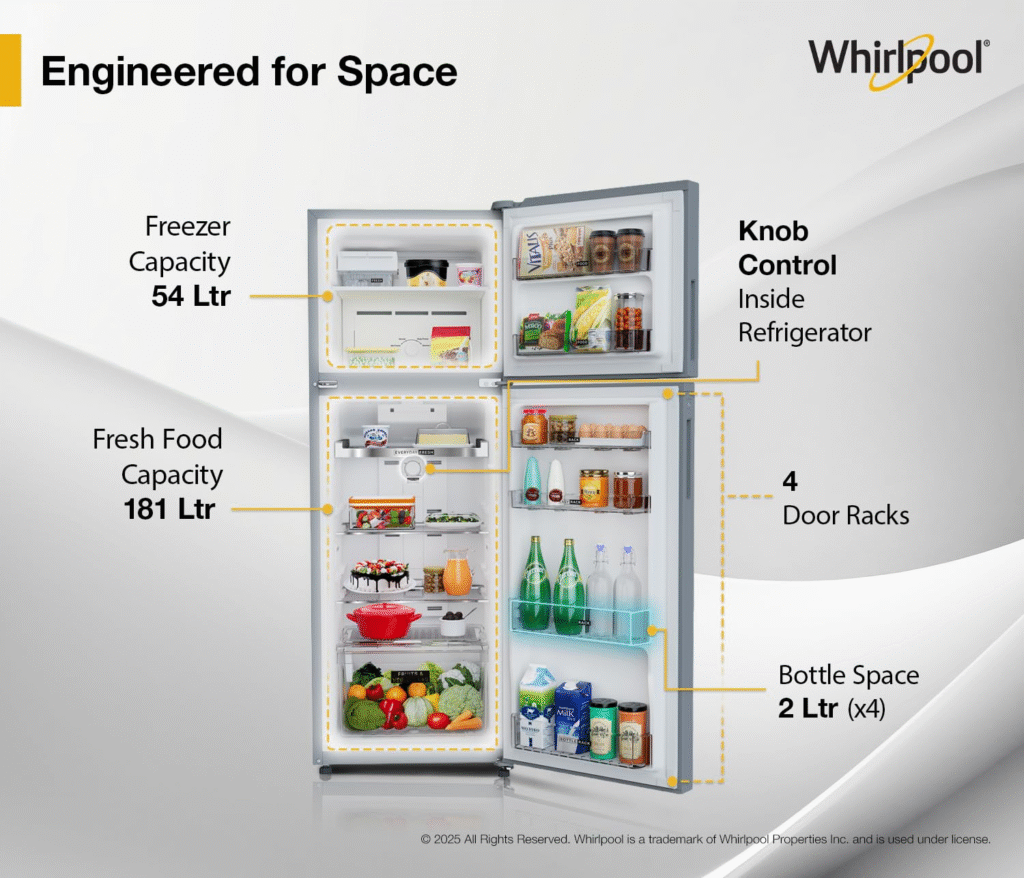
This Whirlpool model stands out because of one simple thing: space management.
That’s the real deal.
A refrigerator can have all the fancy features in the world, but if the shelves and door layout are annoying, you’ll feel it every single day.
Check current price and availability here. Amazon Link: Click Here
Why it wins
very good modern design
strong build quality
transparent white plastic
toughened glass shelves
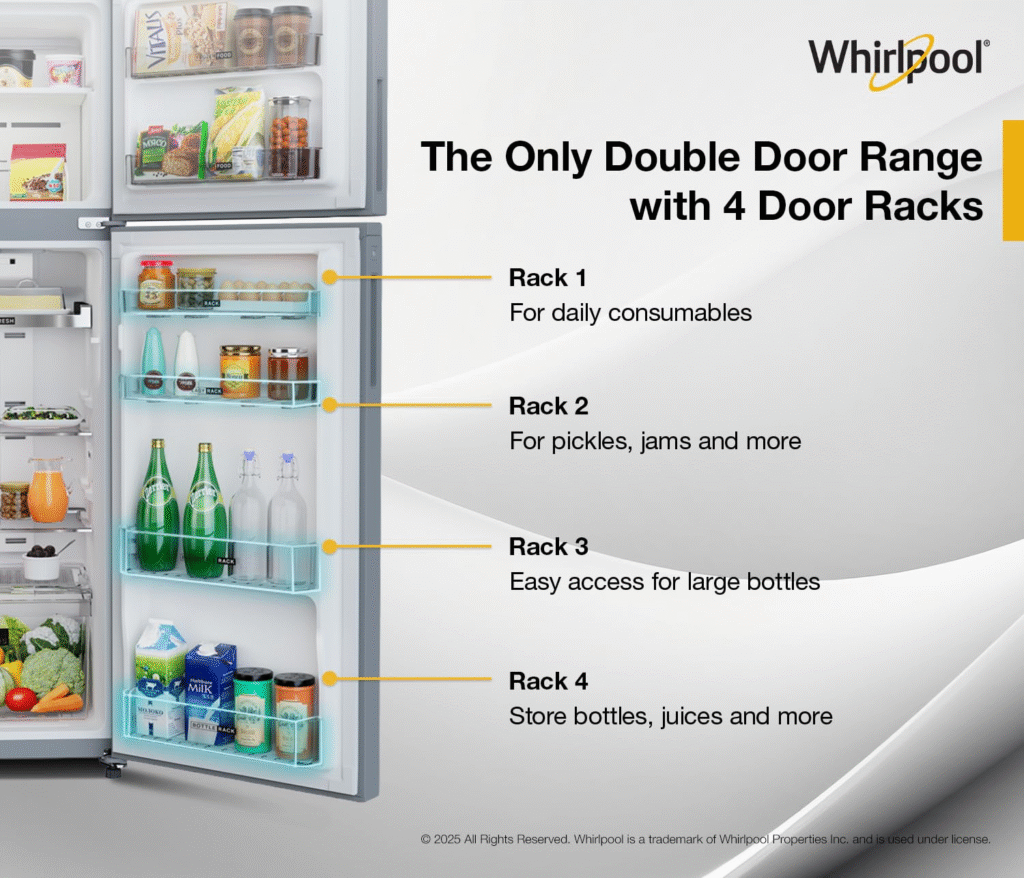
proper 4 door shelves
better bottle storage flexibility
no weird fixed shelf problem like the Samsung example
good freezer space
stable cooling
inverter technology
stabilizer-free operation
The best part
You get proper usable door shelves.
Not fake shelves. Not tiny useless shelves. Actual usable space.
That sounds small, but it matters a lot in daily use.
If your family stores bottles, beverages, milk containers, or just likes practical storage, this fridge is easier to live with.
Cooling and ice claim
The video mentions ice formation in around 85 minutes.
Take that with a pinch of salt, but the point is clear: the fridge cools well and performs strongly in daily use.
Any downside?
Honestly, the transcript doesn’t really point to a major drawback.
That’s why it gets the top spot.
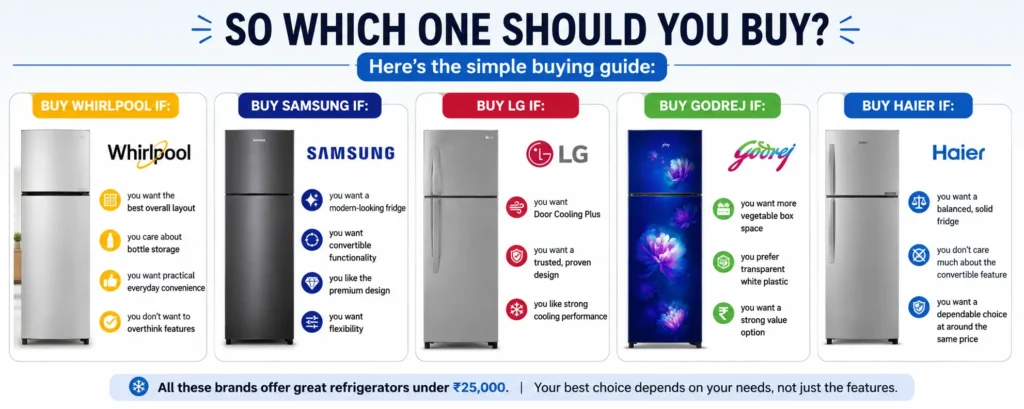
So which one should you buy?
Here’s the simple buying guide:
Yes — here’s a clean table format you can use in the blog:
Brand
Buy This If You Want…
Best For
Whirlpool
Best overall layout, better bottle storage, practical everyday convenience, and simple features
Best overall practical choice
Samsung
Modern design, convertible functionality, premium look, and flexible usage
Best for design and flexibility
LG
Door Cooling Plus, trusted design, and strong cooling performance
Best for cooling performance
Godrej
More vegetable box space, transparent white plastic interiors, and strong value
Best value option
Haier
Balanced performance, dependable usage, and similar pricing without needing convertible features
Best balanced choice
2-star vs 3-star: which one should you choose?
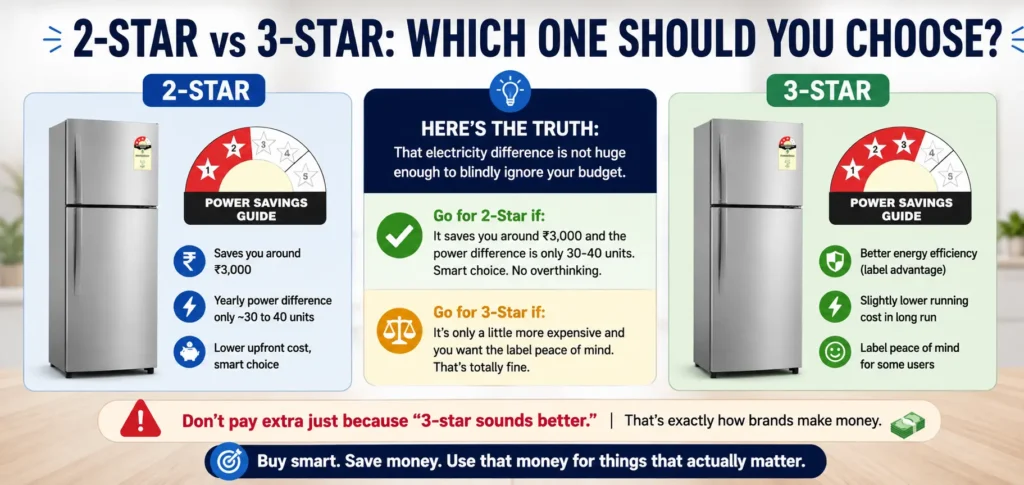
If the 2-star version saves you around ₹3,000 and the yearly power difference is only around 30 to 40 units, I’d seriously consider the 2-star model.
Here’s the truth: that electricity difference is not huge enough to blindly ignore your budget.
If the 3-star model is only a little more expensive and you want the label peace of mind, fine.
But don’t pay extra just because “3-star sounds better.”
That’s exactly how brands make money.
If you already know what type of refrigerator you need and just want the best options by budget, we have you covered. Our best double door refrigerator under 25000 guide breaks down the top picks for families on a mid-range budget. If you are looking for something more compact, check our best single door refrigerator in 2026 article for simple and affordable options. For those with a slightly higher budget, our best refrigerator under 30000 list covers premium models worth considering. And if flexible storage is your priority, our best convertible refrigerator in 2026 guide will help you decide if that feature is worth the extra cost.
Final verdict
If I had to keep it simple:
Best overall: Whirlpool 235L
Best modern premium choice: Samsung
Best cooling tech: LG
Best vegetable storage: Godrej
Best balanced value choice: Haier
If you don’t want to think too much, just pick the one that fits your family’s storage style.
That’s the real game.
Still unsure about which type or size is right for your home? Go back to the basics with our complete Refrigerator Buying Guide 2026 where we explain every feature, capacity range, and buying factor in simple terms.
FAQs
1. Which is the best double door refrigerator under 25000 in 2026?
The best double door refrigerator under 25000 in 2026 depends on your needs, but Whirlpool, Samsung, LG, Godrej, and Haier are among the top options for build quality, cooling, and storage.
2. Is a 2-star refrigerator good enough in 2026?
Yes, a 2-star refrigerator can be a smart buy in 2026 if it saves you money. The yearly electricity difference compared to a 3-star model is usually not very big.
3. Should I buy a convertible refrigerator?
Only if you actually need to change freezer space into fridge space. If you don’t use that feature, a non-convertible model is usually better value.
4. Which brand is better: LG or Samsung?
Both are excellent. Samsung feels more modern and offers convertible options, while LG is strong in cooling thanks to its Door Cooling Plus technology.
5. Is Whirlpool a good refrigerator brand?
Yes, Whirlpool is a very good option if you want practical storage, strong build quality, and good everyday usability.
6. What is the difference between 2-star and 3-star refrigerators?
The difference is in energy efficiency. A 3-star refrigerator usually uses slightly less electricity than a 2-star model, but the yearly difference is often small.
7. Do I need a stabilizer for a refrigerator?
Many modern refrigerators offer stabilizer-free operation, but using a stabilizer is still a smart safety move if your home has voltage fluctuations.
8. Which refrigerator has the best storage layout?
Whirlpool stands out for practical door shelf design and better everyday storage space.
9. Is a frost-free refrigerator better than a direct cool one?
Yes, if you want convenience. Frost-free refrigerators prevent ice buildup and are easier to maintain.
10. What size refrigerator is best for a family of 3 to 4 people?
A double door refrigerator in the 235L to 245L range is usually a good fit for a family of 3 to 4 people.
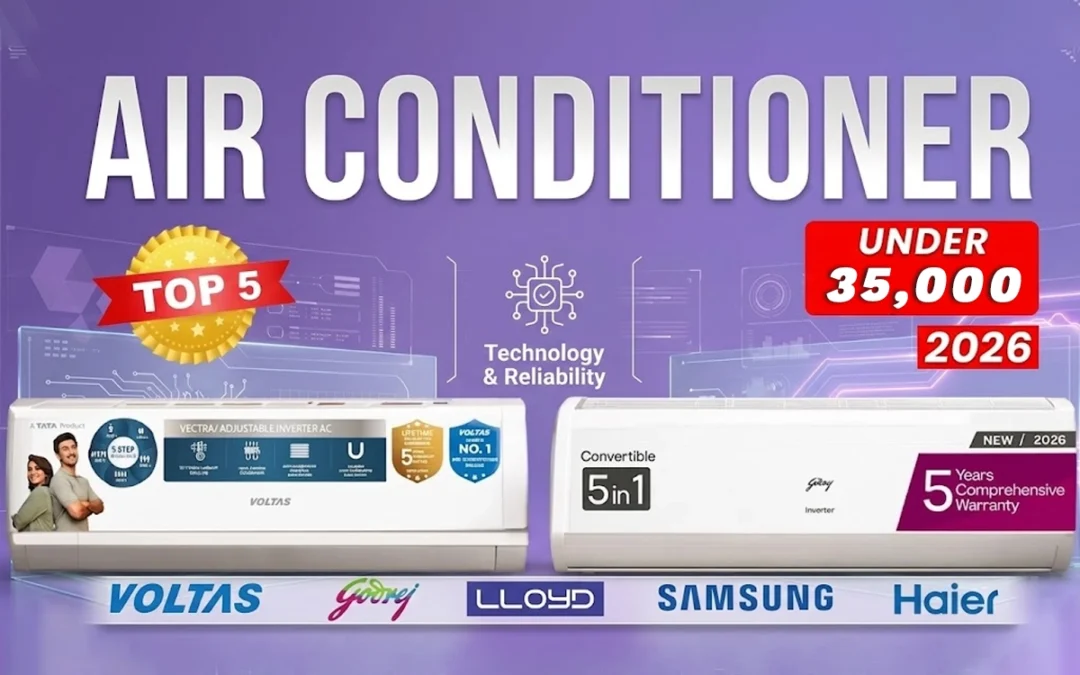
Finding the best AC under 35000 can feel overwhelming with so many brands and features available. The good news is that you do not need to overspend to enjoy powerful cooling and reliable performance. Modern inverter ACs in this price range offer excellent energy efficiency, smart features, and durable build quality.
This comprehensive guide will help you choose the best AC in India for 2026, understand key buying factors, and compare the top models from trusted brands like Voltas, Godrej, Lloyd, Samsung, and Haier.
New to AC buying altogether? Start with our complete AC Buying Guide first.
In This Post
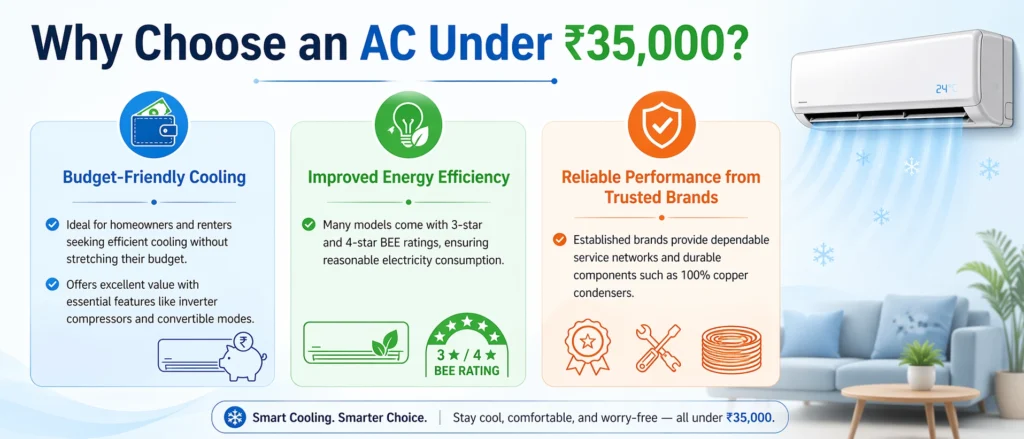
Why Choose an AC Under ₹35,000?
Budget-Friendly Cooling
Ideal for homeowners and renters seeking efficient cooling without stretching their budget.
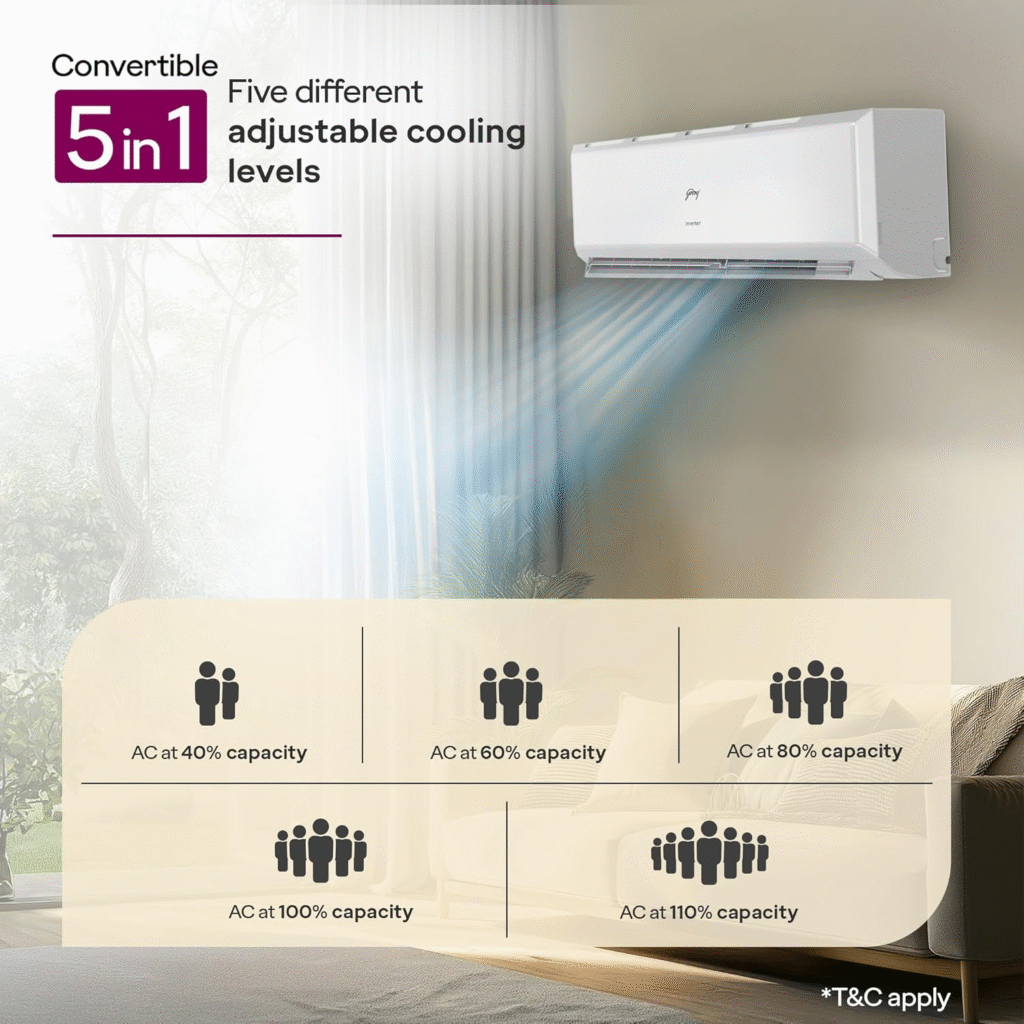
Offers excellent value with essential features like inverter compressors and convertible modes.
Improved Energy Efficiency
Many models come with 3-star and 4-star BEE ratings, ensuring reasonable electricity consumption.
Reliable Performance from Trusted Brands
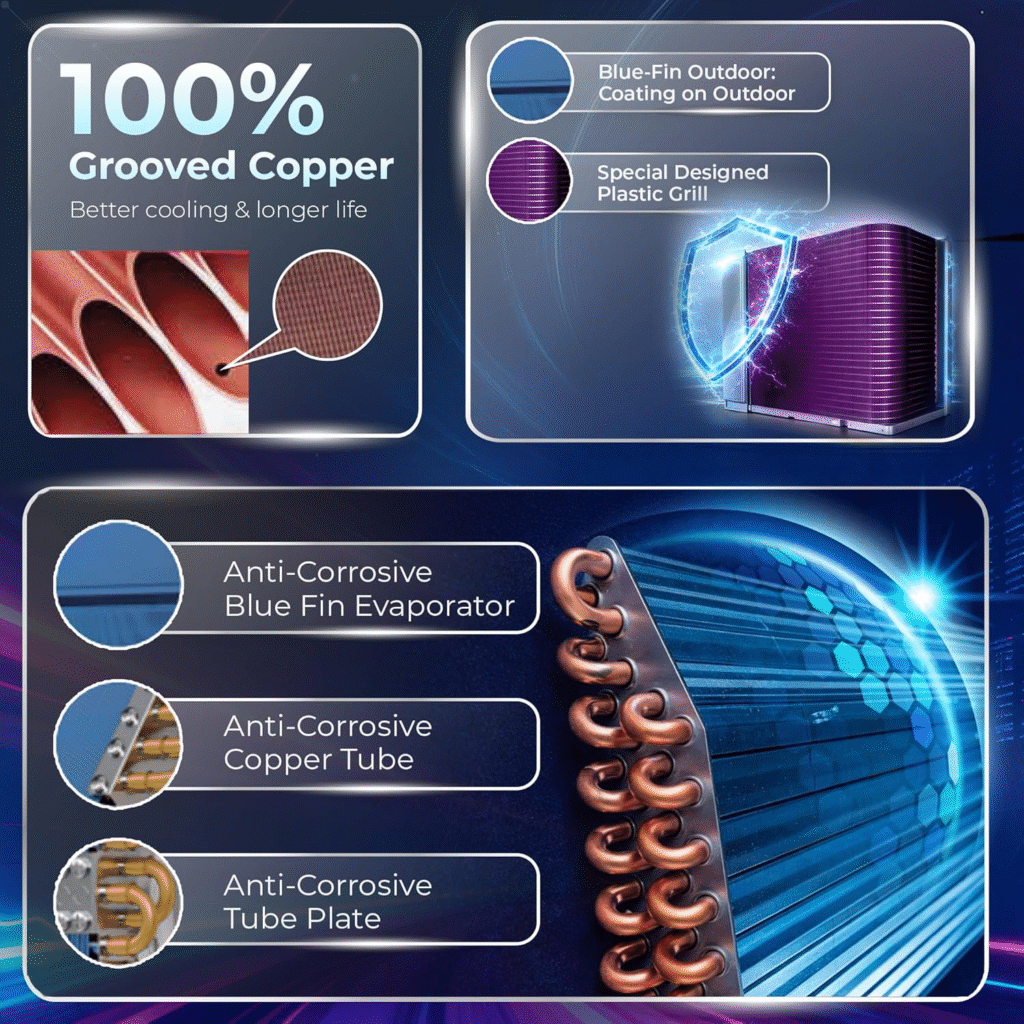
Established brands provide dependable service networks and durable components such as 100% copper condensers.
Images sourced from Amazon. All copyrights belong to their respective owners.
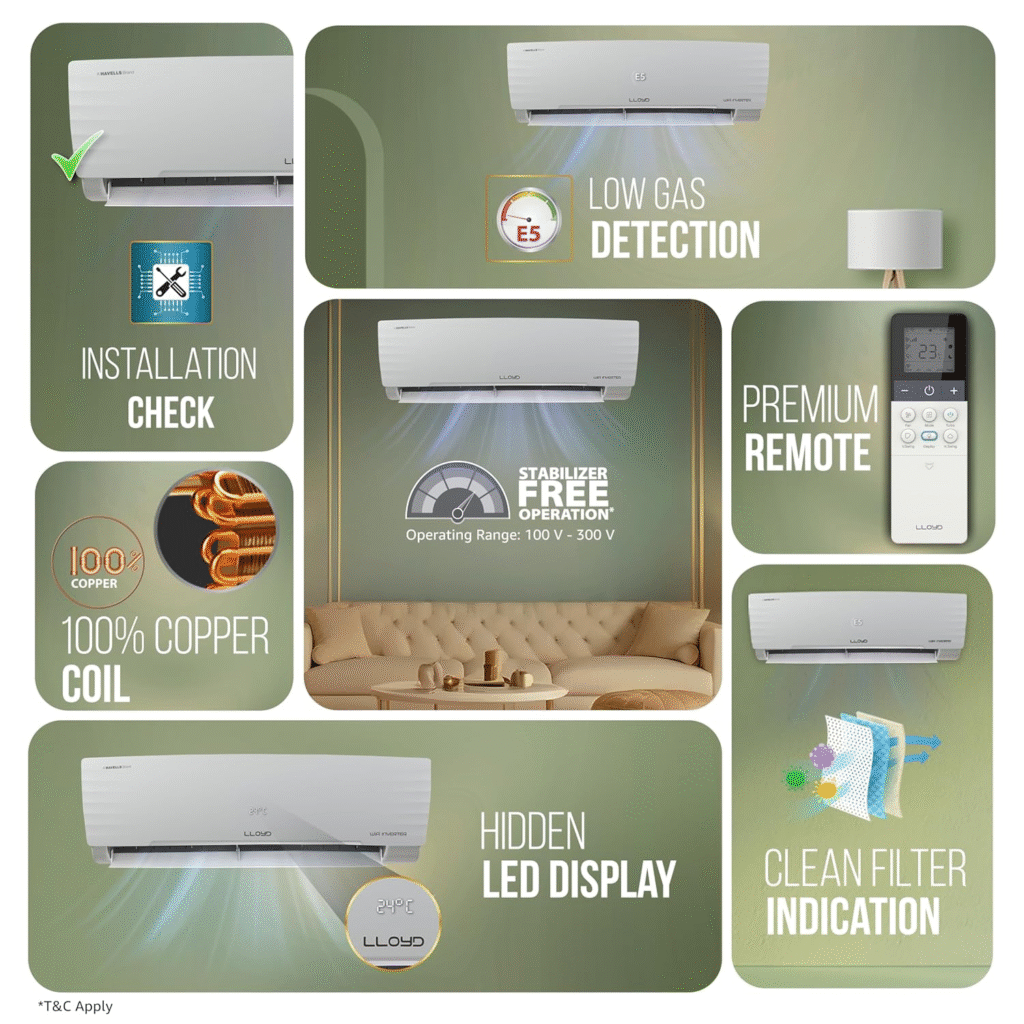
If your priority is simple—strong cooling without any drama—this is the one. It delivers higher real cooling than most in this range, so rooms up to 170–180 sq. ft. cool faster and more evenly. The airflow is strong, build quality is solid with full copper components, and it skips unnecessary features to focus on performance. Add a reliable service network and straightforward warranty, and you get an AC that just works when it matters.
Images sourced from Amazon. All copyrights belong to their respective owners.
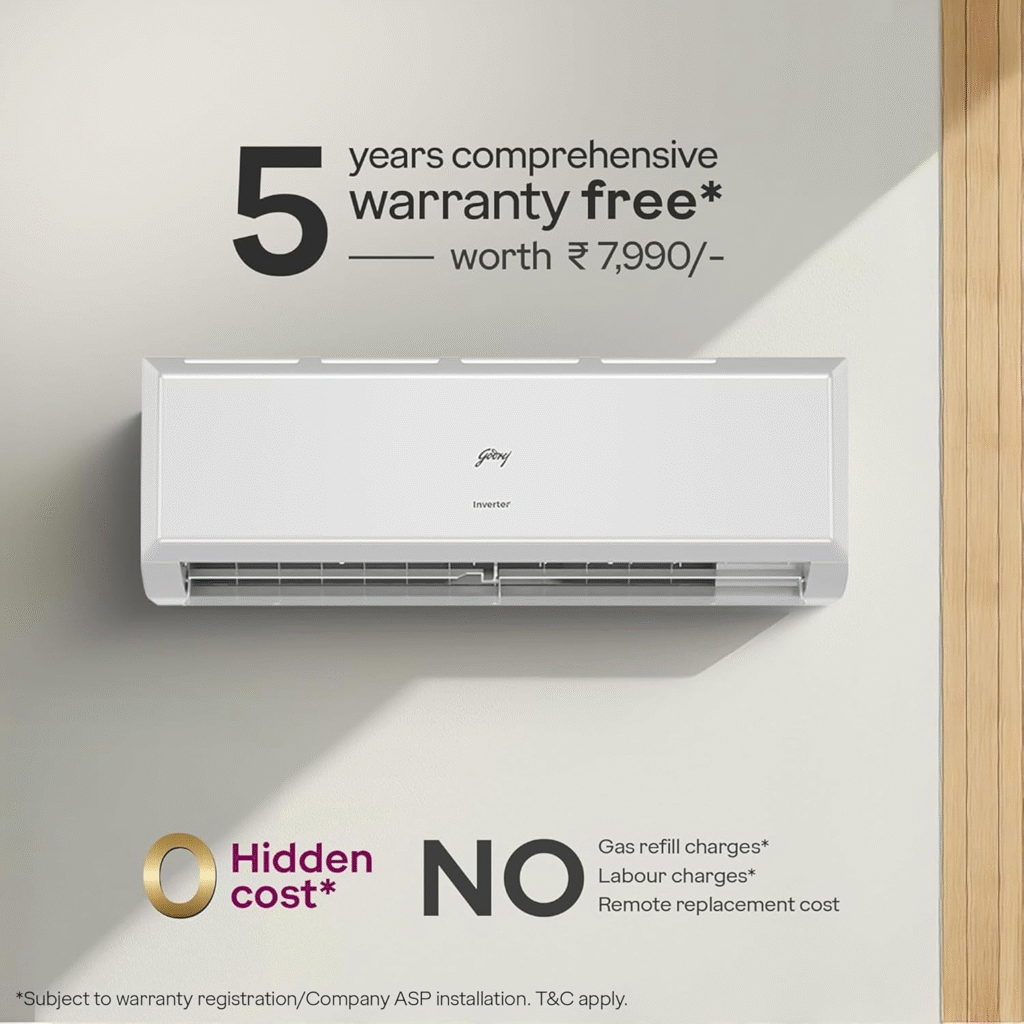
If you want to save on electricity without paying extra upfront, this one makes a lot of sense. You’re getting a 4-star AC at almost 3-star pricing, which is rare, and that directly translates into lower power bills over time. Cooling is solid for standard rooms (up to ~150 sq. ft.), nothing extreme but reliable, and features like i-Sense help direct cooling where you actually are. The biggest win here is the strong, no-nonsense warranty, which most brands don’t match in this range. It’s not about flashy features—it’s about balanced performance with long-term savings.
Images sourced from Amazon. All copyrights belong to their respective owners.
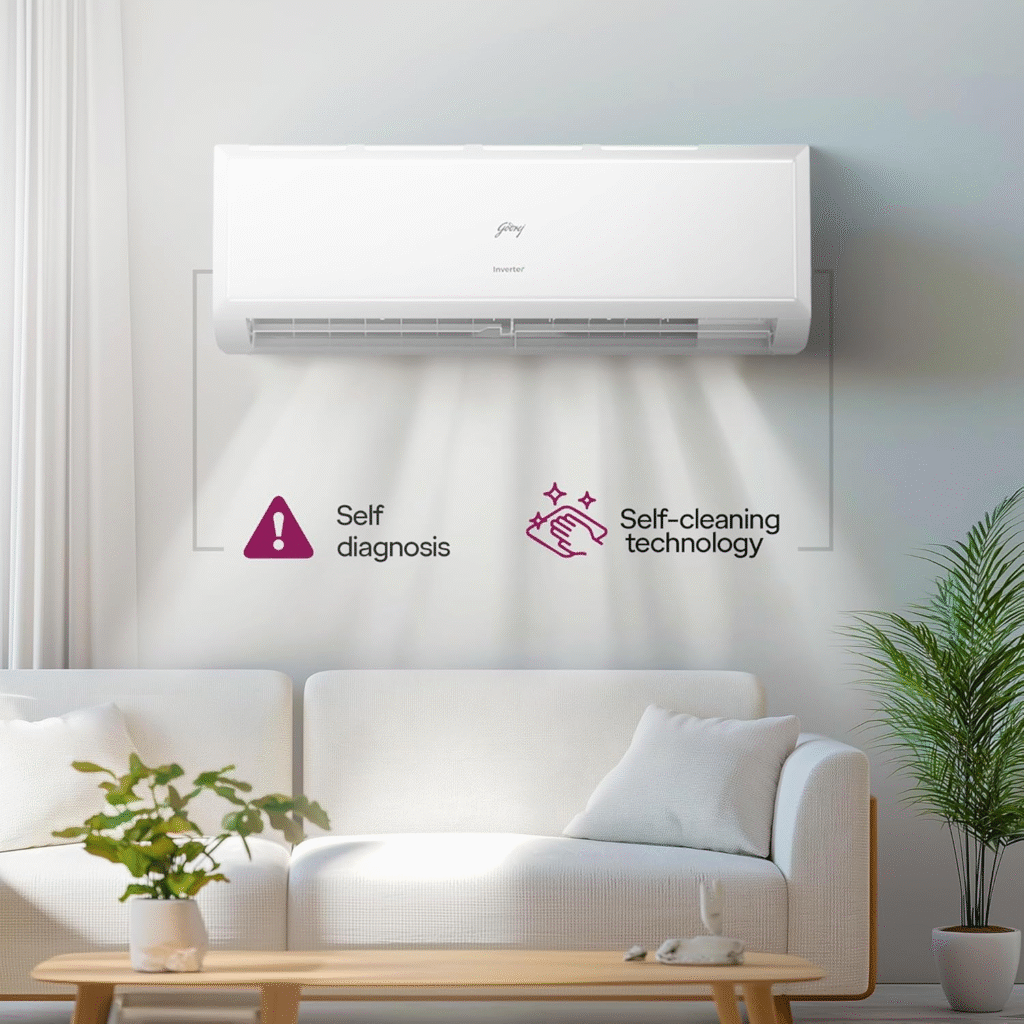
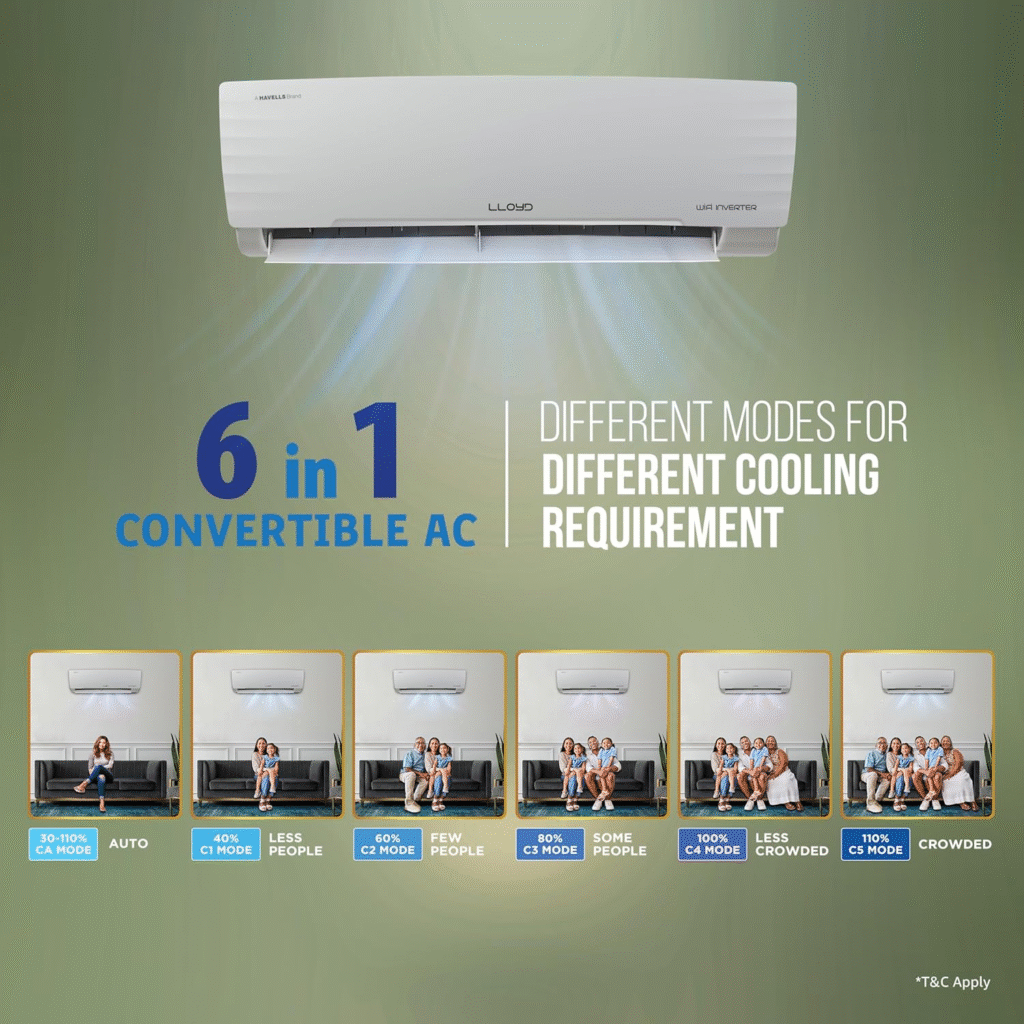
If you’re someone who likes extra features without spending extra money, this AC makes sense. Cooling is standard (~1.36 ton), so it works well for rooms up to 150 sq. ft., but the real focus here is usability. You get things like Ice Clean technology for self-cleaning and 6-in-1 convertible modes, which give you more control than most ACs in this range. It’s not the strongest in cooling or warranty, and you don’t get Wi-Fi, but for the price, it packs in more functionality than expected. It’s a feature-first choice for budget buyers who want a bit more than just basic cooling.
Images sourced from Amazon. All copyrights belong to their respective owners.
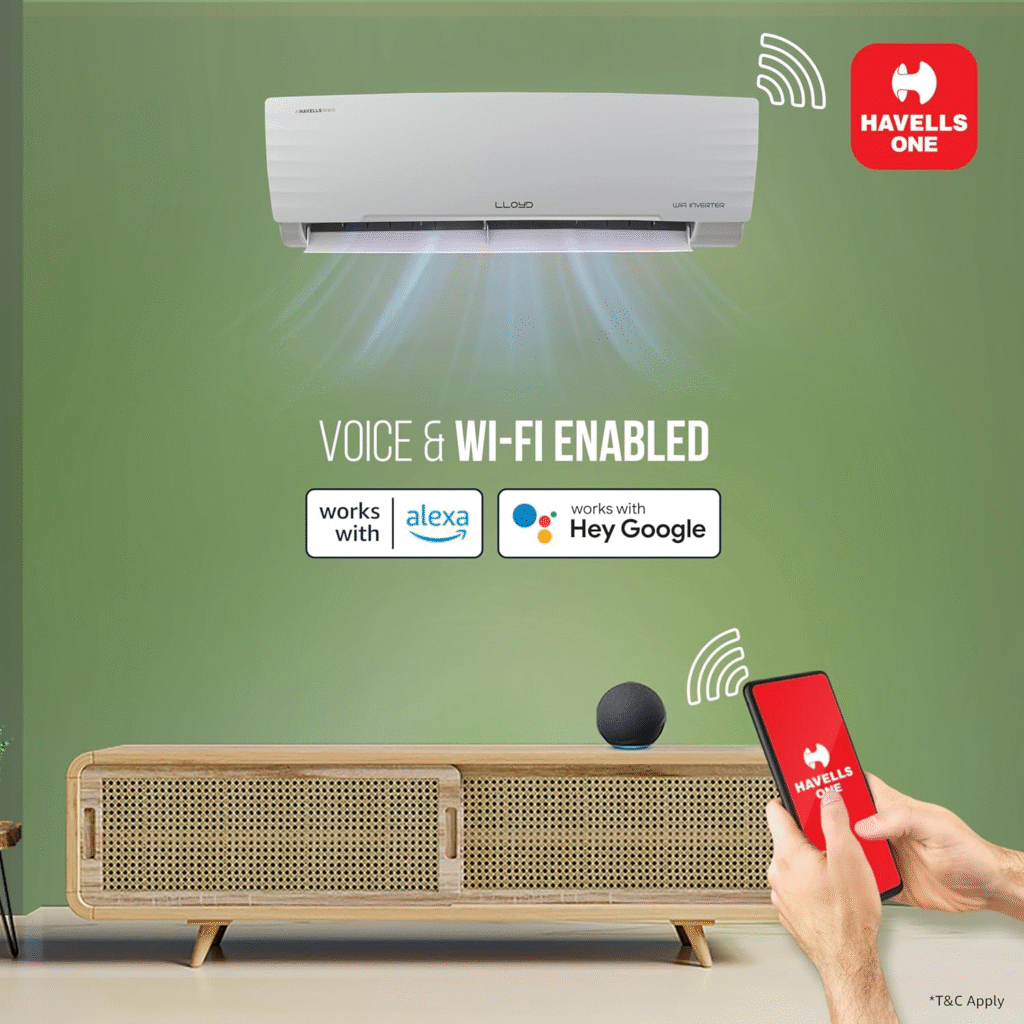
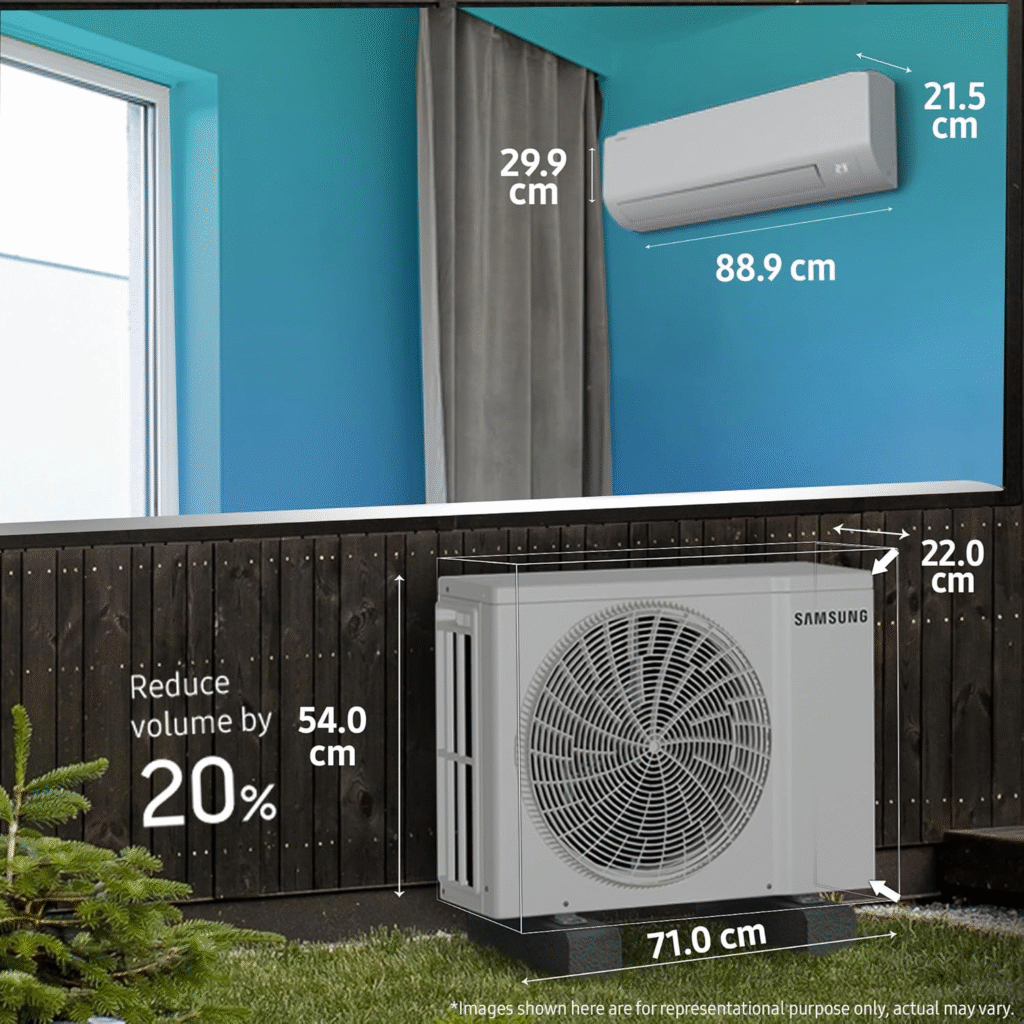
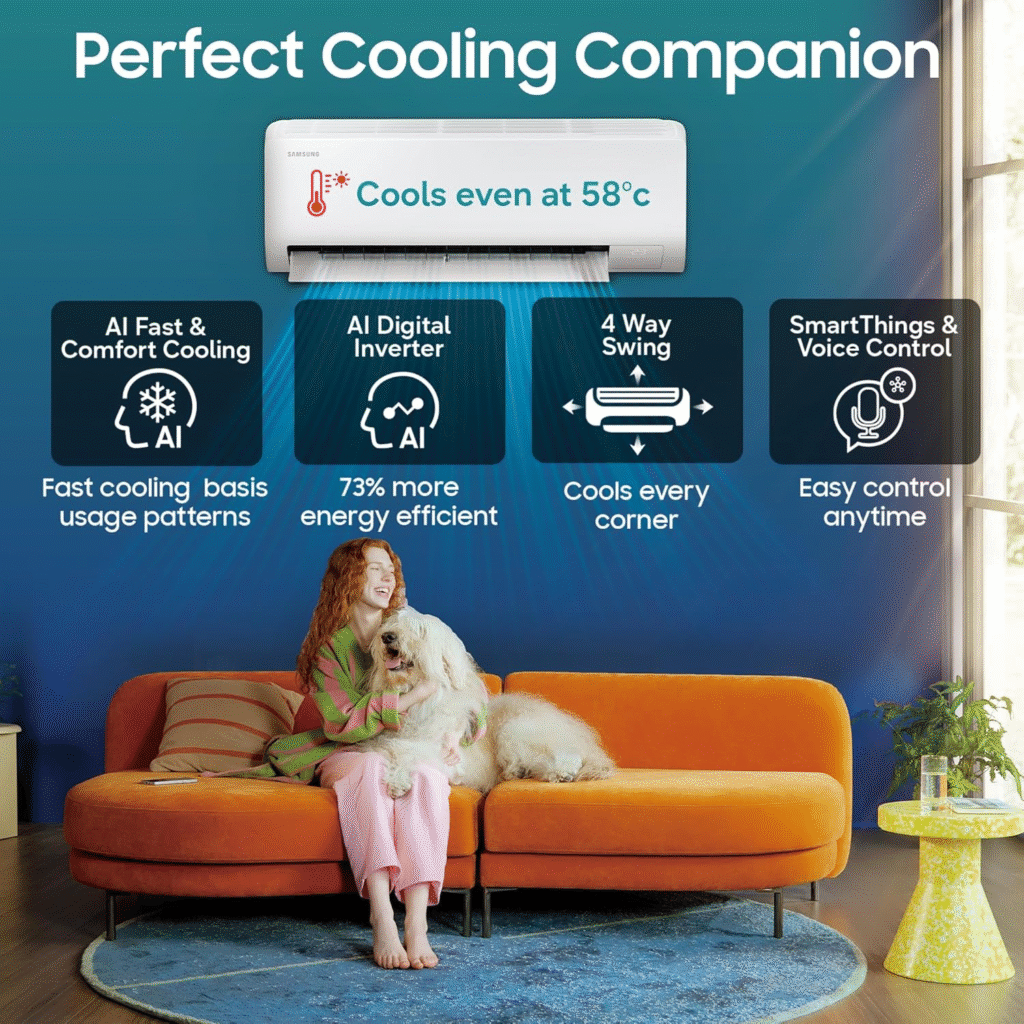
If you want an AC that feels a bit more modern and convenient, this is where Samsung stands out. Cooling is slightly better than most (~1.38 ton), but the real advantage is comfort and control—you get 4-way air swing for more even cooling and Wi-Fi connectivity to control everything from your phone. It also runs quieter than most in this range, which you’ll notice at night. It does cost a little more, and you still don’t get air filters, but the strong warranty and smart features make it a solid choice if you want more than just basic cooling.
Images sourced from Amazon. All copyrights belong to their respective owners.
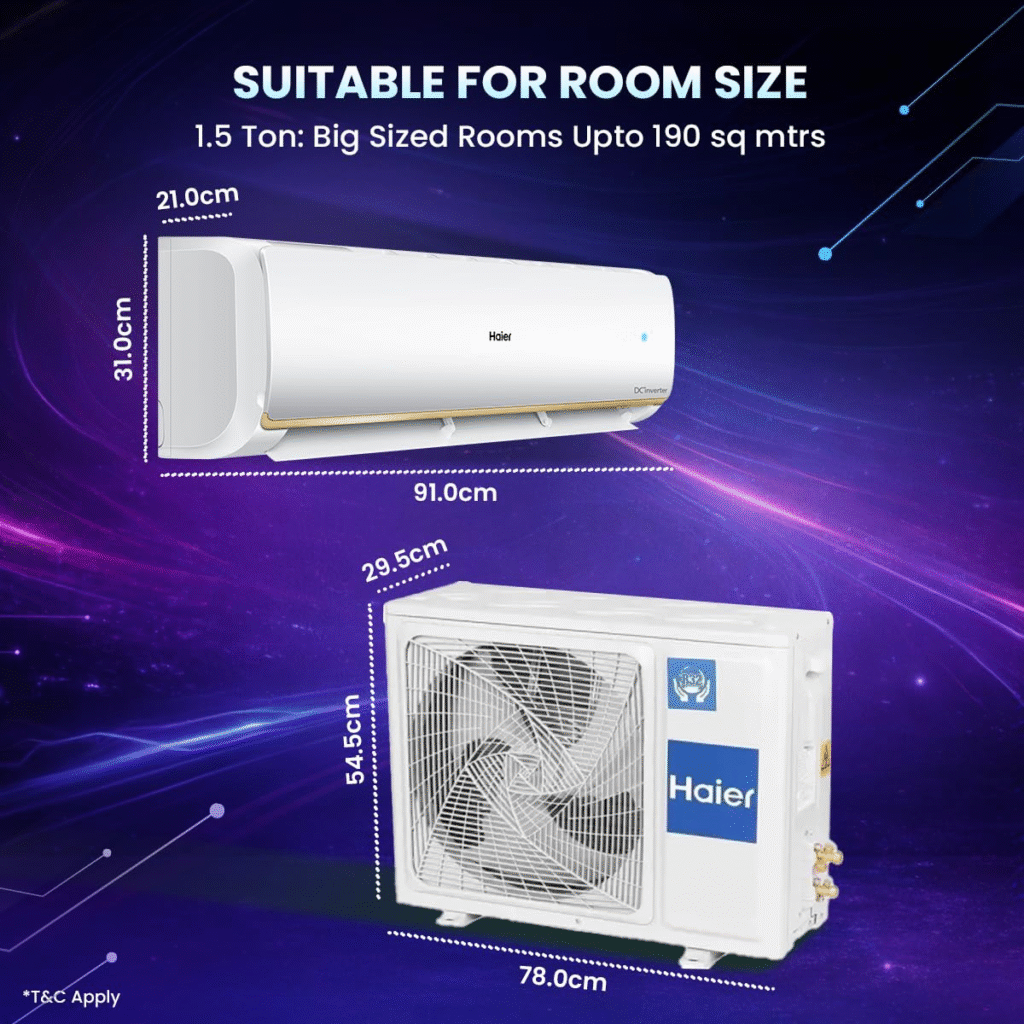
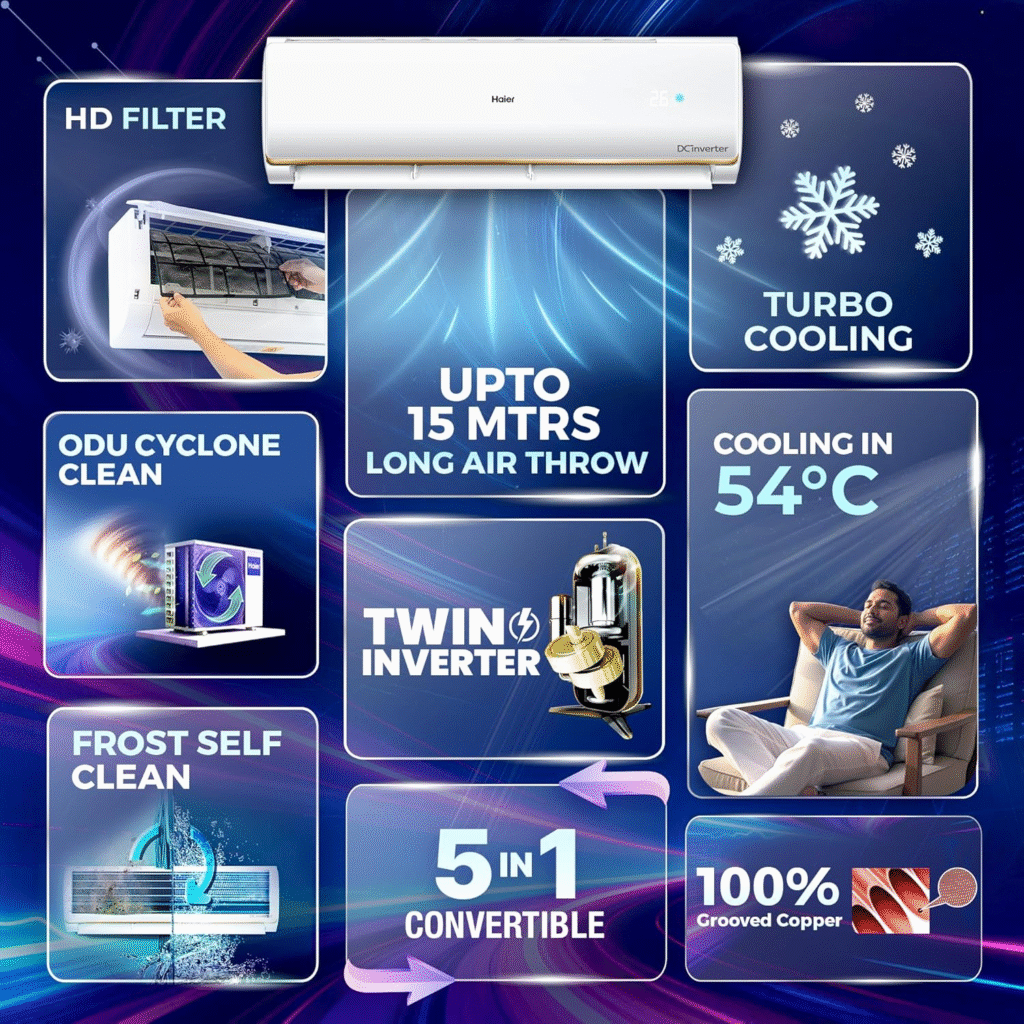
If you’re looking for something a bit different in this price range, Haier goes in a slightly more tech-focused direction. Cooling is pretty standard at around 1.36 ton, so it works well for rooms up to 150 sq. ft. Nothing surprising there. Where it stands out is the twin inverter compressor, which helps the AC run smoother and adjust better to load. You also get features like frost self-clean and an outdoor cleaning mode, which actually help keep performance consistent over time. The build quality is solid overall, no major complaints. The only thing you need to be careful about is the warranty—it’s not as straightforward as others, so read the terms properly. If you’re okay with that, this is a good option for getting more tech at a similar price.
Inverter compressors adjust power consumption based on cooling demand.
Provides faster cooling and future-proofs your purchase if you move to a larger room.
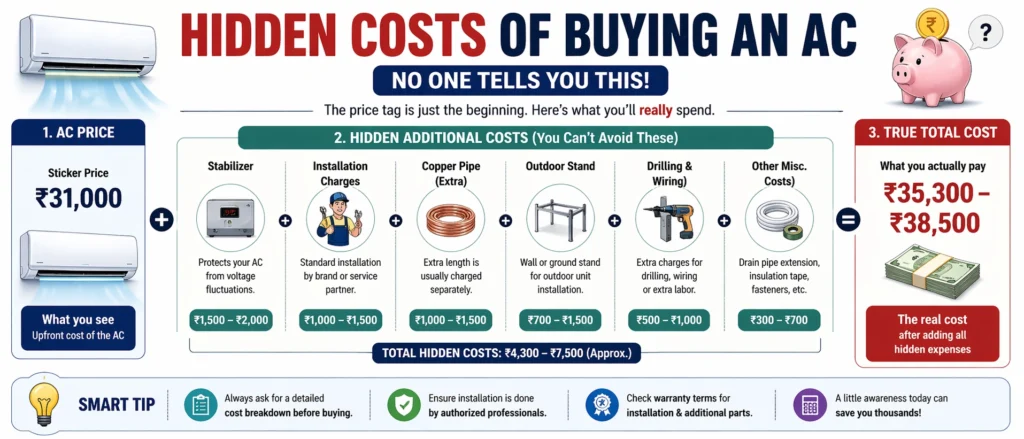
Additional Costs to Consider
Expense
Estimated Cost
Stabilizer
₹1,500 – ₹2,000
Installation Charges
₹1,000 – ₹1,500
Outdoor Unit Stand
₹500 – ₹1,000
Extra Copper Piping
As required
Pro Tip: Always ensure the installer performs vacuuming of copper pipes before the first use to maximize efficiency and lifespan.
How to Choose the Right AC for Your Home
Assess Room Size
Ensure the AC capacity matches your room dimensions for optimal performance.
Evaluate Energy Efficiency
Consider long-term electricity savings when comparing star ratings.
Check Warranty and After-Sales Service
A strong service network is essential for maintenance and repairs.
Compare Features vs Price
Avoid paying extra for features you may not use.
Conclusion
Choosing the best AC under 35000 in India is easier when you focus on cooling capacity, energy efficiency, warranty, and essential features. The Voltas 1.5 Ton 3-Star Inverter AC stands out as the best overall option due to its powerful cooling and reliability. However, if energy efficiency or smart features are your priority, Godrej and Samsung offer excellent alternatives.
Evaluate your room size, usage pattern, and budget to make a confident and informed decision that keeps you comfortable throughout the summer.
FAQs
1. Which is the best AC under 35000 in India?
The Voltas 1.5 Ton 3-Star Inverter AC is widely considered the best due to its powerful cooling and reliability.
2. Is a 3-star AC sufficient for home use?
Yes, a 3-star AC is ideal for moderate usage of 4–6 hours per day during the summer months.
3. How much electricity does a 1.5 ton inverter AC consume?
On average, it consumes between 0.8 to 1.5 units per hour, depending on usage and efficiency.
4. Do I need a stabilizer for an inverter AC?
Although many ACs support stabilizer-free operation, using a stabilizer is recommended for protection against voltage fluctuations.
5. Which AC brand offers the best warranty?
Godrej and Samsung typically provide some of the most comprehensive warranty packages in this price range.
Buying an AC feels simple… until you actually try.
Tonnage, star ratings, inverter vs non-inverter, ISEER, copper coils — suddenly everything feels like a tech exam you never signed up for.
Don’t worry. I’ll make this simple.
This guide to the Best 1.5 Ton 5 Star AC in India 2026 is based on real testing — not spec-sheet reading or unboxing videos. Every AC mentioned here was actually purchased, installed, and used to give you an honest and reliable recommendation.
New to AC buying altogether? Start with our complete AC Buying Guide first.
Let’s get into it.
In This Post
Best 1.5 Ton 5 Star AC in India 2026
Here’s the ranking — based on real usage, real testing, real rooms.
Images sourced from Amazon. All copyrights belong to their respective owners.
Best for: Rooms up to 150–155 sq ft | Budget: ~₹42,000
Let’s start with Carrier.
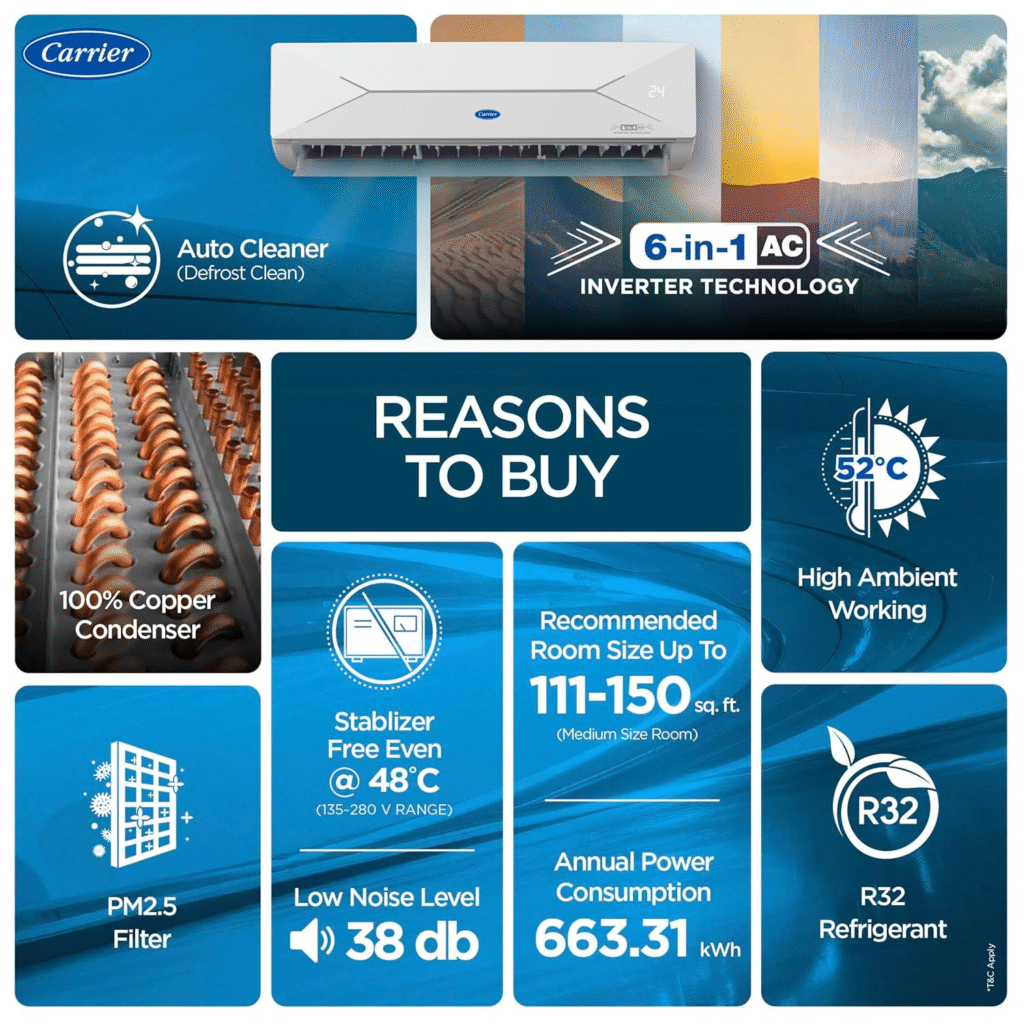
The first thing to know — the actual cooling capacity here is 1.36 tons. Not 1.5. So if your room is larger than 155 sq ft, just skip this one.
Here’s where it gets interesting — Carrier compensates with a solid ISEER rating of 5.6, which is very good. Lower cooling capacity, but more efficient use of the electricity it draws.
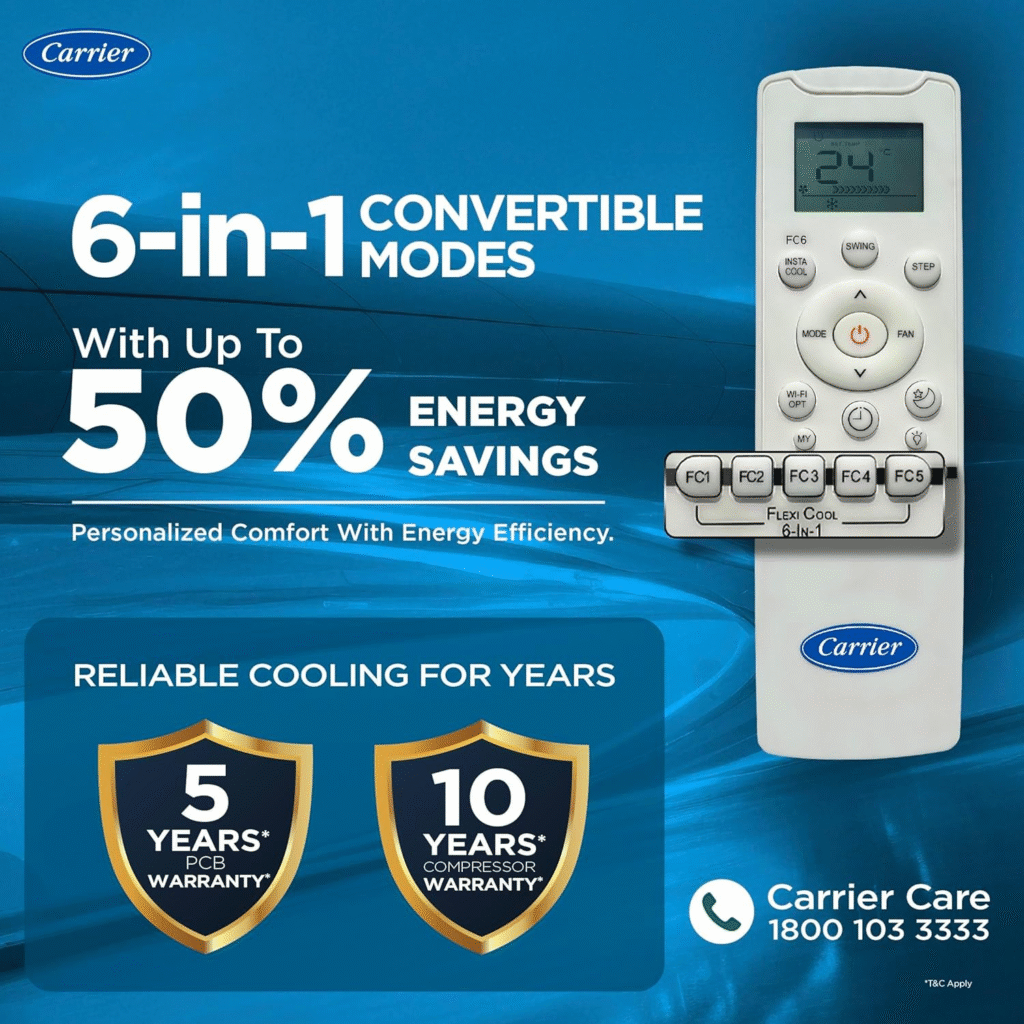
You get Carrier’s AI Flexi Cool inverter tech with convertible 6-in-1 modes, ranging from 0.8 ton to 1.7 ton in theory.
Common mistake: Getting excited about the 1.7 ton “turbo” mode. At full blast, this AC will run at that mode for only 20–25 minutes before automatically dropping back to auto. So don’t expect sustained high-capacity cooling.
That said — in the right room size (150–155 sq ft), this AC performs brilliantly. Tested it in a challenging setup with more open area than a normal room, and it handled the load well.
Quality check passed: 100% copper condenser and tubes — verified by opening the unit before installation. Carrier’s Aqua Clear coating on outdoor coils and Hydro Blue coating on indoor coils are genuinely good anti-corrosion protection.
You also get dual filtration — HD filter + PM 2.5 filter — and auto-clean technology that actually works.
The one real con: No Wi-Fi. Carrier mentions “AI mode” but without connectivity, it’s more of a marketing label than a real feature.
Noise level: Around 40 decibels in real use (company claims 38 dB).
Warranty: 1-year comprehensive | 5 years on PCB | 10 years on inverter compressor
My recommendation: If your room is 150 sq ft or under and your budget is around ₹42,000 — this is a solid buy. If your room is bigger, look at the options below.
Images sourced from Amazon. All copyrights belong to their respective owners.
Best for: Rooms up to 160–165 sq ft | Budget: ~₹47,500
LG is LG. Six years of buying and testing their ACs, and the consistency never disappoints.
Cooling capacity here is 1.42 tons — same as last year’s model, but the ISEER has improved significantly to 5.7. How? The compressor hasn’t changed much — it’s the motor that’s been upgraded. Same cooling, less electricity. That’s the right kind of progress.
LG’s Dual Rotary Inverter Compressor is one of the best in this price range. Tested extensively across rooms and multiple years — performance doesn’t degrade over time. Noise levels don’t increase. That long-term consistency is rare.
Here’s where it gets interesting: LG gives you four-way air swing. This sounds like a small feature. It’s not. When you use it in a bedroom — where the AC placement is rarely perfect — four-way swing means the cold air actually reaches every corner. You’ll feel the difference the first week.
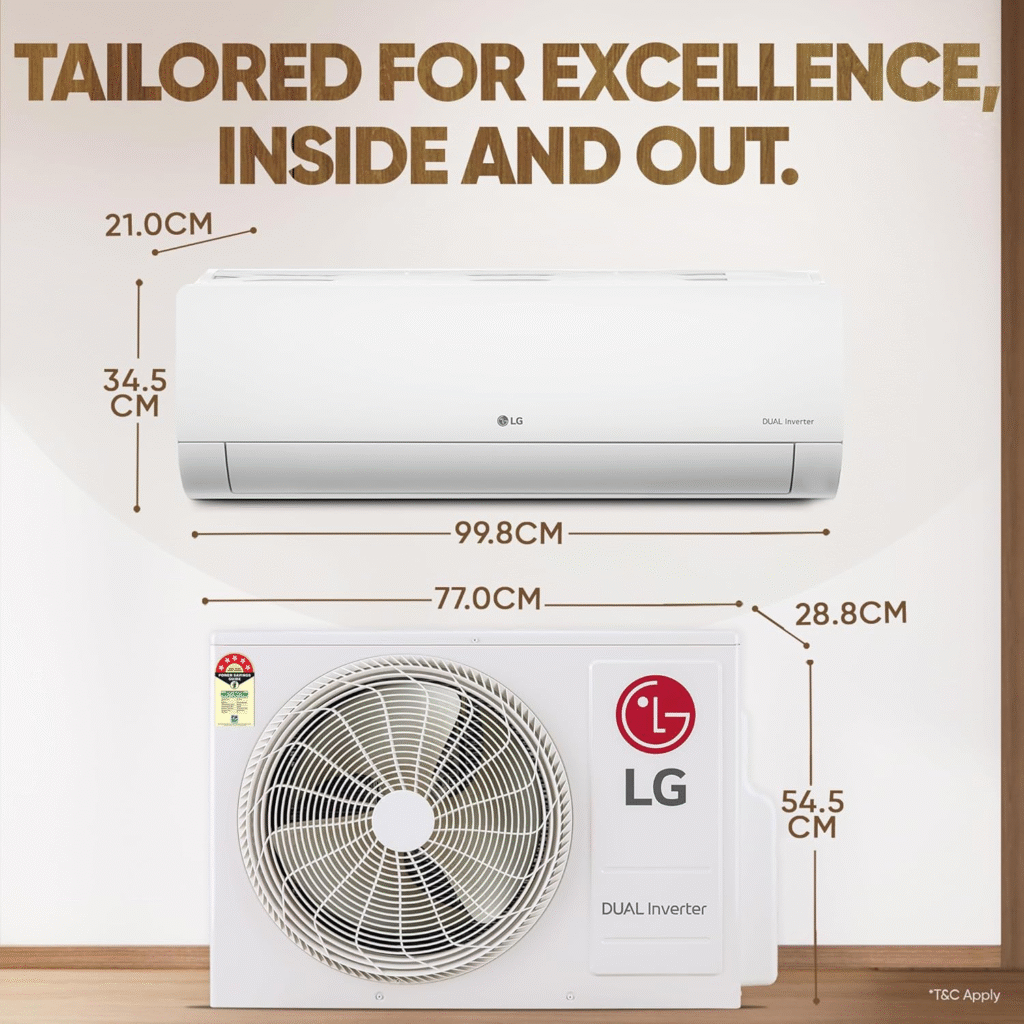
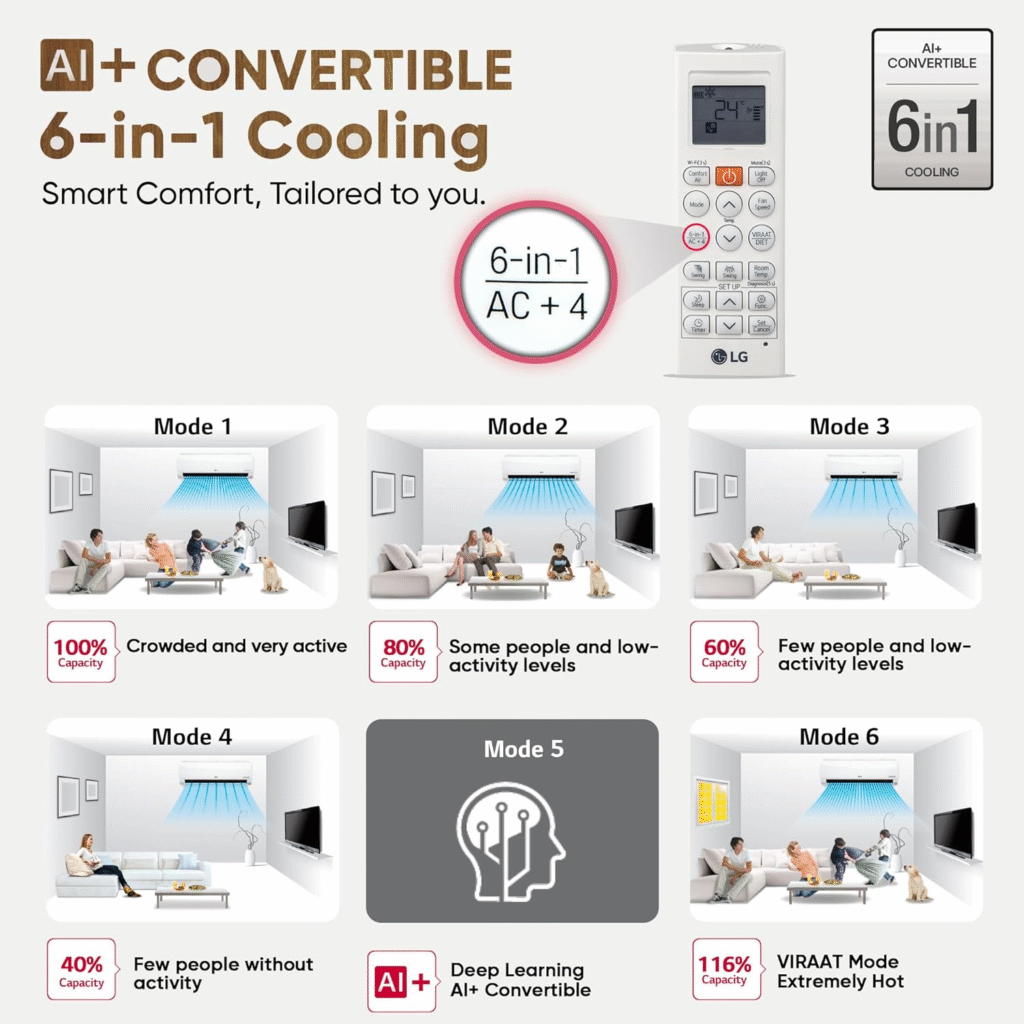
Also get: AI convertible 6-in-1 modes (40% to 110%), Virat mode (LG’s name for the turbo boost we discussed), Gold Fin Plus and Ocean Black Protection on coils, auto-clean, smart diagnosis.
Quality check: Inner grooved copper tubes — a detail most brands skip. The refrigerant passes through faster, meaning slightly better cooling efficiency. Verified before installation.
The cons — and I’ll be direct:
No Wi-Fi. In 2026. That’s a real miss. If you want Wi-Fi on LG, you’re paying ₹2,500 extra for a separate model — which already puts it above Blue Star pricing.
Also no PM 2.5 filter — just the standard HD filter. For Indian air quality, that’s a gap.
Noise level: LG claims 31 decibels. Ambient noise in a room is already 37–38 dB, so you literally cannot measure 31 dB. What this means in practice: you can barely hear it’s on.
Warranty: 1-year comprehensive | 5 years on PCB (both indoor and outdoor — important detail) | 10 years on compressor
Note on gas charging warranty: Only covered for the first year. After that, gas top-ups are at your expense.
My recommendation: If cooling performance and long-term reliability are your priority, and Wi-Fi is not a deal-breaker — LG is an excellent choice for rooms up to 165 sq ft.
Images sourced from Amazon. All copyrights belong to their respective owners.
Best for: Rooms up to 165–170 sq ft | Budget: ~₹46,500
Last year this was my #1. This year it’s tied at #2 with LG — and honestly, it could easily be argued as the better pick of the two.
Cooling capacity: 1.45 tons — the highest among the #2 and #3 picks. Tested it in a 170 sq ft room. It handled it. That’s not what the spec sheet says is recommended — that’s what actually happened in the test.
ISEER of 5.63 — incredibly good for the capacity it’s delivering.
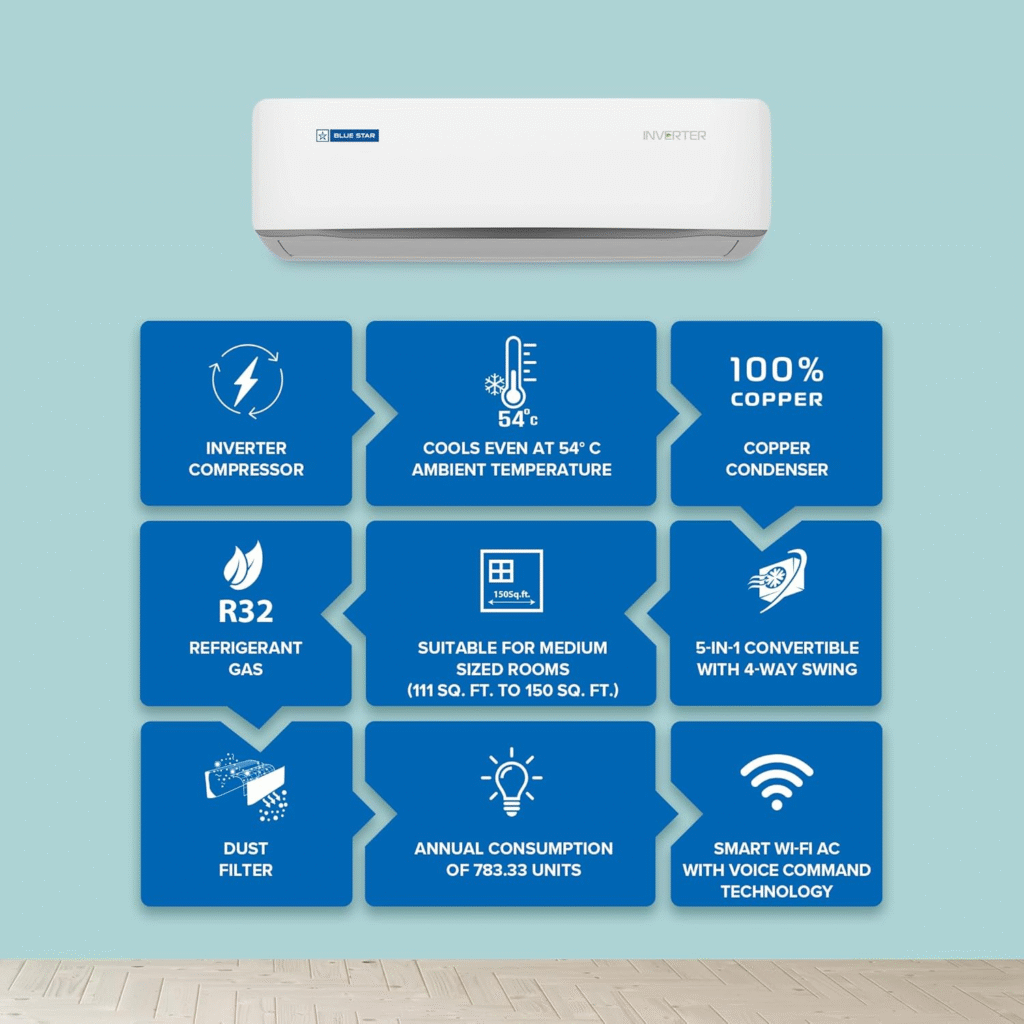
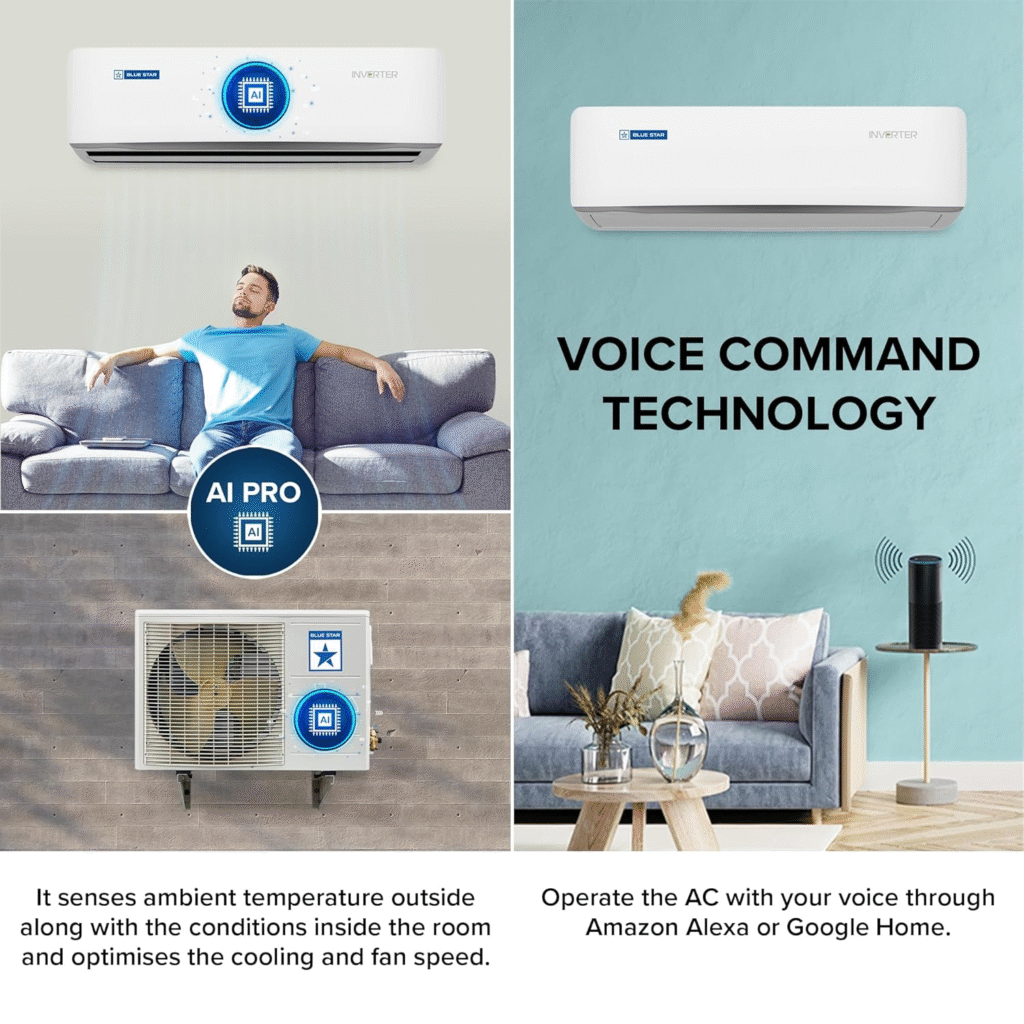
The AI Pro inverter compressor with 5-in-1 convertible modes (40% to 110%) works flawlessly. Quality check before installation: 100% copper tubes, compressor blanket covering — everything top notch. Anti-corrosive Blue Fins on indoor and outdoor coils — proper chemical coating, not marketing.
What Blue Star gets right that LG doesn’t:
Wi-Fi. Built-in. Works with Alexa, Google Assistant, and the Blue Star app. No extra cost, no separate model needed.
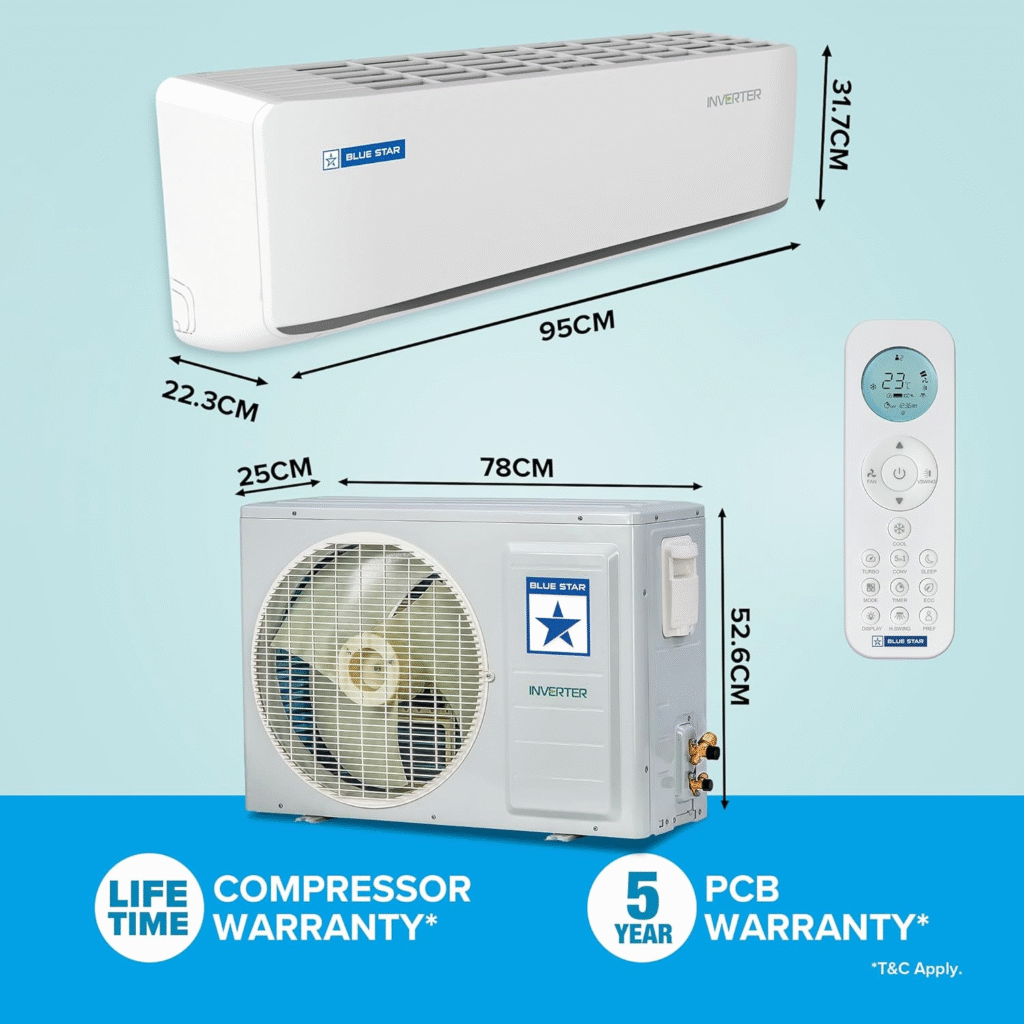
And the warranty — this is where Blue Star genuinely pulls ahead. 5-year comprehensive warranty (covering all technical faults, except plastic parts and remotes). That kind of assurance at this price is rare. Plus 10 years on the compressor.
Four-way air swing — yes, same as LG. Both have it.
The one real con: No PM 2.5 filter. Just a basic dust filter. In 2026, in Indian cities, this is genuinely frustrating. Blue Star, if you’re reading this — please fix it.
Noise level: Very quiet. Comfortable for bedrooms.
My recommendation: If you want Wi-Fi, a stronger warranty, slightly more cooling capacity, and a room up to 170 sq ft — Blue Star edges ahead of LG. The only thing LG does better here is the PM 2.5 filter (which Carrier has, but Blue Star and LG don’t offer at this tier).
Images sourced from Amazon. All copyrights belong to their respective owners.
Best for: Rooms up to 160–165 sq ft | Budget: ~₹48,000–50,000
This is where it gets interesting.
Cooling capacity dropped this year — 1.42 tons, down from a full 1.5 tons last year. That’s disappointing on paper.
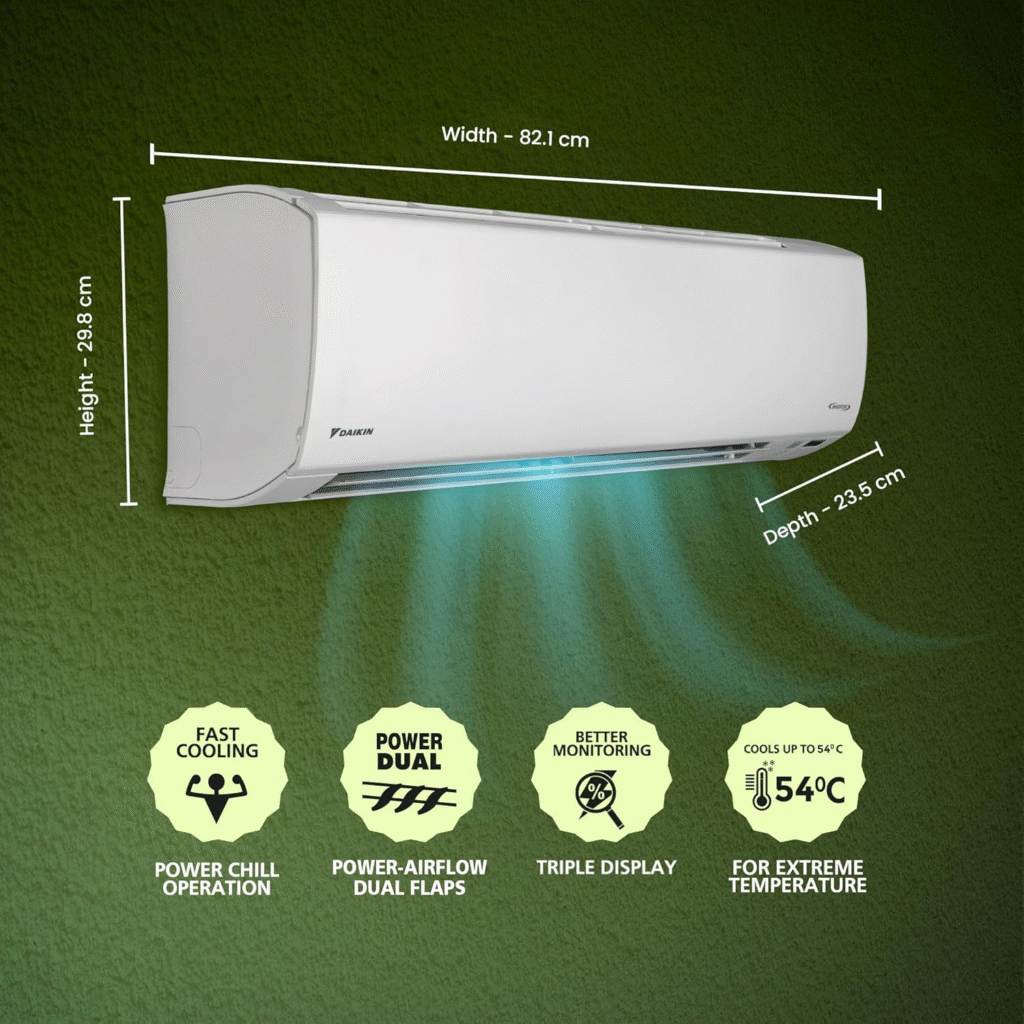
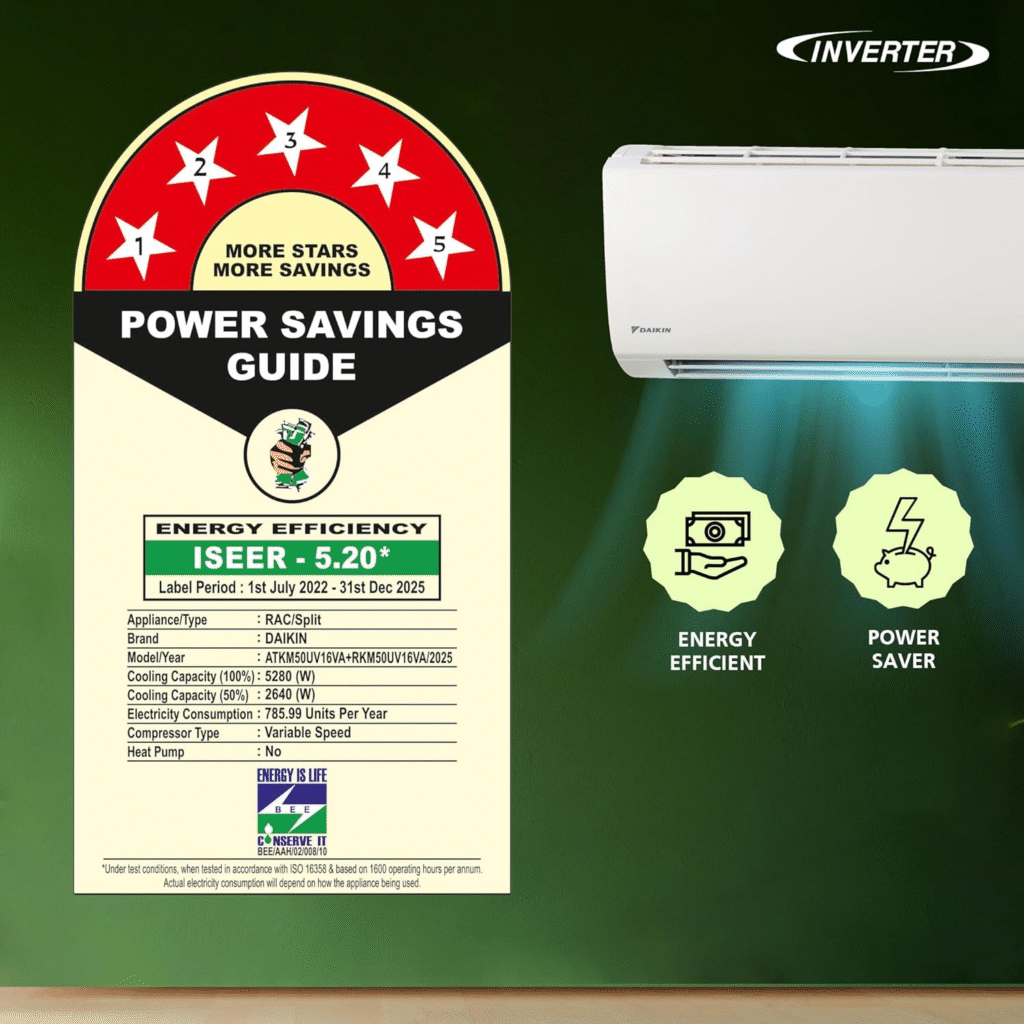
But here’s the truth: it doesn’t matter. Because this is Daikin. The technology they pack into that 1.42-ton capacity makes it perform like other brands’ 1.5-ton units. Tested it. Compared it. The result is unbeatable cooling in its room size range.
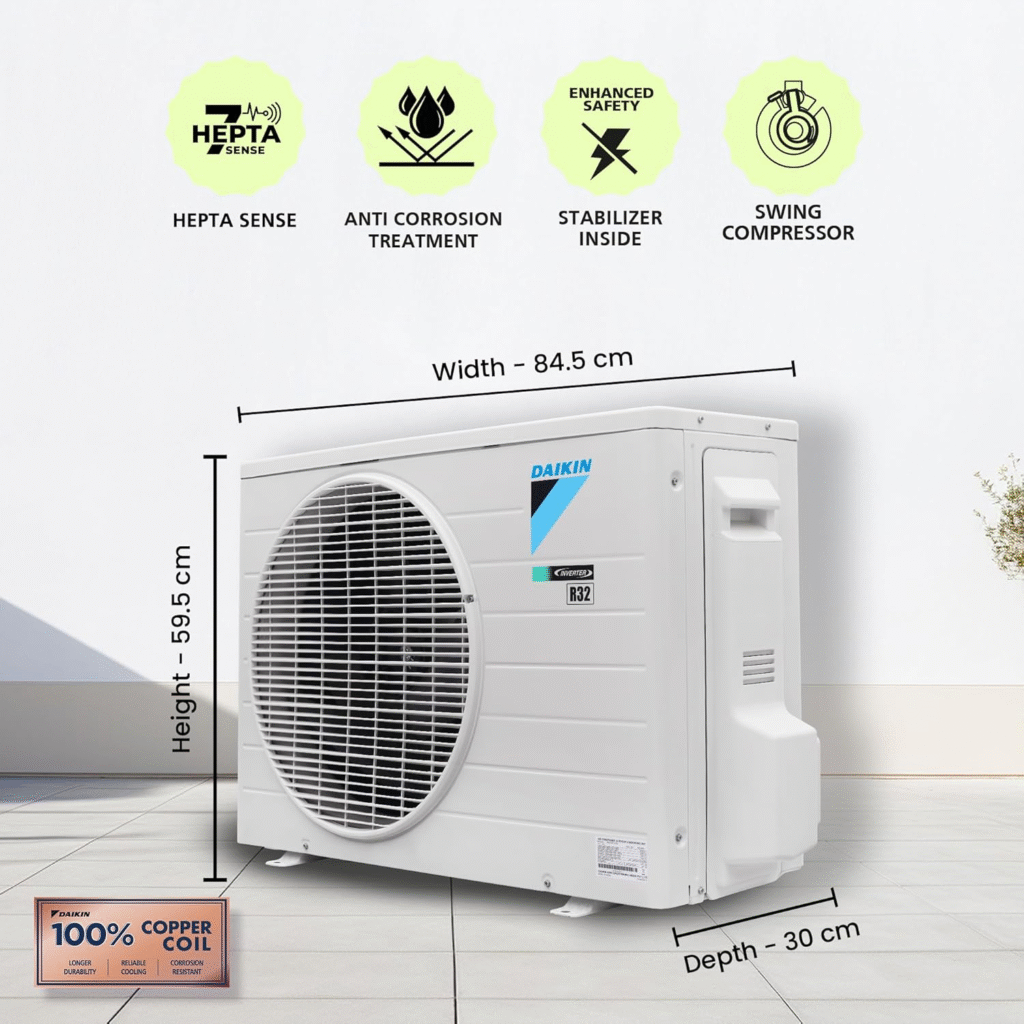
Swing Inverter Compressor technology, 100% copper condenser coils, Coanda air flow — all verified before installation. Quality is just what you expect from a Japanese brand that’s been doing this longer than most.
New addition in 2026: PM 2.5 filter + Active Carbon filter. Both. That’s a significant upgrade for air quality inside your room — especially in Delhi, Mumbai, or any metro.
The honest con: No convertible modes. Daikin’s philosophy is that convertible modes make an inverter AC behave like a non-inverter — and they’re not wrong in principle.
But here’s the thing — as a user, having that option is convenience. We can choose not to use it. Brands taking that choice away from us, even with good intentions, is still a limitation.
This has been a Daikin con for 5 years. It’s still a Daikin con in 2026.
Also no Wi-Fi — which in 2026 feels increasingly like a miss at this price point.
Noise level: Claims 34 dB. Essentially silent in practice.
Voltage range: 130V–285V. Very good.
Warranty: Standard — 1-year comprehensive, 5 years PCB, 10 years compressor.
My recommendation: If your priority is pure, reliable, Japanese-quality cooling — Daikin is still one of the best you can buy. Room size up to 165 sq ft. Accept the lack of convertible modes and Wi-Fi if those aren’t essential for you.
Images sourced from Amazon. All copyrights belong to their respective owners.
Best for: Rooms up to 170+ sq ft | Budget: ~₹48,000–50,000
If you’re going to spend ₹48,000–50,000, this is where I’d personally put that money.
Cooling capacity: 1.45 tons — same as last year, but this year Panasonic made significant internal changes.
ISEER: 5.8 — the best in this entire list. More cooling capacity AND better efficiency. That’s not easy to pull off.
Here’s what’s new in 2026:
The indoor blower has been upgraded — physically larger. Air flow has jumped to 730 cubic feet per minute (from around 500–550 earlier). That is a massive increase. You feel it the moment you turn it on.
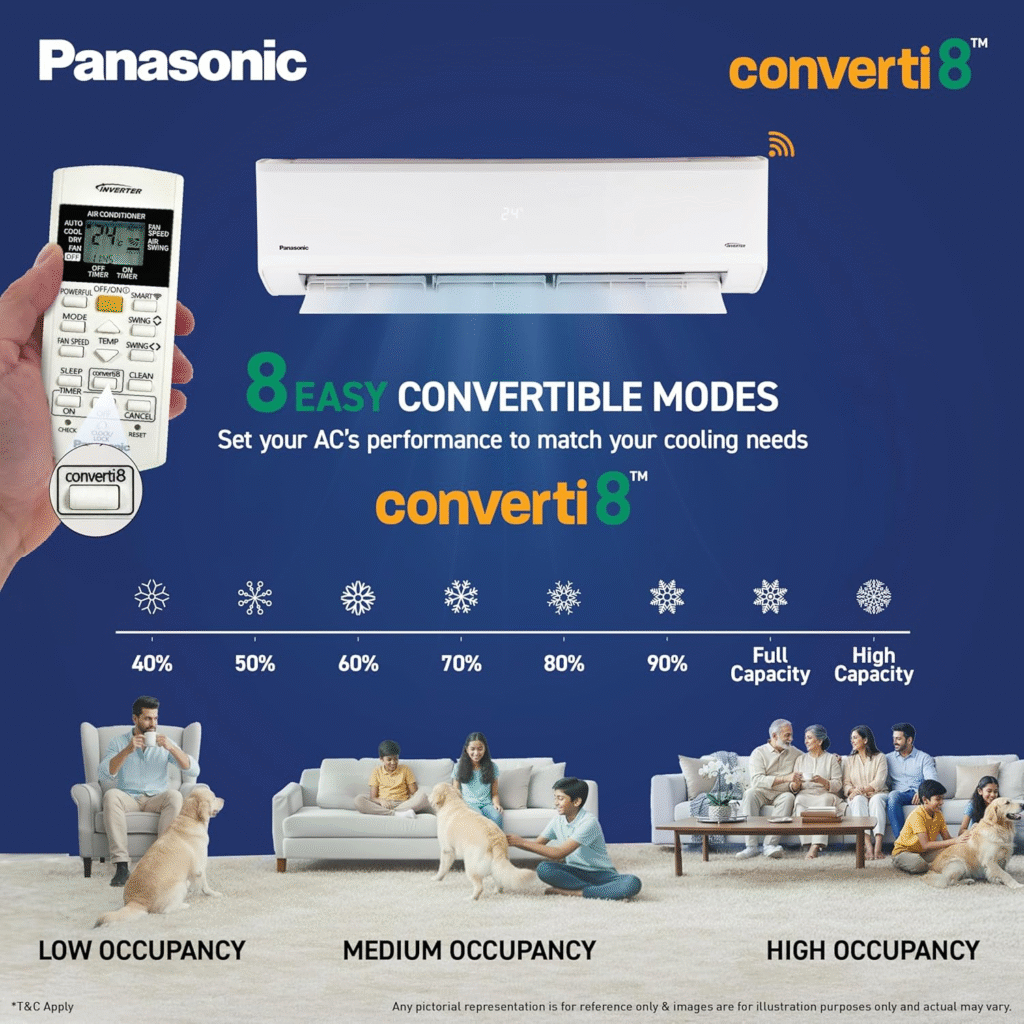
Also upgraded to 18-in-1 convertible modes — from 40% to 110%, at every 10% step. Delhi summer? Use 100%. Kerala humidity? Drop to 60%. Mumbai monsoon? 70%. The AC stays the same; you adjust it to your city and your needs.
Features that actually matter:
Wi-Fi built-in — and the mAir app is genuinely the best AC companion app available. You can create sleep profiles, set family member preferences individually, control via Alexa or Google Assistant.
Dust Buster — when you switch off the AC, the outdoor unit runs the fan in reverse to clean dust and sediment off the outdoor coils automatically. No other AC in this list does this.
Four-way air swing — same as LG and Blue Star.
Shield Blue Technology — chemical coating on both indoor and outdoor coils. Quality verified before installation. Top notch.
Noise level reduced to 34 dB this year (was 36–38 dB last year). Effectively silent.
Voltage range: 100V–290V. The widest range in this list.
The con — and it’s a small one:
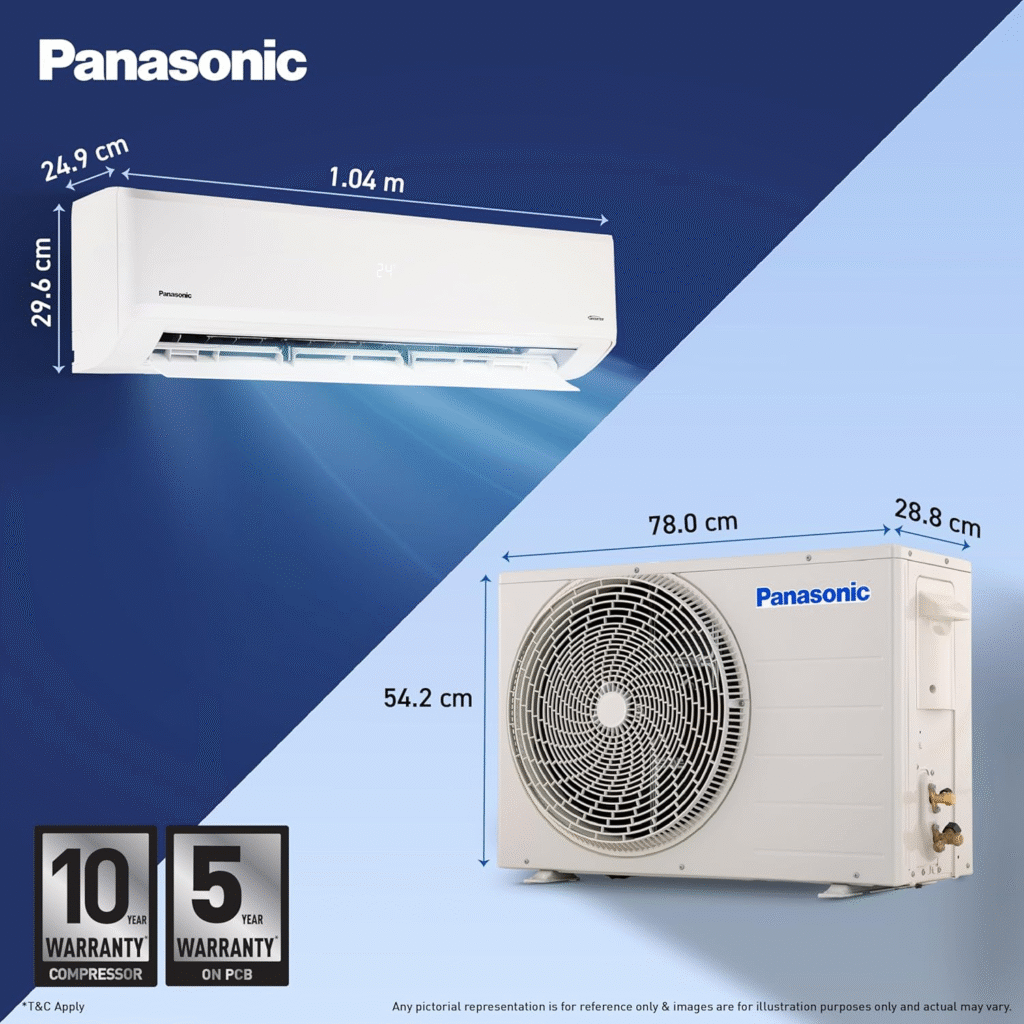
The indoor unit is slightly larger than other brands because of the bigger blower. Not a dealbreaker, but worth noting for tight wall spaces.
Warranty: 1-year comprehensive | 5 years PCB | 10 years compressor.
My recommendation: If you want the best of everything — cooling capacity, efficiency, Wi-Fi, app quality, air flow, and smart features — Panasonic is the answer. It’s the one AC in this list where I genuinely have no major complaints.
Final Decision Guide — Pick Your AC in 60 Seconds
If your room is under 155 sq ft and budget is ₹42,000: → Go with Carrier. No overthinking needed.
If your room is 155–165 sq ft and Wi-Fi doesn’t matter: → LG. Best long-term reliability, incredibly quiet, inner grooved copper tubes.
If your room is 155–170 sq ft and you want Wi-Fi + strong warranty: → Blue Star. Better warranty than LG, Wi-Fi included, slightly more cooling capacity.
If you want Japanese build quality and don’t need Wi-Fi or convertible modes: → Daikin. Pure cooling performance, PM 2.5 + Active Carbon filter, unbeatable reliability.
If you want the absolute best and you’re willing to pay for it: → Panasonic. Best ISEER, highest airflow, best app, Dust Buster, 18-in-1 modes. The complete package.
Before You Pick Any AC — Read These 3 Points First (Best 1.5 Ton 5 Star AC in India 2026)
Most people skip this part. That’s exactly why they regret their purchase later.
Star Ratings Changed in 2026 — Here’s What That Actually Means
Here’s the truth: the star rating system was completely revised in January 2026.
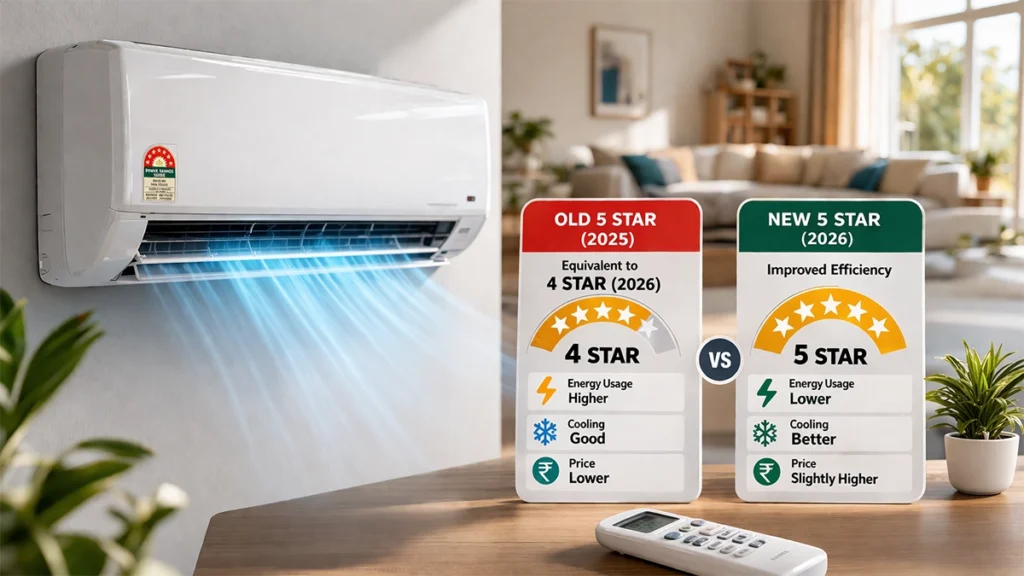
Any AC that was rated 5-star in 2025 is now technically a 4-star AC under the new norms. The government raised the bar.
The new 2026 five-star ACs consume slightly less electricity while delivering the same cooling. Sounds great, right?
But here’s the practical part — the actual savings difference between a 2025 model and a 2026 model is not dramatic enough to justify a ₹4,000–5,000 price premium.
Simple rule: If you find a 2025 model of the Best 1.5 Ton 5 Star AC in India 2026 at a significant discount right now — just buy it. Don’t let the star label on the box make the decision for you. Your electricity savings won’t cover that price gap anytime soon.
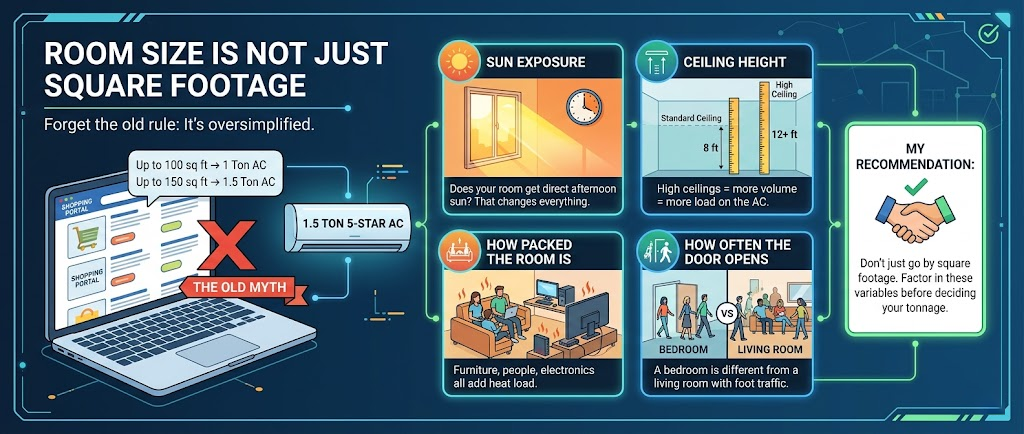
Room Size Is Not Just Square Footage
You’ve seen this everywhere on Flipkart and Amazon:
Up to 100 sq ft → 1 Ton AC
Up to 150 sq ft → 1.5 Ton AC
Forget that. It’s oversimplified.
For a 1.5 Ton 5-Star AC, the right room size depends on:
Sun exposure — Does your room get direct afternoon sun? That changes everything.
Ceiling height — High ceilings = more volume = more load on the AC.
How packed the room is — Furniture, people, electronics all add heat load.
How often the door opens — A bedroom is different from a living room with foot traffic.
My recommendation: Don’t just go by square footage. Factor in these variables before deciding your tonnage.
We’ve covered room size calculation in detail in our complete AC guide — worth a read before you decide.
Cooling Capacity ≠ Tonnage Category
This is where most people get fooled.
Every brand will call their AC “1.5 Ton.” But the actual cooling capacity inside that 1.5 Ton label varies brand to brand. One brand’s 1.5 Ton might actually cool at 1.36 tons. Another might deliver 1.45 tons.
Here’s the truth: 1.5 Ton is a category, not a fixed spec. Always check the actual cooling capacity in the technical details — not just the headline tonnage.
I’ll tell you the exact cooling capacity for every AC in this list. That’s what will actually help you decide.
How to Use Your Inverter AC the Right Way
Still confused about inverter ACs? Let’s make this simple.
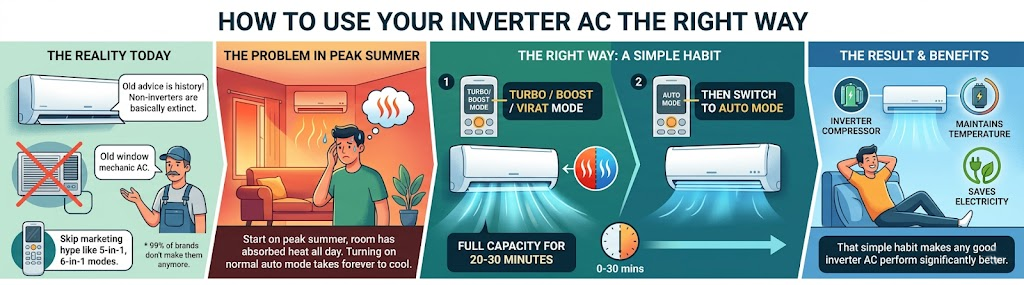
Non-inverter ACs are basically extinct in the residential market now. 99% of brands don’t even make them anymore. So whatever your old mechanic told you about “inverter ACs having expensive repairs” — that advice is from another era. Move on.
Here’s where it gets interesting —
Every inverter AC today comes with convertible modes. You’ll see 5-in-1, 6-in-1, 8-in-1. Don’t get excited about those numbers — it’s mostly marketing.
What actually matters is how you use it:
When you turn on your AC in peak summer, your walls are hot. The room has absorbed heat all day. If you start the AC on auto mode, it’ll take forever to cool down.
Common mistake: Turning on the AC at normal mode and then complaining it doesn’t cool fast enough.
The right way:
Start on Turbo/Boost/Virat mode (whatever your brand calls it) — full capacity for 20–30 minutes.
This cools down your hot walls fast.
Then switch to Auto mode.
The inverter compressor takes over, maintains the temperature, and saves electricity.
That’s it. That simple habit will make any good inverter AC perform significantly better.
Before Installation — Don’t Skip These Steps
Copper Pipe Vacuuming
When your AC gets installed, insist on vacuuming the copper pipes before the unit is switched on.
If the installation team says they don’t have a vacuum pump — stop them. That’s a red flag. Don’t let them proceed without it. Skipping this step can damage your AC over time.
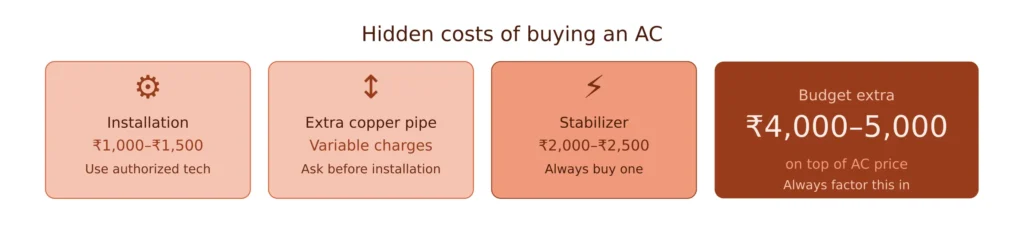
Budget for Extra Costs
Your AC price is not your total cost. Here’s a realistic breakdown:
AC price — what you see online
Installation charges — up to ₹1,500 (always use the brand’s authorized installer; warranty depends on it)
Extra copper pipe — if your indoor and outdoor units are more than 3 meters apart, you’ll pay extra per foot
Stabilizer — ₹2,000–2,500
Total extra budget to keep aside: ₹4,000–5,000 over and above the AC price.
Do You Actually Need a Stabilizer?
Every brand will tell you their inverter AC has built-in voltage stabilization. And that’s true — to a point.
But if there’s a voltage surge in your home and your ₹47,000 AC gets fried, the brand may not honor the warranty claim.
A ₹2,000–2,500 stabilizer is cheap insurance for an expensive appliance. Just buy it.
What About Samsung, Mitsubishi, and Voltas?
Fair question.
Mitsubishi and General are genuinely excellent ACs and could easily compete for the title of the Best 1.5 Ton 5 Star AC in India 2026. Their build quality and cooling performance are hard to fault.
But here’s the catch — they’re not easily available on platforms like Amazon or Flipkart, and their service networks are strongest in Tier 1 cities.
If you live in a Tier 2 or Tier 3 city, make sure you check service availability and spare parts access before making the purchase.
The product might be outstanding; the after-sales experience could be the real challenge.
Samsung will be covered separately — it deserves its own detailed review.
Voltas is a different category and price point — worth considering if budget is the primary constraint.
One Last Thing
If I had to recommend just one thing from this entire Best 1.5 Ton 5 Star AC in India 2026 guide — get the tonnage and room fit right. Everything else is secondary.
A ₹50,000 AC in the wrong room size will always underperform a ₹42,000 AC in the right room size.
That’s the one mistake that no brand, no warranty, and no feature can fix.
Get that right. Everything else falls into place.
Frequently Asked Questions (FAQs)
1. Which Is the Best 1.5 Ton 5 Star AC in India (2026)?
Panasonic offers the best combination of performance, efficiency, and smart features, closely followed by Daikin.
2. Is it worth buying a 2026 model over a 2025 model?
If the price difference exceeds ₹4,000–₹5,000, a 2025 model can provide better value with minimal efficiency compromise.
3. What room size is suitable for a 1.5 Ton AC?
Typically, 150–170 sq. ft., depending on sunlight exposure, insulation, and ceiling height.
4. Do I need a stabilizer for an inverter AC?
Yes. Although many ACs support stabilizer-free operation, an external stabilizer offers additional protection against voltage fluctuations.
5. Which brand provides the best warranty?
Blue Star stands out with its 5-year comprehensive warranty, offering significant peace of mind.
Prices mentioned are approximate at time of testing. Always check current prices and available offers before purchasing. Use authorized brand installers to keep your warranty valid.
So you’ve finally decided to buy an AC. Maybe the last summer broke you, or maybe you’re just done pretending that a ceiling fan is “enough.” Either way — welcome to this AC buying guide 2026. You’re in the right place.
I’ve been through this whole process myself, and honestly? It’s way more confusing than it needs to be. Tonnage, BEE star ratings, inverter compressors, split vs window, Wi-Fi enabled, PM 2.5 filters… it feels like you need an engineering degree just to buy something that blows cold air.
So let me break it all down for you — simple, honest, and without the fluff. This AC buying guide 2026 covers everything from the absolute basics to the stuff even “experienced” buyers miss.
Let’s get into it.
In This Post
Too many brands. Too many features. Too many misleading terms.
If you choose wrong, you will:
Waste electricity
Get poor cooling
Regret your purchase for years
This guide simplifies everything. No technical jargon. No fluff.
How much ton you need
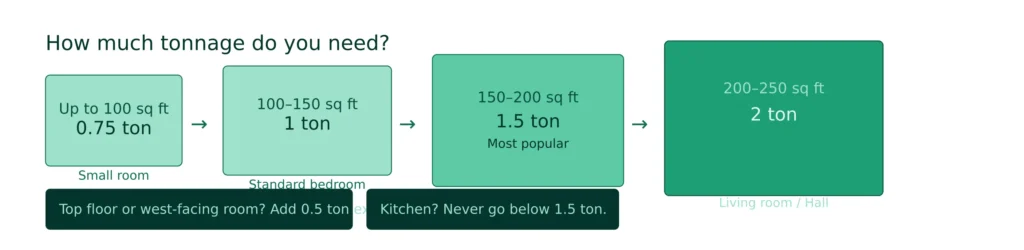
Here’s a simple formula that works for Indian conditions:
If you don’t want to read everything, here’s the simple rule:
Room Size
Recommended Tonnage
Small room Up to 100 sq ft
0.75 ton
100 – 150 sq ft
1 ton
Medium room 150 – 200 sq ft
1.5 ton
Large room 200 – 250 sq ft
2 ton
Living room250 sq ft and above
2+ ton
For most Indian homes: 1.5 Ton 5 Star Inverter AC is the safest choice
But wait — room size alone isn’t the full story.
A few things can change your AC ton requirement:
Top floor flat? Add 0.5 ton. The roof absorbs a ton of heat (pun intended).
West-facing room? Same — add 0.5 ton. Afternoon sun is brutal.
More than 4–5 people regularly in the room? Bodies generate heat. Factor that in.
Large windows with direct sunlight? Consider going up a size.
Kitchen? Never go below 1.5 ton regardless of size.
Not sure which size is right? Read our detailed guide on 1 Ton vs 1.5 Ton AC
The common mistake is people buy a 1-ton AC because it’s cheaper, put it in a 180 sq ft room, and then wonder why it runs all day without cooling properly. Undersized AC = higher electricity bill + shorter AC lifespan + you still sweating.
Types of AC (AC Buying Guide 2026)
1. Split AC (Best for Most People)
The one with an indoor unit on your wall and an outdoor unit outside. This is what most people buy today and for good reason.
Pros:
Quieter operation (compressor is outside)
Better cooling distribution
Sleeker look
Available in higher tonnage and efficiency ratings
More brands and models to choose from
Cons:
Requires professional installation (drilling, piping)
Installation cost: ₹2,000–₹4,000 extra
If you move houses, reinstallation is a hassle and cost
Best choice for bedrooms and living rooms
2. Window AC
The single unit that sits in a window or wall opening.
Pros:
Easier installation
Cheaper upfront
Good for rentals where you might move frequently
No separate outdoor unit to worry about
Cons:
Noisier (compressor is right inside the unit)
Less efficient options available
Limited to smaller rooms
Good for budget buyers
My take: If you own your home or plan to stay for 2+ years — split AC, no question. If you’re a renter who moves every year, window AC makes more sense practically.
3. Portable AC (Avoid)
Easy to move
Poor cooling
Not worth it in Indian heat
Inverter vs Non-Inverter AC — Just Buy Inverter
Non-Inverter AC
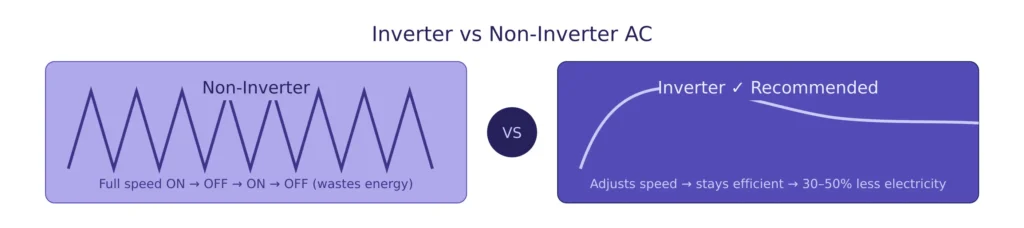
The compressor runs at full speed, then shuts off, then runs again at full speed, then shuts off. It’s like driving a car by flooring the accelerator and then hitting the brakes repeatedly.
Old technology
High electricity consumption
Inverter AC (Recommended)
The compressor adjusts its speed based on how much cooling is needed. Once the room is cool, it slows down and maintains the temperature. Much more efficient.
Adjusts speed automatically
Saves electricity
Better cooling control
The result? Inverter ACs use 30–50% less electricity compared to non-inverter ACs. In India, where electricity bills in summer can be painful, this matters a lot.
My recommendation: Always go inverter. No exceptions.
The only scenario where non-inverter makes sense is if you’re using the AC for very short periods (like 2–3 hours a day at most). For regular daily use — inverter, always.
3 Star vs 5 Star AC (Don’t Buy Anything Below 3 Star in 2026)
The BEE (Bureau of Energy Efficiency) star rating tells you how energy efficient an AC is. More stars = less electricity consumed.
For 2026, here’s what I’d recommend:
Star Rating
Who Should Buy
3 Star
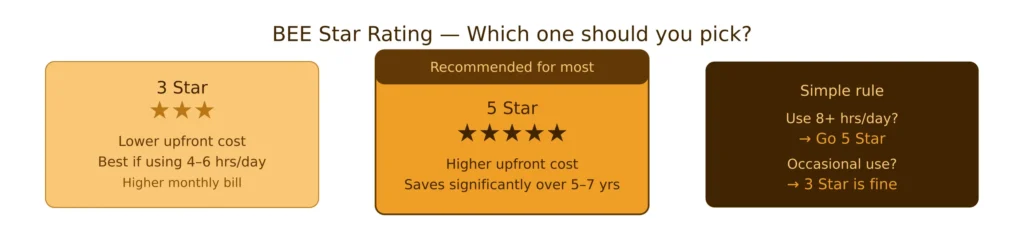
Budget buyers, limited usage (4–6 hrs/day)
4 Star
Good balance of cost and efficiency
5 Star
Daily heavy usage, long-term savings priority
5 Star AC
Higher efficiency
Lower electricity bills
Higher price
3 Star AC
Cheaper
Higher electricity consumption
Simple Rule:
If you’re running your AC 8+ hours a day (which most people in Delhi, Mumbai, or Chennai do in peak summer), go 5-star. The electricity savings over 5–7 years are significant.
Still confused? Check full comparison: 3 Star vs 5 Star AC – Which One Should You Buy
Link → 3 Star vs 5 Star AC
Pro tip: Check the ISEER value on the label, not just the stars. Higher ISEER = better efficiency. Two 5-star ACs can have different ISEER values, and the higher one will save you more money.
Use AC daily → go for 5 Star
Use occasionally → go for 3 Star
2026 Star Rating Change (Important)
In 2026:
Old 5 star → now 4 star equivalent
New models are slightly more efficient
But savings are small
If a 2025 model is ₹4000–5000 cheaper, buy that instead
One thing I always tell people — check the service network in your city before buying. A great AC from a brand with no service center nearby is a headache waiting to happen.
What’s the Actual Cost? (2026 Price Guide)
Here’s a rough price range to set your expectations:
Type
Tonnage
Star Rating
Price Range
Split Inverter
1 ton
3 Star
₹28,000 – ₹35,000
Split Inverter
1 ton
5 Star
₹38,000 – ₹48,000
Split Inverter
1.5 ton
3 Star
₹33,000 – ₹42,000
Split Inverter
1.5 ton
5 Star
₹45,000 – ₹60,000
Split Inverter
2 ton
5 Star
₹58,000 – ₹80,000
Window AC
1 ton
3 Star
₹22,000 – ₹28,000
Window AC
1.5 ton
3 Star
₹28,000 – ₹35,000
Add ₹2,000–₹4,000 for installation (split AC). Always get it done by the brand’s authorized installer — DIY or local electricians can void your warranty.
Where to buy: Flipkart, Amazon, and brand websites frequently run good deals especially during January–March (off-season pricing). If you’re buying offline, Reliance Digital and Croma often price-match online rates if you ask.
Common Mistakes to Avoid
Buying based on price alone. The cheapest AC in the showroom will cost you more in electricity over 5 years.
Ignoring tonnage. I said it before, I’ll say it again. Undersized AC is the #1 mistake.
Skipping AMC (Annual Maintenance Contract). The first year is usually free under warranty. After that, get an AMC — ₹1,500–₹3,000/year for regular servicing. It keeps the AC efficient and extends its life significantly.
Not servicing regularly. Clean the filter every 2–3 weeks in heavy use months. Get professional servicing once a year. A dirty AC can use 15–20% more electricity.
Buying last year’s unsold stock without checking. Always check the manufacture date. If a dealer is pushing a “new” AC that was manufactured 2 years ago — that’s 2 years off your warranty effectively.
Learn how to reduce bills: How to Save Electricity with AC
AC Buying Checklist 2026 (AC Buying Guide 2026)
Before you finalize your purchase, run through this:
Measured room size accurately
Accounted for top floor / west-facing / extra heat sources
Chosen inverter AC (not non-inverter)
Minimum 3-star rating (5-star if using 8+ hours/day)
Checked ISEER value on the energy label
Verified brand has service center in your city
Confirmed stabilizer-free operation range
Budgeted for installation cost
Asked about AMC options
Final Thoughts
Buying an AC isn’t complicated once you know what to look for. In this AC Buying Guide 2026, get the tonnage right, go for an inverter AC, choose the right star rating based on your usage, and pick a brand with a strong service network in your area. Everything else is secondary.
If I had to give you one piece of advice: don’t rush it. Spend 20 minutes getting the basics right, and you’ll be happy with your purchase for the next 8–10 years. Rush it to save ₹2,000, and you might regret it every month on your electricity bill.
Hope this AC buying guide 2026 helped.
If you want to go deeper:
Best AC under ₹40,000
1 Ton vs 1.5 Ton AC
AC electricity saving tips
If you follow this guide, you will:
Save money
Get better cooling
Avoid long-term regret
FAQs
1. What size AC should I buy for my room?
If your room is up to 120 sq ft, go for 1 ton. For 120–170 sq ft, 1.5 ton works best. Bigger rooms need 2 ton. Always consider sunlight and room heat, not just size.
2. Is inverter AC better than non-inverter AC?
Yes. Inverter AC adjusts power based on need, cools faster, and saves electricity. Non-inverter is outdated and less efficient.
3. Should I buy a 3 star or 5 star AC?
If you use AC daily for long hours, go for 5 star. If usage is limited, 3 star is enough and saves upfront cost.
4. What is the most important thing in an AC buying decision?
Cooling capacity and correct tonnage. If that is wrong, no feature or brand can fix poor cooling.
5. What does this AC Buying Guide 2026 recommend for most users?
This AC Buying Guide 2026 recommends a 1.5 ton inverter AC with a good star rating and strong service support, as it suits most Indian homes and usage patterns.