Kling AI 3.0 is rolling out right now, and it’s not a small update. This is a serious upgrade that finally makes AI video feel usable for real storytelling.
In this guide, I’m breaking down Kling 3.0 examples and use cases based on hands-on testing. You’ll see exactly what works, where it still struggles, and how creators are actually using it in real workflows.
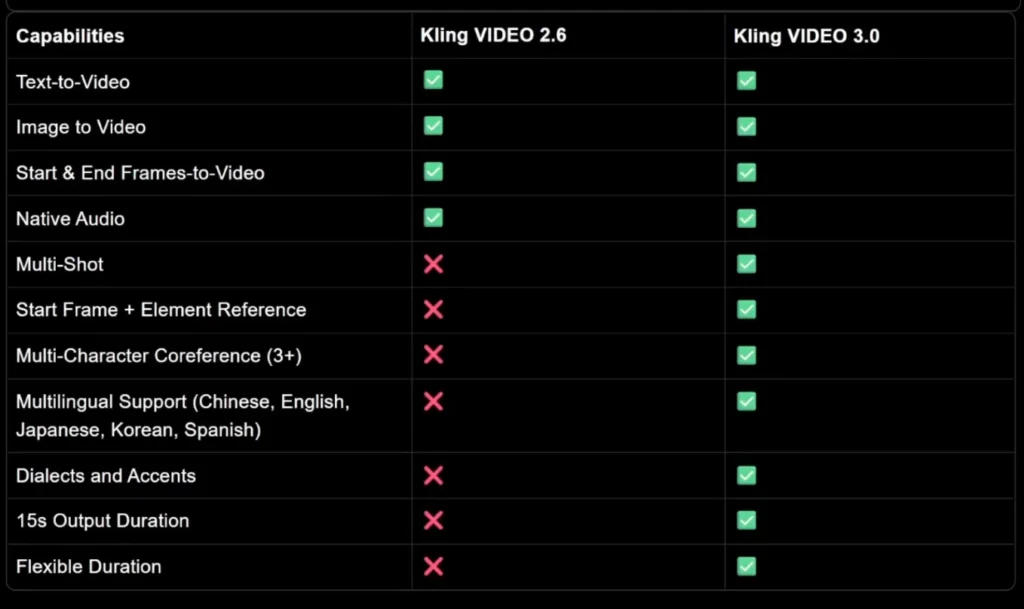
Kling 3.0 is the latest version of Kling’s AI video generation model. It supports text to video, image to video, native audio, lip sync, and up to 15 seconds of output.
The standout feature is multi-shot video generation, which lets you define what happens in each shot instead of generating one random clip.
That one feature changes everything.
Kling 3.0 Examples and Use Cases
Let’s start with real examples.
Image to Video Example
Upload an image as the first frame and write a simple prompt like:
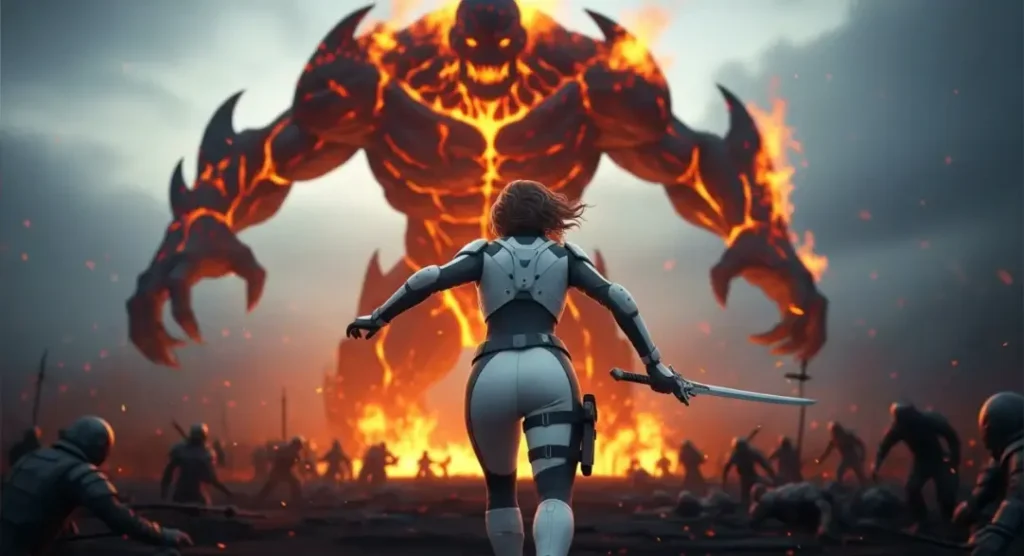
A warrior sprints toward a monster and engages in an epic fight.
With multi-shot on.
The same scene is split into multiple cinematic shots with hard cuts. The pacing improves. The scene feels intentional.
character consistency stays intact across shots, which is something most AI video models still struggle with.
Multi-Shot Storytelling Example
You can go further by manually defining each shot.
Upload an image as the first frame and write a simple prompt like:
Example setup:
Create a cinematic game teaser with 5 shots.
Shot 1: Wide shot of a massive fantasy city at night, glowing torches, rain falling, cinematic scale. Shot 2: Tracking shot behind a hooded character walking through a crowded street. Shot 3: Close-up of a sword being drawn, sparks and reflections, dramatic lighting. Shot 4: Fast cut action shot – character dodges an attack in slow motion. Shot 5: Final wide shot of the city skyline with thunder and lightning.
Epic fantasy, cinematic camera, realistic motion, dark tone.
The result follows the prompt almost perfectly. Camera movement, pacing, and cuts all make sense.
This is where Kling 3.0 clearly separates itself.
Kling 3.0 Use Cases for Content Creators
This is where Kling 3.0 actually becomes useful.
YouTube Creators
Creators can generate:
Cinematic B-roll
Short narrative sequences
High-action intros
Visual explainers
Multi-shot control makes it possible to create scenes instead of random clips.
Short-Form Content (TikTok, Reels, Shorts)
Use case Brands running Meta ads, product reels, or hero visuals.
Why Kling 3.0 fits
Short duration optimized for reels
Clean transitions
Controlled product focus
Example prompt
Create a premium product reel in 3 shots.
Shot 1: Close-up of a sleek wireless charger on a dark desk, soft blue accent lighting, slow camera pan. Shot 2: Phone placed on charger, subtle glow appears, minimalistic background, smooth motion. Shot 3: Final hero shot with clean composition, product centered, cinematic lighting, modern tech aesthetic.
Professional commercial style, realistic textures, smooth motion, no text.
Game Cinematic / Trailer Concept
Use case Game studios or YouTube creators creating teaser visuals or concept trailers.
Kling 3.0 advantage
Action + camera movement
Fantasy / realism blend
Trailer-style pacing
Example prompt
Create a cinematic game teaser with 5 shots.
Shot 1: Wide shot of a massive fantasy city at night, glowing torches, rain falling, cinematic scale. Shot 2: Tracking shot behind a hooded character walking through a crowded street. Shot 3: Close-up of a sword being drawn, sparks and reflections, dramatic lighting. Shot 4: Fast cut action shot – character dodges an attack in slow motion. Shot 5: Final wide shot of the city skyline with thunder and lightning.
Epic fantasy, cinematic camera, realistic motion, dark tone.
AI Influencer / Character Video
Use case Virtual influencers, AI characters, or brand mascots.
Why Kling 3.0 works
Character consistency
Facial expressions + motion
Camera control
Example prompt
Create a realistic AI character video.
Shot 1: Medium shot of a young female digital influencer standing on a city rooftop at sunset. Shot 2: Close-up as she smiles and looks into the camera, soft cinematic lighting. Shot 3: Side profile shot as wind moves her hair, shallow depth of field.
Photorealistic human character, natural motion, cinematic realism.
Educational / Explainer Visual
Use case Ed-tech, Instagram explainers, YouTube shorts.
Strength here
Visual clarity
Calm motion
Easy storytelling
Example prompt
Create a clean educational explainer video in 3 shots.
Shot 1: Minimal desk setup with laptop and notebook, soft daylight, calm camera movement. Shot 2: Abstract visualization of data lines and charts floating subtly. Shot 3: Wide shot of a modern workspace with natural light, professional tone.
Clean, modern, minimal, smooth motion.
Fashion / Lifestyle Reel
Use case Clothing brands, Instagram drops, lookbooks.
Why Kling 3.0 shines
Fabric realism
Motion + pose control
Editorial feel
Example prompt
Create a fashion editorial reel.
Shot 1: Wide shot of a model walking slowly in an urban street, cinematic framing. Shot 2: Medium shot focusing on outfit details, fabric movement in slow motion. Shot 3: Close-up portrait with soft natural light, shallow depth of field.
High-fashion editorial style, cinematic realism.
Pre-Visualization for Ads or Films (Storyboard Replacement)
Use case Directors, agencies, production houses.
Why this matters
Saves time before shooting
Replaces rough storyboards
Visual clarity for clients
Example prompt
Create a pre-visualization cinematic sequence for a commercial.
Shot 1: Establishing shot of a modern city at sunrise. Shot 2: Interior office shot, professional working on laptop, natural light. Shot 3: Close-up of hands typing, shallow depth of field. Shot 4: Final wide shot with confident tone and clean composition.
Neutral color grading, realistic motion, cinematic framing.
Kling 3.0 Advanced Examples and Workflows
Now let’s talk about advanced workflows.
Custom Multi-Shot Workflows
Instead of letting Kling decide everything, you can:
Define each shot
Control duration per shot
Specify camera movement
Stitch everything into one coherent video
This works especially well for:
Short films
Narrative ads
Action sequences
Dialogue-heavy scenes
Omni 3 Video Editing Workflow
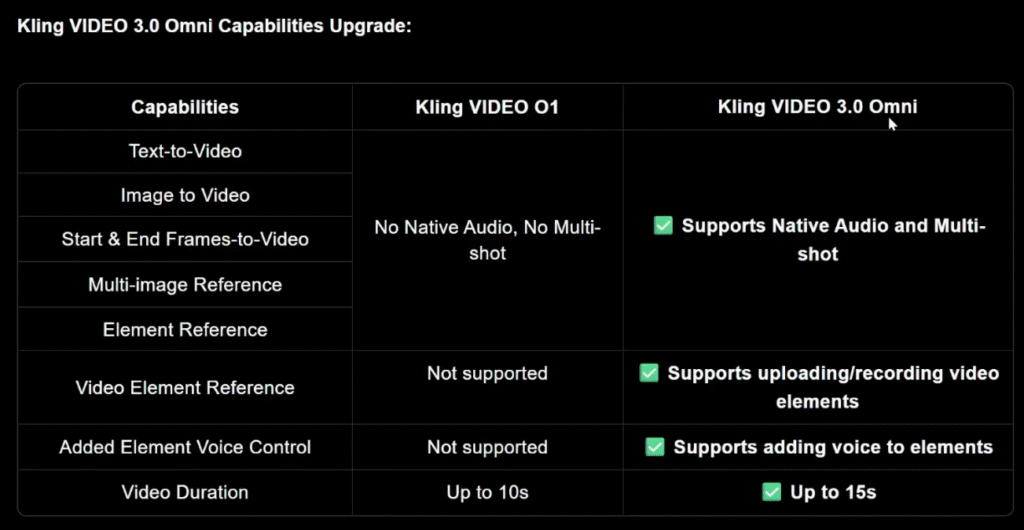
Kling 3.0 also includes Video 3 Omni, its omni-modal editing model.
With Omni 3, you can:
Upload images and videos
Edit scenes using natural language
Change outfits, colors, and backgrounds
Add or remove characters
Example prompt:
Make the woman wear a kimono and change the car to red.
It just works.
Consistency is strong, even with complex clothing. Faces can lose detail at a distance, but overall, this is one of the most powerful AI video editing workflows available right now.
Kling 3.0 Strengths and Weaknesses Explained
Let’s be honest.
Strengths
Excellent multi-shot storytelling
Strong character consistency
Good camera movement understanding
Native audio and lip sync
Multilingual support
Up to 15 seconds of video
1080p output
This is one of the few AI video models that feels usable for real projects.
Weaknesses
Fast motion still causes blur
Fingers and faces can break in action scenes
Physics-heavy scenes aren’t perfect
Distant shots lose fine detail
It’s a big improvement, but it’s not flawless.
World Understanding and Style Tests
Kling 3.0 shows solid world understanding.
It understands game concepts like Squid Game without copying characters
It handles 3D animation styles like Disney-Pixar convincingly
Educational prompts work better than expected
Motion graphics are hit or miss
Compared to older versions, it’s noticeably smarter.
Conclusion
Kling 3.0 is a massive upgrade.
The multi-shot feature alone changes how AI video is made. Instead of generating random 5-second clips, you can now create structured scenes with real pacing and intent.
It still struggles with extreme motion and fine details, but overall, this is one of the strongest AI video generators available right now.
If you care about cinematic control, storytelling, and consistency, Kling 3.0 is absolutely worth testing.
FAQs
What are the best Kling 3.0 examples and use cases?
Multi-shot storytelling, cinematic B-roll, anime dialogue, and short narrative videos.
What are the main Kling 3.0 use cases for content creators?
YouTube videos, Shorts, ads, cinematic intros, and visual storytelling.
Does Kling 3.0 support advanced workflows?
Yes. Custom multi-shot control and Omni 3 editing allow complex workflows.
What are Kling 3.0’s strengths and weaknesses?
Strong consistency and storytelling, weaker fine detail in fast motion.
Is Kling 3.0 worth using right now?
Yes, especially if you want cinematic control and structured scenes.
Let’s be honest— AI can generate beautiful visuals, but when it comes to telling a proper story, most creators hit the same wall:
“Why does my character look different in every scene?”
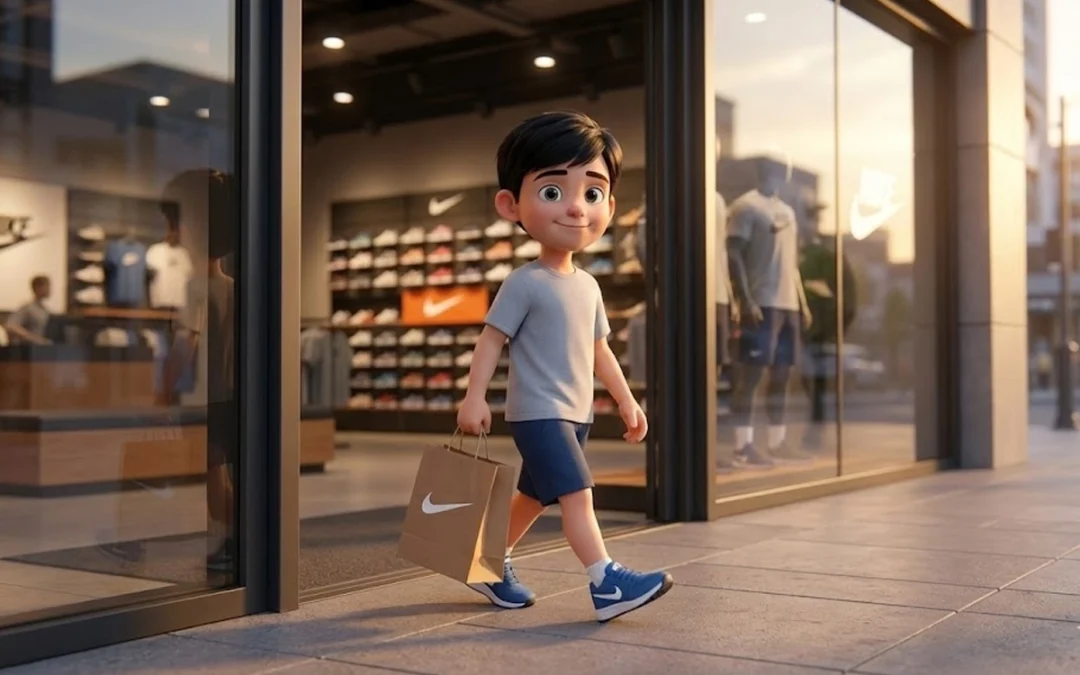
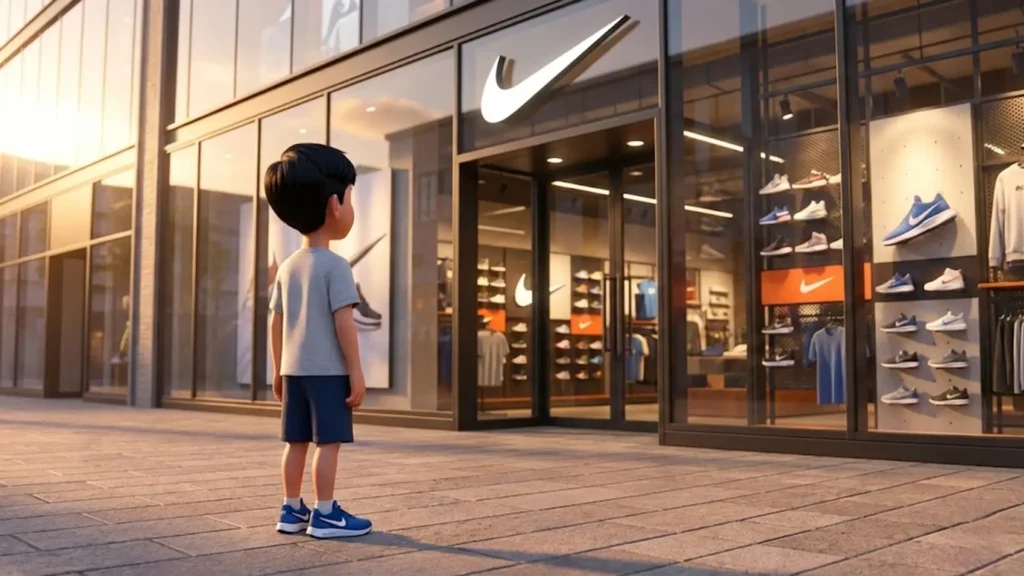
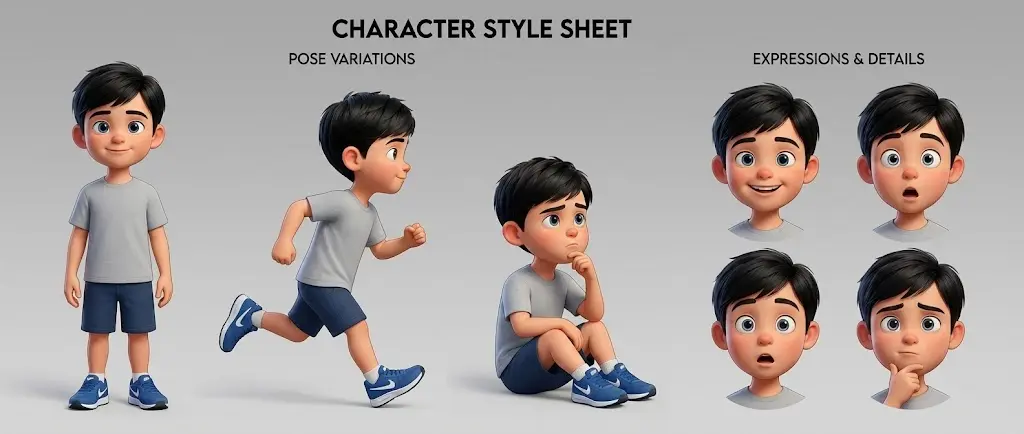
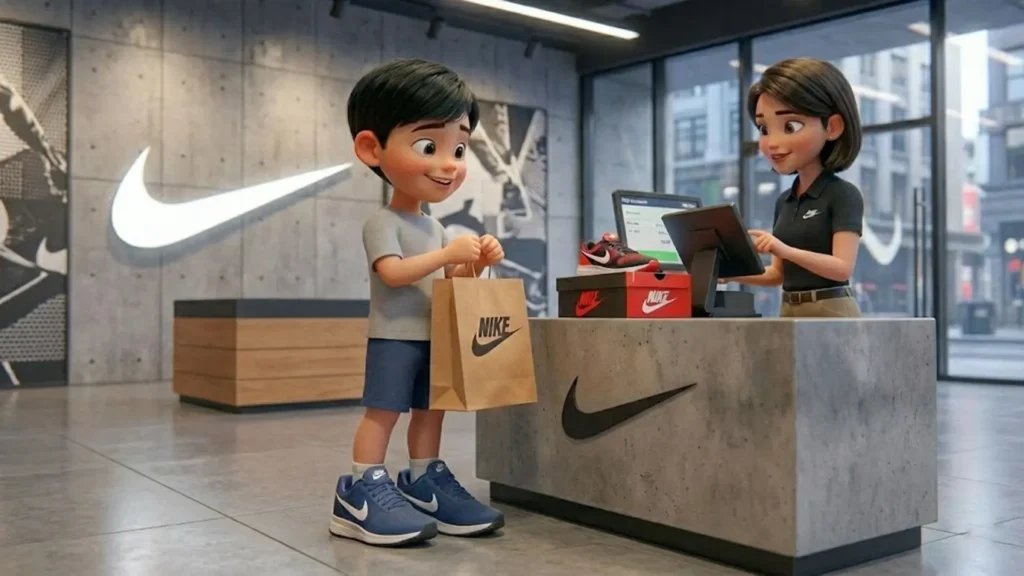
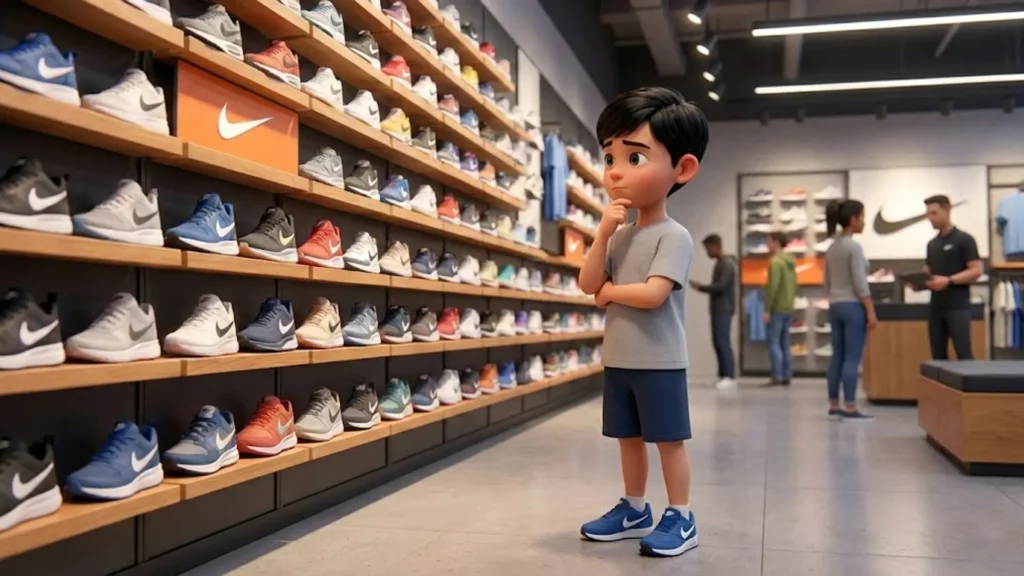
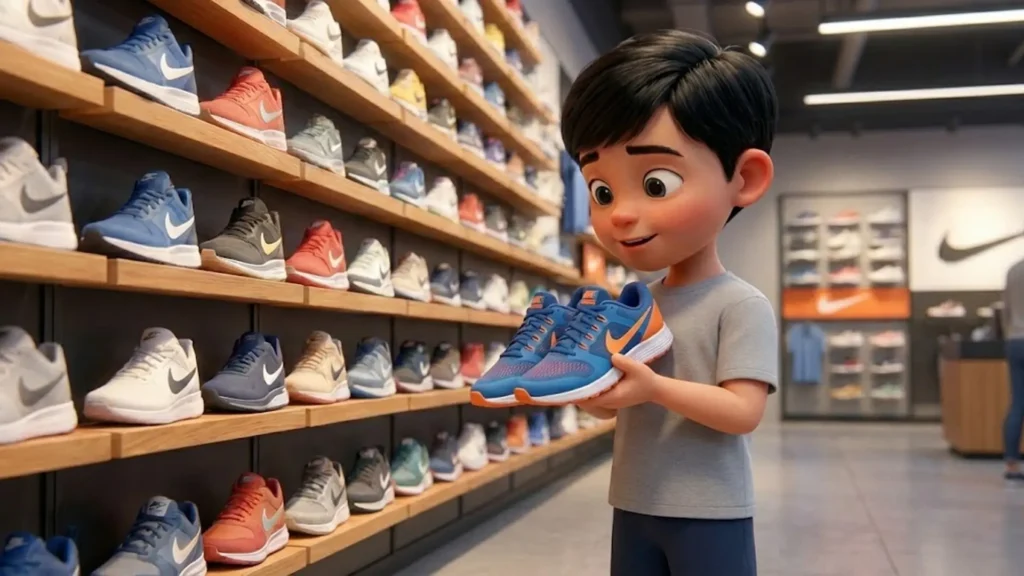
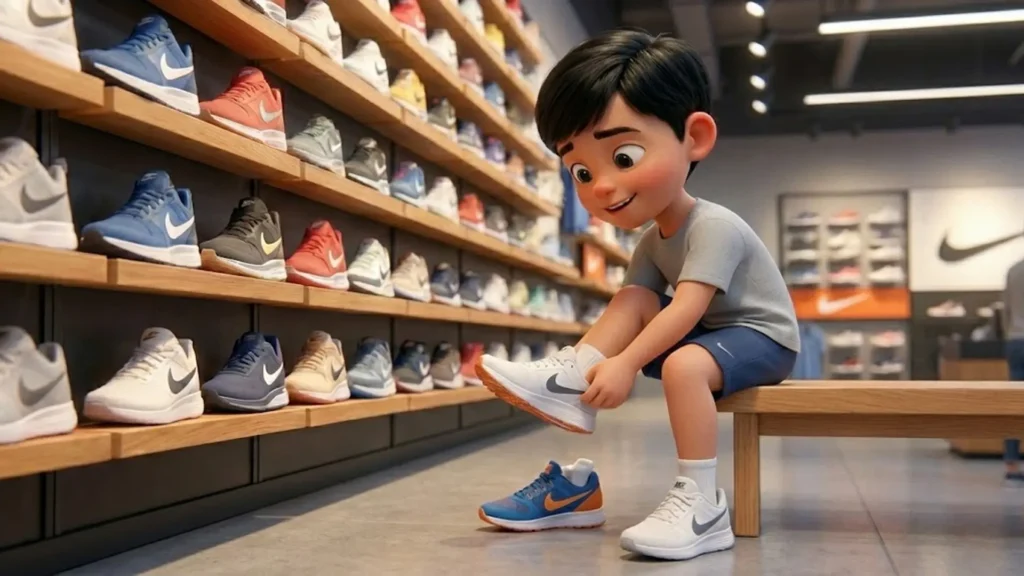
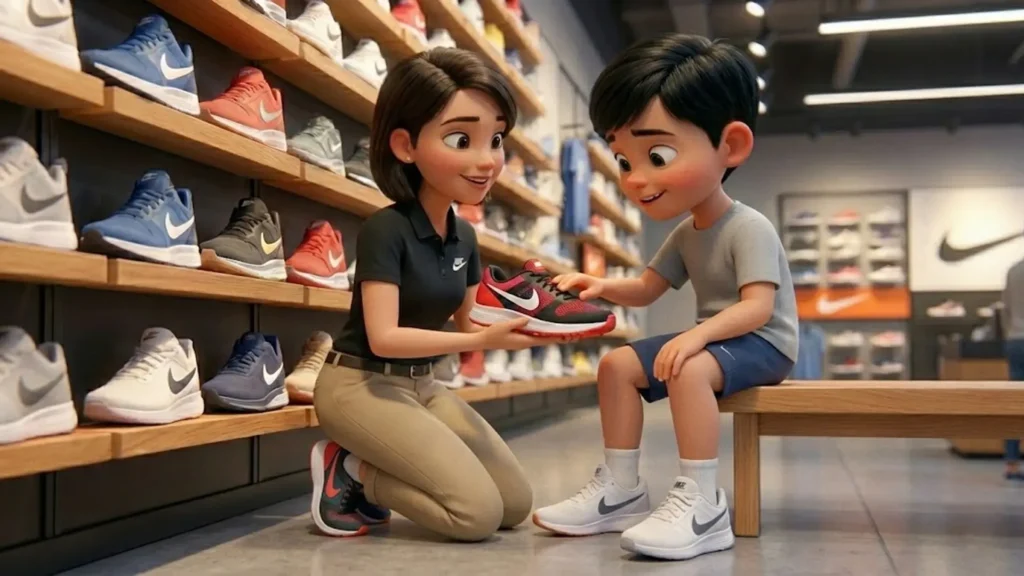
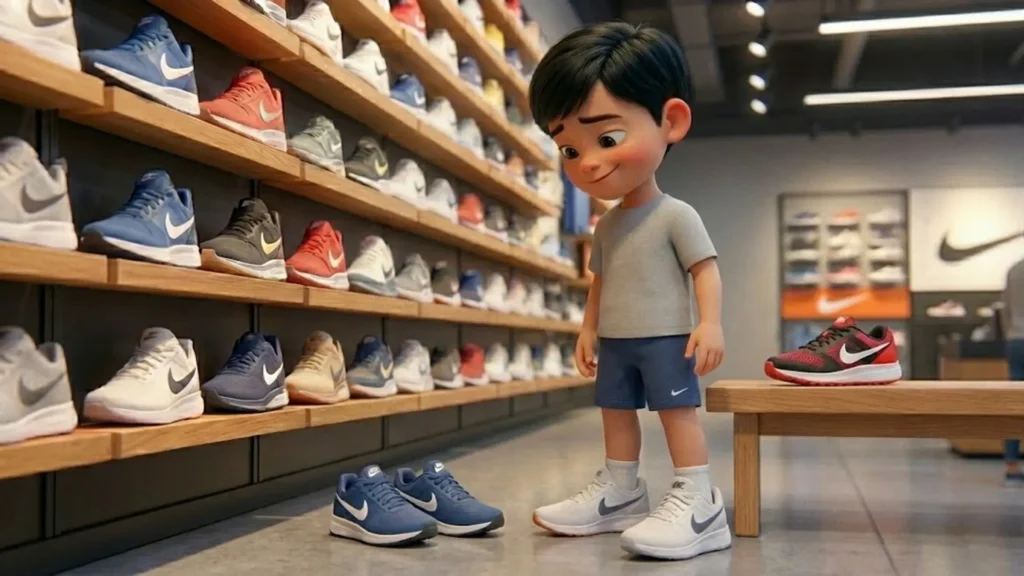
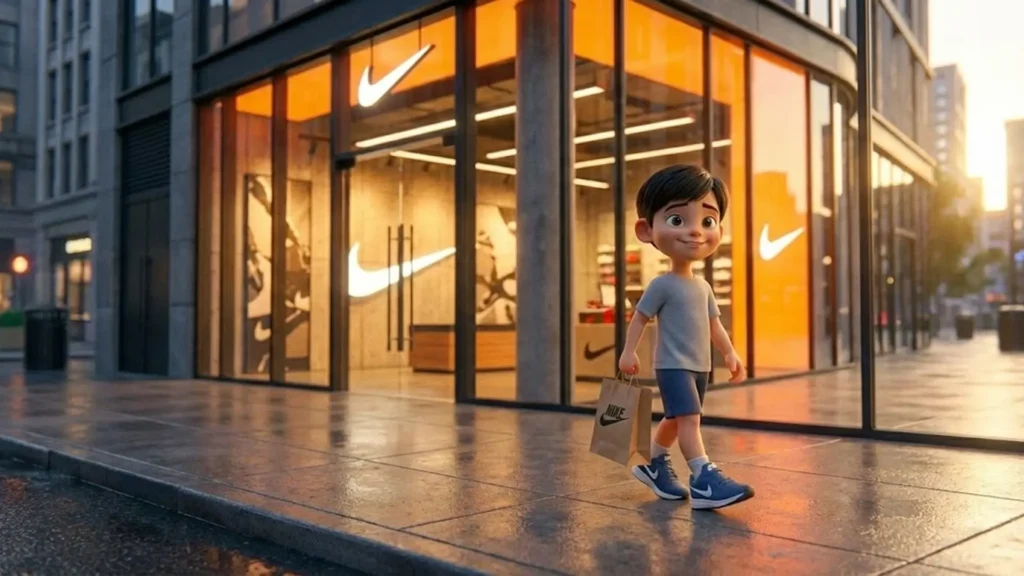
That exact problem is what led me to experiment with a cinematic retail storytelling workflow, using Nano Banana for images and Veo 3.1 for video motion.
In This Post
In this blog, I’ll walk you through exactly how I created a Nike store reel that feels:
Natural
Emotional
Cinematic
And most importantly… consistent
No film crew. No expensive gear. Just the right structure and AI discipline.
Why This Kind of Storytelling Works So Well
People don’t connect with products. They connect with moments.
A child walking into a Nike store, thinking, choosing, trying shoes, and walking out happy—that’s a story we’ve all lived in some form.
When you show that journey:
Viewers watch longer
Saves increase
Shares go up
The brand feels human, not salesy
That’s exactly what short-form platforms like Instagram reward.
A cinematic Nike store reel is a short-form video that tells a story using natural moments like entering a store, trying shoes, and walking out—styled like a mini film rather than an ad.
Which AI tools are used to create this reel?
This workflow uses Nano Banana for cinematic image generation and Veo 3.1 for turning those images into realistic videos with smooth motion.
How is character consistency maintained?
Character consistency is achieved using a Master Character Anchor, which is copied exactly into every image prompt to keep the same face, body, and clothing across scenes.
Why is character consistency important in AI reels?
Without consistency, AI reels feel disconnected and artificial. A consistent character helps maintain realism, emotion, and viewer trust.
Can beginners create this type of reel?
Yes. Beginners can create this reel by following a structured prompt workflow. No advanced editing skills are required.
If your AI characters keep changing faces, outfits, or vibes every time you generate a new image, you’re not doing anything “wrong.” You’re just missing the core workflow that Nano Banana Pro expects you to use.
This beginner-friendly guide explains exactly how to maintain character consistency in Nano Banana Pro, why most people fail, and how to fix it permanently using foundation images, reference logic, and simple prompts.
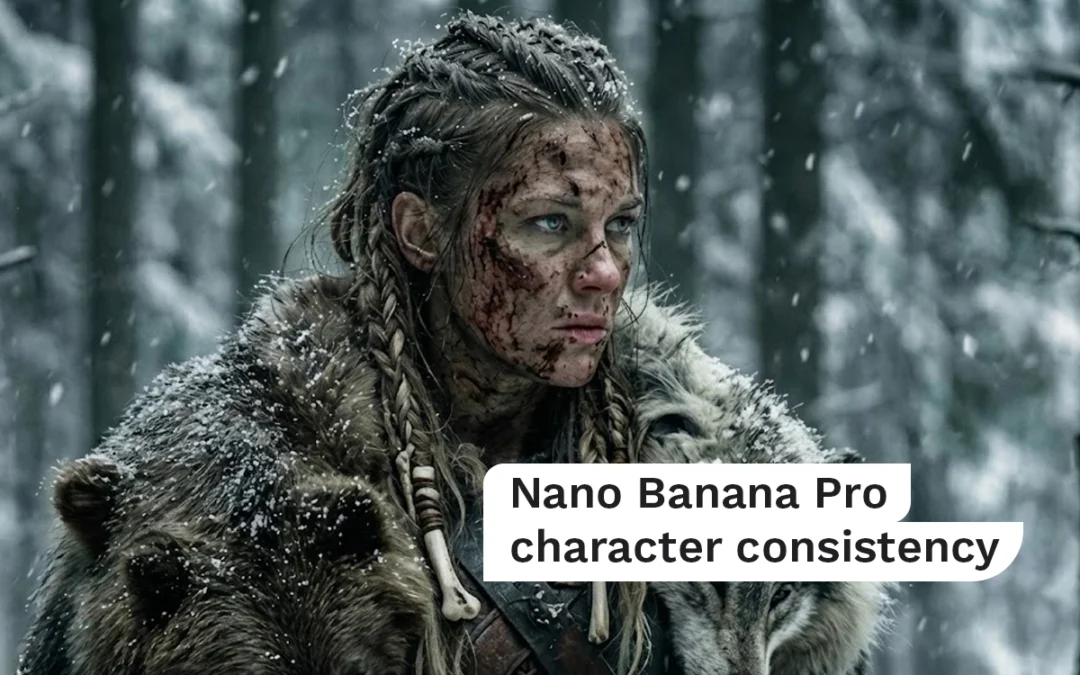
No jargon. No guessing. Full control. Nano Banana Pro character consistency
In This Post
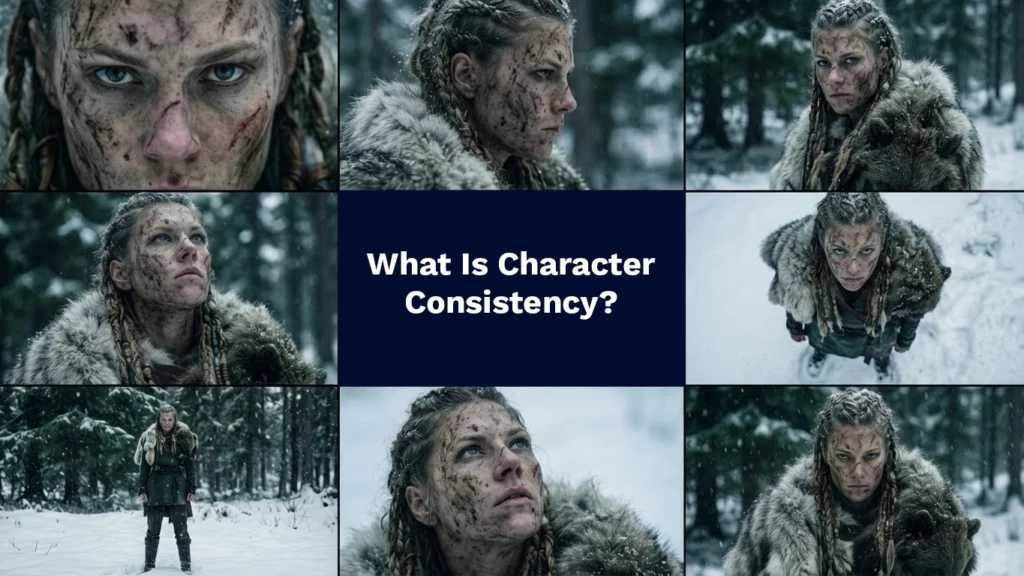
What Is Character Consistency in Nano Banana Pro?
Character consistency means that the same character remains visually identical across:
Different camera angles
Different scenes
Different emotions
Different image generations
Images → video workflows
In Nano Banana Pro, consistency is not achieved by longer prompts. It’s achieved by how you use reference images.
If your character keeps changing, it’s because Nano Banana Pro is being forced to re-invent the character every time.
Why Most AI Characters Break (The Real Reason)
Here’s the hard truth:
Nano Banana Pro does not want you to “describe” your character repeatedly.
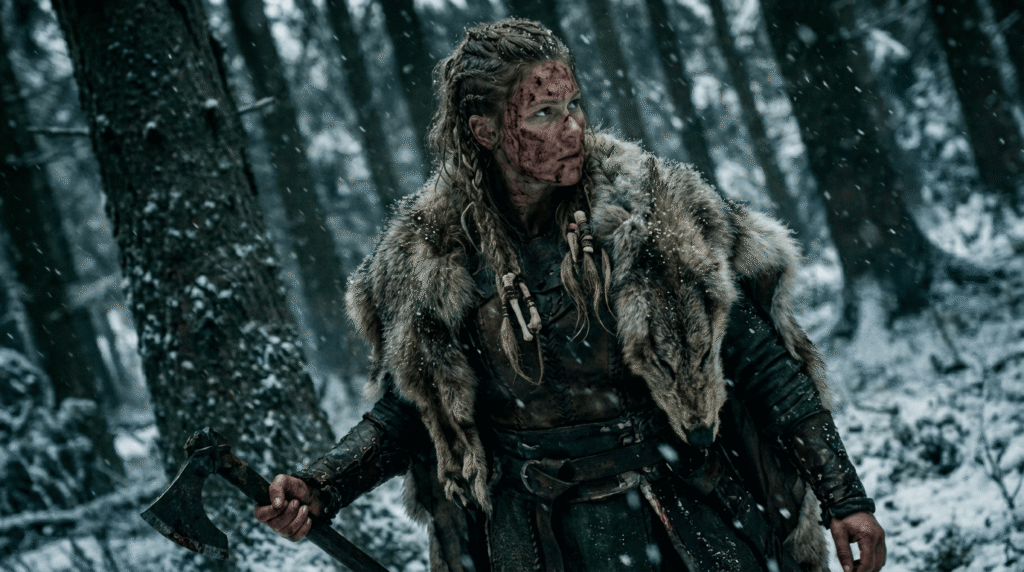
Three-quarter angle cinematic shot of image 1. Same outfit, same lighting, same environment. Camera slightly rotated to show perspective change without altering character identity.
Most beginners do this:
Add more adjectives
Add more physical details
Add more style words
Rewrite the prompt every time
That works in text-to-image tools. It fails in image-to-image systems like Nano Banana Pro.
Why?
Because Nano Banana Pro trusts images more than words.
The Foundation Image: The Single Most Important Concept
A foundation image is the original image that defines:
Face structure
Hair
Clothing
Body type
Lighting
Color palette
Environment
Style
This image becomes Image 1 in Nano Banana Pro.
Everything else you create must reference this image.
If you skip this step, character drift is guaranteed.
How Nano Banana Pro Actually Thinks
Nano Banana Pro works like this:
It reads Image 1
It extracts visual identity
It treats that identity as ground truth
It applies your new instructions on top of that identity
If you don’t give it Image 1, it fills the gaps itself.
That’s why characters randomly change.
The Correct Workflow for Character Consistency
Step 1: Create One Strong Foundation Image
Your foundation image must be:
Clear
High-quality
Well-lit
Visually distinct
Emotionally neutral
Avoid extreme expressions or motion. You want a stable reference, not a dramatic moment.
Step 2: Lock the Foundation Image as Image 1
Every new generation should:
Include the foundation image
Reference it explicitly
Avoid redefining the character
Your prompts should assume the character already exists.
Look, I’ve been a designer for over a decade. I’ve ground out projects for Lots of brands. I know the struggle of spending days on tasks that should take hours.
But recently? Everything changed.
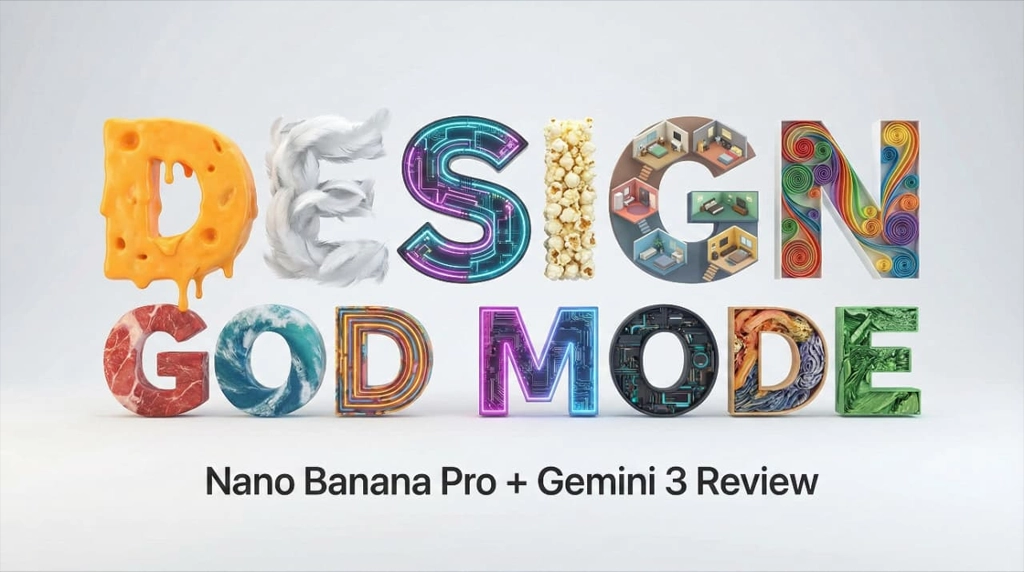
I’ve been testing Nano Banana Pro paired with Gemini 3, and I’m not throwing this term around lightly: it is absolute God Mode for designers. We are talking about five breakthrough features that take tasks that used to take me three full days and finishing them in seconds.
If you want to know how to create epic designs, perfect text, and mind-blowing 4K renders, keep reading. Here is how Nano Banana Pro changes graphic design forever.
Nano Banana Pro is an advanced multimodal AI design model capable of reasoning across text, images, layout, and visual hierarchy. When grounded by Gemini 3, it becomes far more than an image generator.
It understands: – What text means, not just how it looks – How images relate spatially and semantically – How design systems stay consistent – How real-world information should appear visually
This combination moves AI design from generation to design intelligence.
Why Gemini 3 Changes Everything
Gemini 3 provides grounding, reasoning, and verification.
Instead of guessing, Nano Banana Pro can: – Research before designing – Validate information after output – Understand instructions at a structural level
This drastically reduces hallucination and increases professional reliability.
Breakthrough 1: Perfect Text Rendering With Real Content
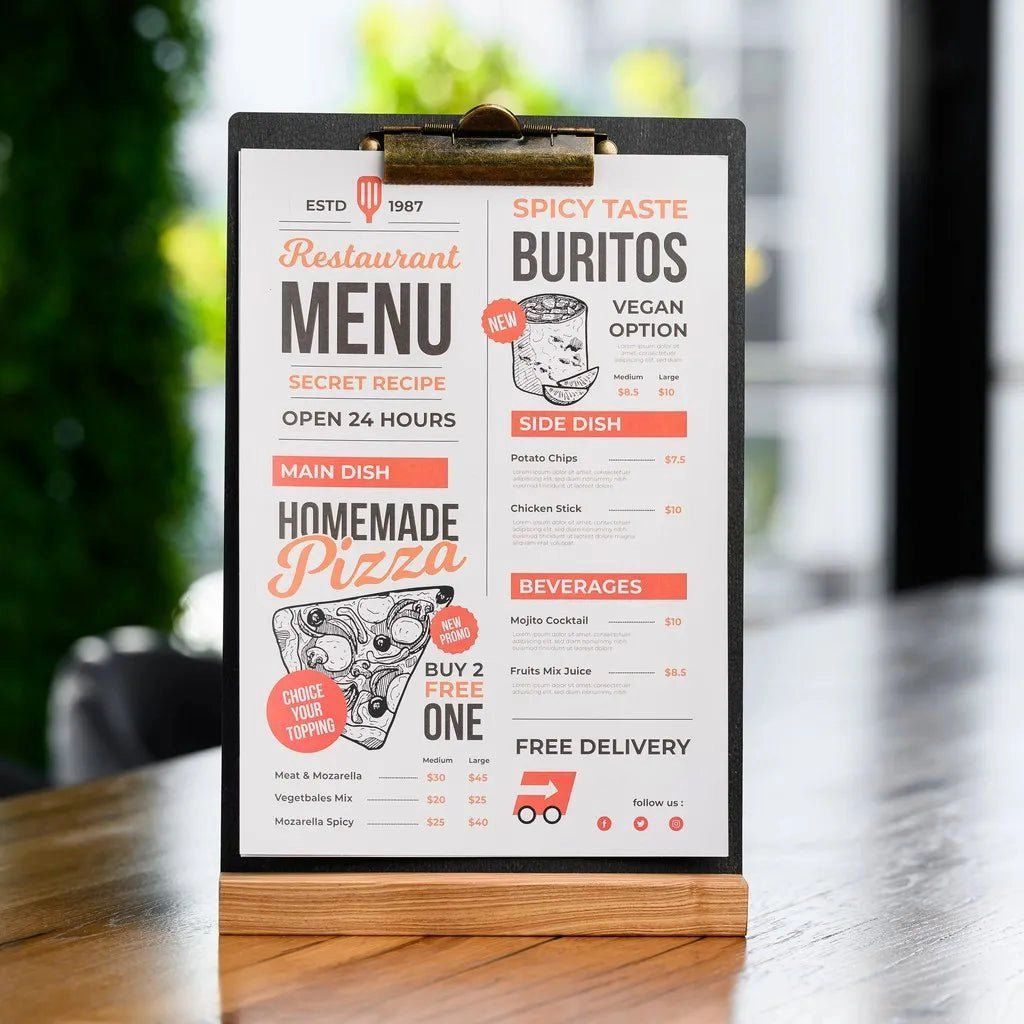
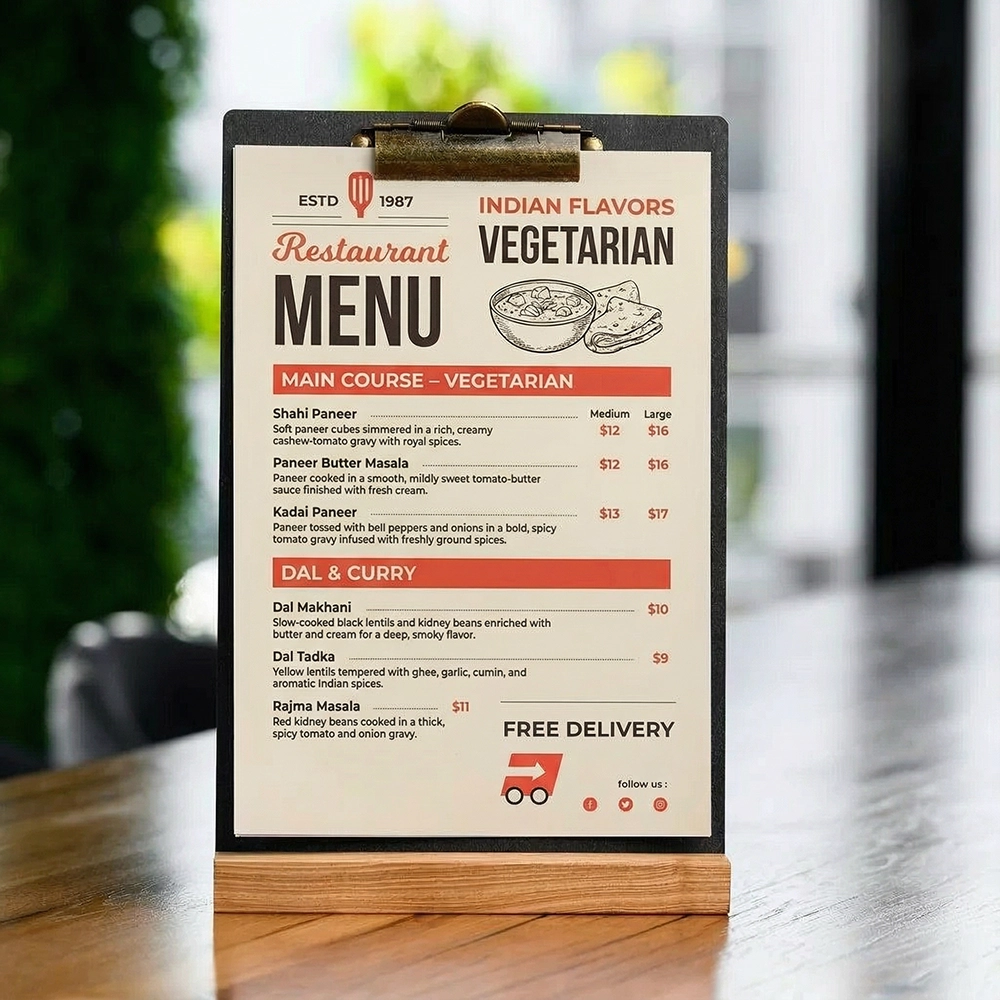
This is the most important update because it allows us to output highly dense, specific pieces of text. I tested this by feeding it a prompt for a street food menu with 10 clean, modern items.
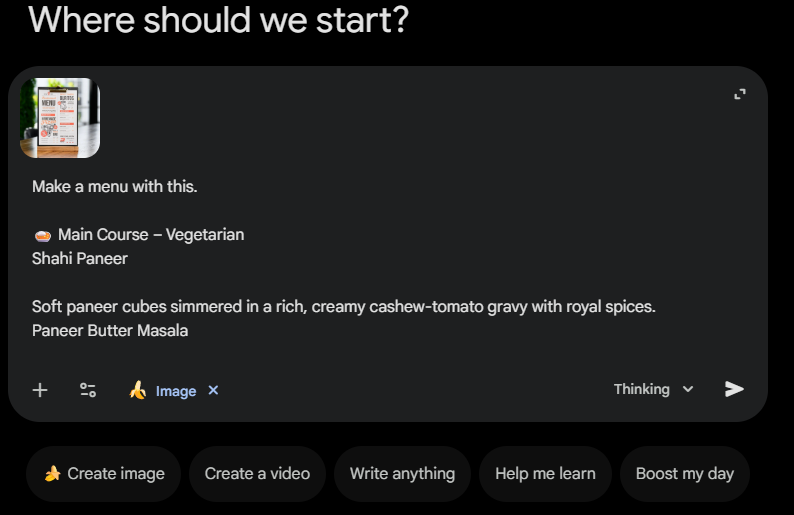
I gave it an image reference and said,
Prompt: “Make a menu with this.
🍛 Main Course – Vegetarian
Shahi Paneer Soft paneer cubes simmered in a rich, creamy cashew-tomato gravy with royal spices.
Paneer Butter Masala Paneer cooked in a smooth, mildly sweet tomato-butter sauce finished with fresh cream.
Kadai Paneer Paneer tossed with bell peppers and onions in a bold, spicy tomato gravy infused with freshly ground spices.
Dal Mak….“
The result?
Zero typos.
Perfect formatting.
Instant output.
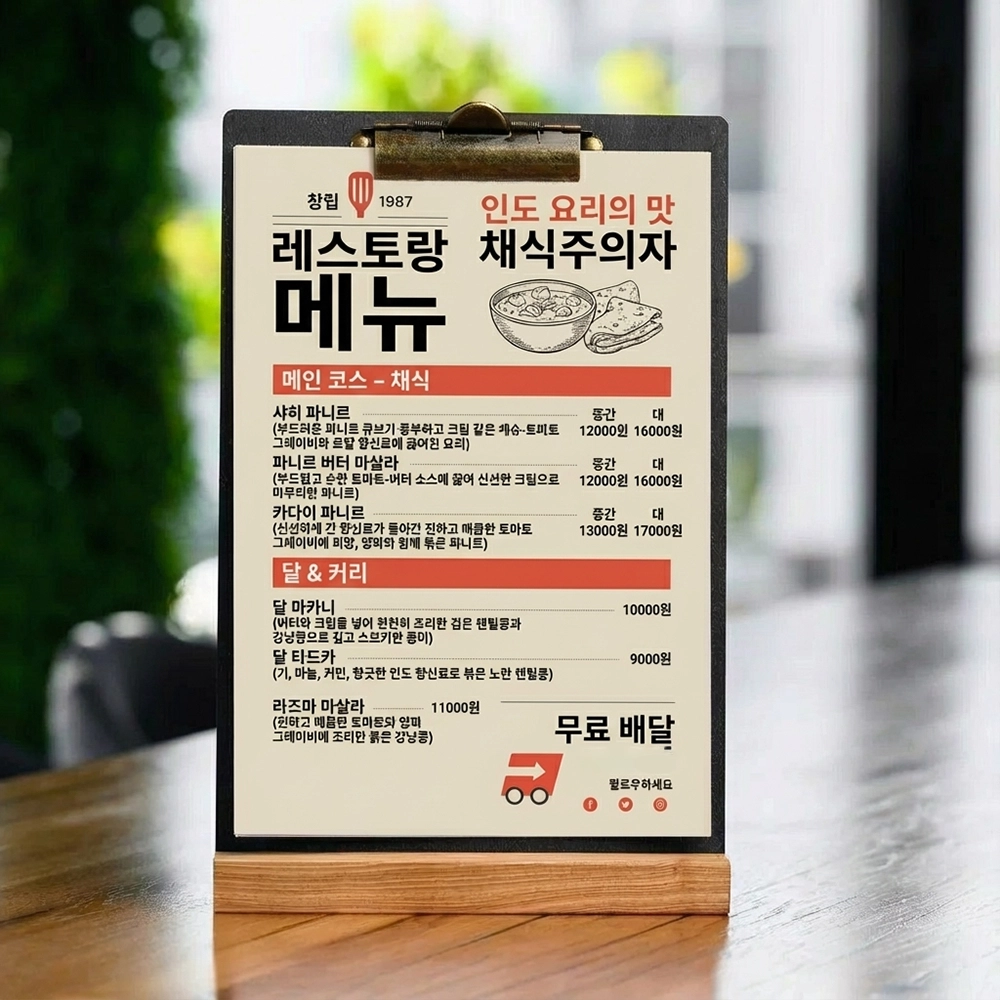
The Translation Hack Here is where it gets crazy. You can take that same design and ask it to translate it instantly while keeping the exact design aesthetic.
I asked it to translate the menu to Korean. Now, my Korean is a little rusty, but it performed the task with absolute expertise. Imagine the time you save designing for international markets without having to rebuild the layout from scratch.
Breakthrough 2: Infinite Typography and Custom Font Creation
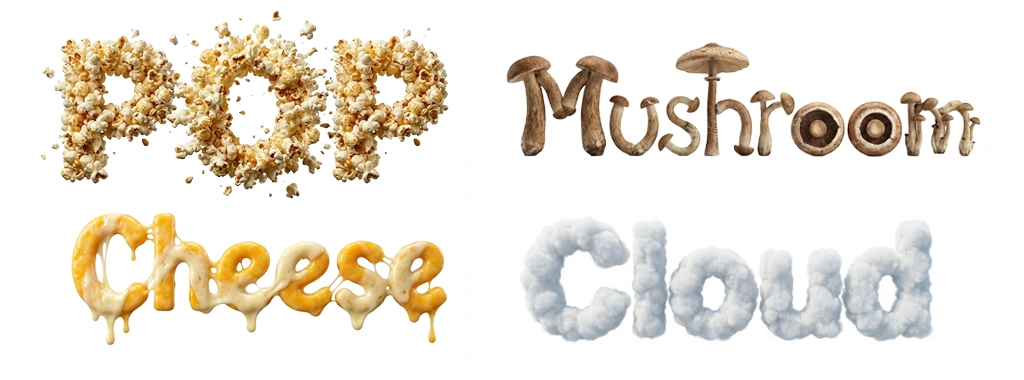
Nano Banana Pro can generate typography as designed objects, not font files alone.
I played around with this and the results were stunning:
The word “Cheese” made of melting cheese.
“Pop” made of exploding popcorn.
“Mushroom” using the mushroom cap to form the letter ‘O’.
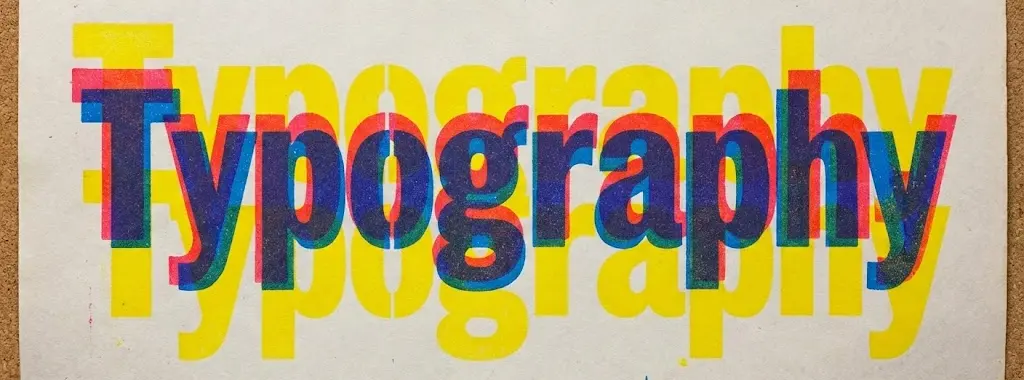
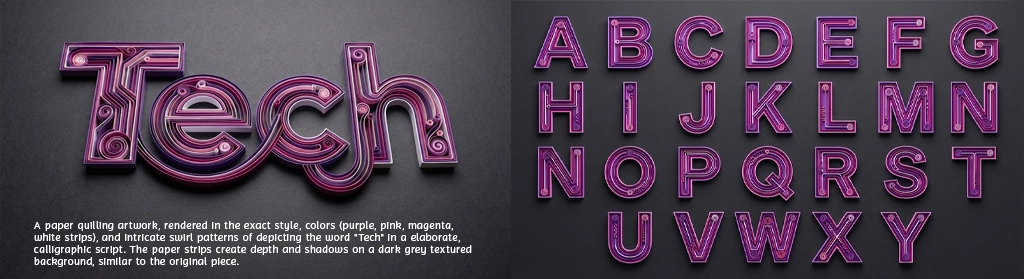
We can even do “impossible” shapes or specific artistic styles like paper quilling (rendered in purple, pink, and magenta) or Rizograph print styles with that beautiful, authentic grain.
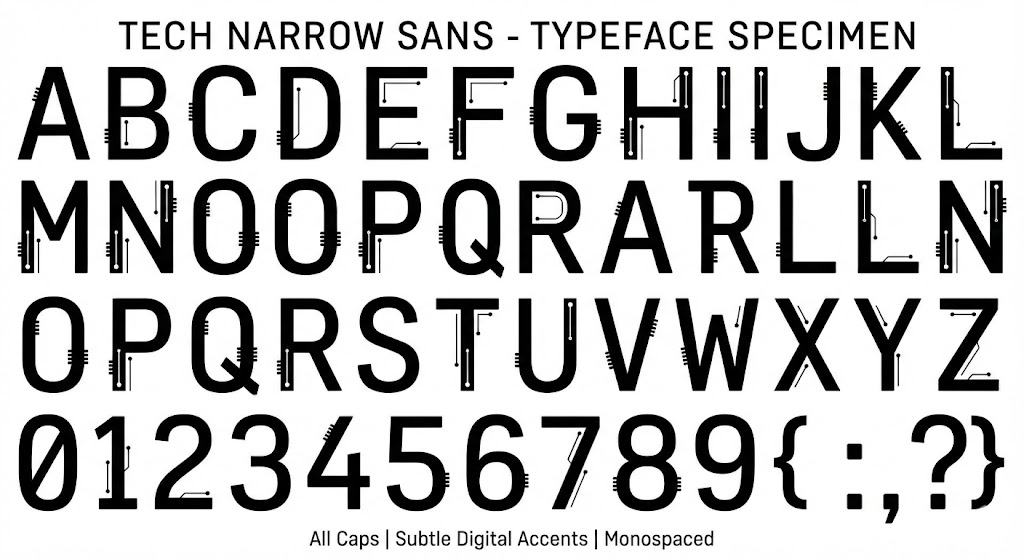
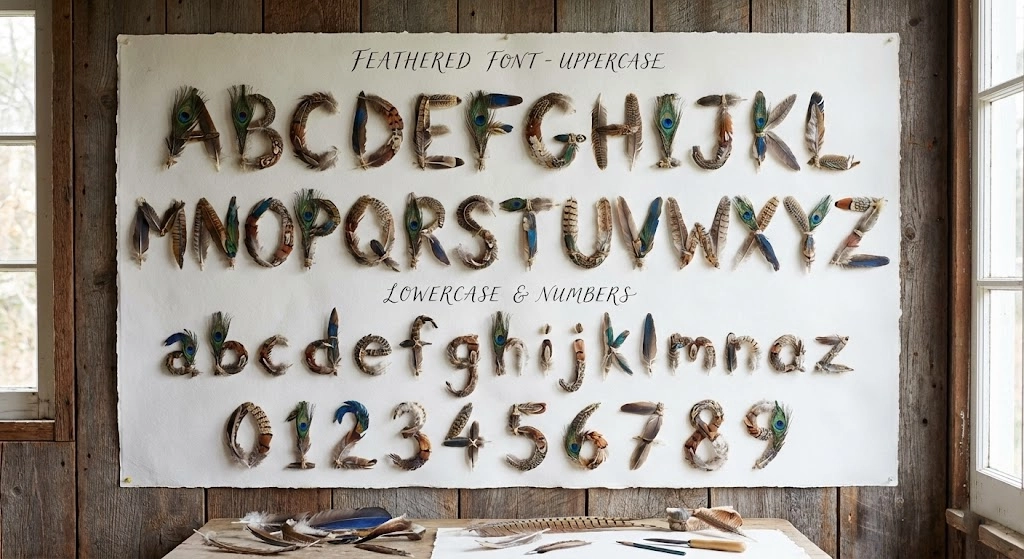
Pro Tip: You can generate entire font sheets. I made a “feathery font” and a futuristic tech font in seconds. In the past, creating a custom brand font would have taken me weeks.
This allows rapid creation of brand-specific typographic systems that previously took weeks.
Breakthrough 3: Multi-Image Reference Reasoning (Up to 14 Images)
Nano Banana Pro can ingest up to 14 reference images and reason across them contextually.
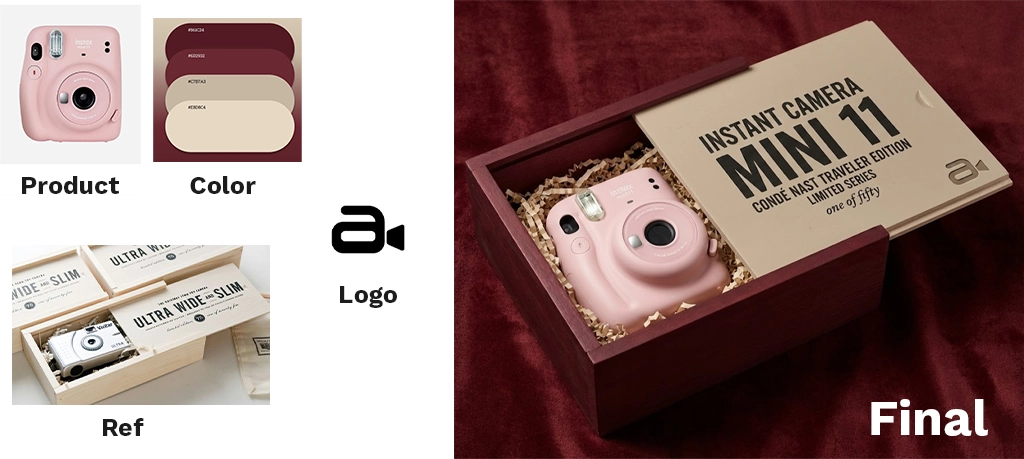
I wanted to design premium product packaging artwork for a new physical product.
I uploaded four reference images:
A photograph of the actual product (shape, proportions, materials).
A luxury packaging design from a different brand (typography, spacing, hierarchy).
A color palette + texture reference (matte black, foil accents).
A brand symbol / logo used on older collateral.
Then I instructed the AI:
“Create a premium box packaging design using the product’s exact shape from Image 1, apply the visual language and typography system from Image 2, use the color and material finish from Image 3, and integrate the logo from Image 4 subtly on the front panel.”
Image 2 = design system reference (grid, font scale, whitespace)
Image 3 = material & finish direction
Image 4 = brand identity asset
It did not randomly blend visuals.
It:
Placed branding with intent and hierarchy
Preserved product proportions
Applied the correct typography rhythm
Used materials realistically (foil, emboss, matte)
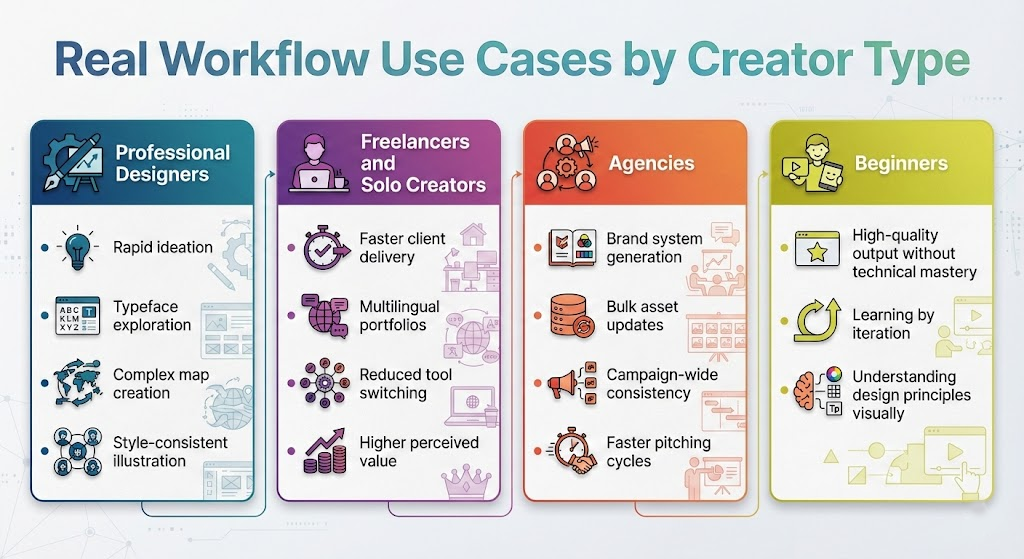
Real Workflow Use Cases by Creator Type
Professional Designers
Rapid ideation
Typeface exploration
Complex map creation
Style-consistent illustration
Freelancers and Solo Creators
Faster client delivery
Multilingual portfolios
Reduced tool switching
Higher perceived value
Agencies
Brand system generation
Bulk asset updates
Campaign-wide consistency
Faster pitching cycles
Beginners
High-quality output without technical mastery
Learning by iteration
Understanding design principles visually
Layer Control and Practical Workarounds
Full layer editing is limited, but usable workarounds exist.
You can: – Export isolated elements – Use white or green backgrounds – Rebuild layers in traditional tools
This allows Nano Banana Pro to fit into professional pipelines today.
Advanced Applications: Maps, Logos, and Systems
Nano Banana Pro excels at traditionally complex tasks: – Illustrated and recolored maps – GTA-style city layouts – Negative space logos – Symbol-letter hybrids
It understands both readability and symbolism.
Meta Prompting: Designing the Prompt Before the Design
A powerful workflow: 1. Write a rough idea 2. Ask Gemini 3 to refine it 3. Send the refined prompt to Nano Banana Pro
This dramatically improves consistency and output quality.
From Single Images to Design Systems
When used inside design agents, Nano Banana Pro scales to full brand systems.
You can generate and update: – Logos – Websites – Social media assets – Posters – Merchandise
Changes can propagate across all assets via natural language.
Industry Implications
This shifts the designer’s role.
Execution is automated. Direction becomes critical. Taste becomes leverage.
The designer becomes a systems thinker, not a production machine.
Nano Banana Pro is an advanced AI design model that generates high-resolution visuals with accurate text, custom typography, and multi-image reasoning, especially when paired with Gemini 3.
How does Gemini 3 improve AI graphic design
Gemini 3 grounds AI-generated designs in real-world knowledge, improves prompt understanding, reduces hallucinations, and enables verification of text and data inside images.
Is Nano Banana Pro better than Midjourney or DALL·E
Nano Banana Pro focuses on accurate text, layout control, and design systems, while tools like Midjourney emphasize artistic imagery over production-ready design.
Can Nano Banana Pro be used for professional client work
Yes. It is suitable for branding, typography, infographics, maps, and concept design when combined with human review and verification.
What are the limitations of Nano Banana Pro
Current limitations include limited native layer editing and the need for human verification of critical data, despite Gemini 3 grounding.
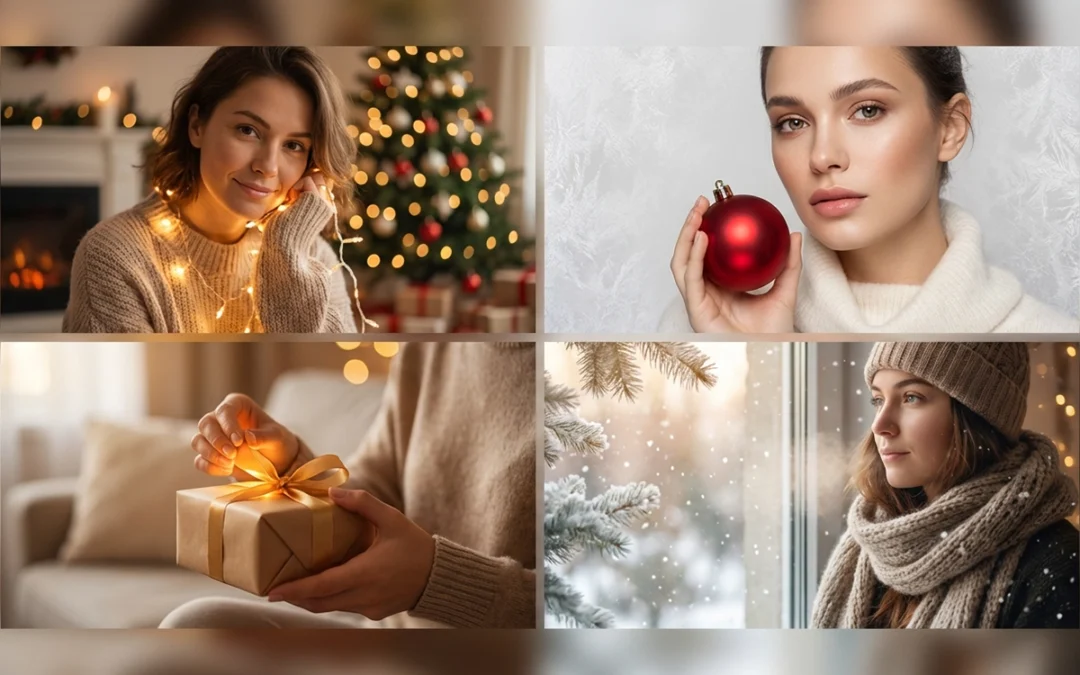
There is something timeless about Christmas portraits. They capture warmth, joy, and emotion in a way no other season can. From glowing lights to cozy textures, holiday portraits tell a story people want to revisit year after year.
The problem is consistency. Many holiday portraits feel staged, flat, or overly artificial.
That is where Gemini changes everything.
With Google’s latest image model, you can create Christmas portraits that feel cinematic, personal, and professionally lit without a studio or complex setup.
This guide gives you 15 ready-to-use Gemini prompts designed specifically for realistic, high-impact Christmas portraits.
In This Post
How to Create Your Perfect Christmas Portrait With Gemini
Before using the prompts, follow this exact setup for best results.
Copy and paste each prompt without changing wording for consistent output quality.
15 Gemini Christmas Portrait Prompts
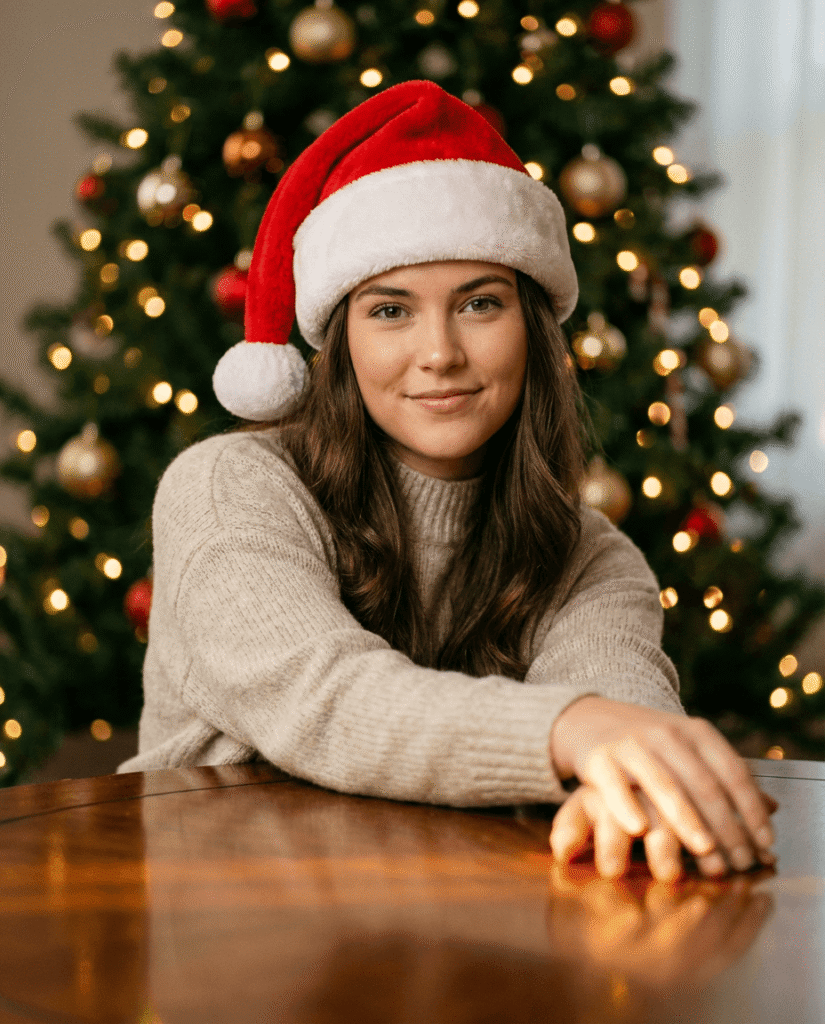
1. Cozy Tabletop Glow Portrait
Create a warm Christmas portrait of a young woman sitting at a wooden table, leaning slightly forward with relaxed hands resting on the surface. She wears a soft neutral knit sweater and a red Santa hat. The table has a subtle reflective finish catching soft light. A Christmas tree glows gently behind her with warm lights blurred into bokeh. Her expression is calm, confident, and natural. Lighting is soft and cinematic. Aspect ratio 4:5.
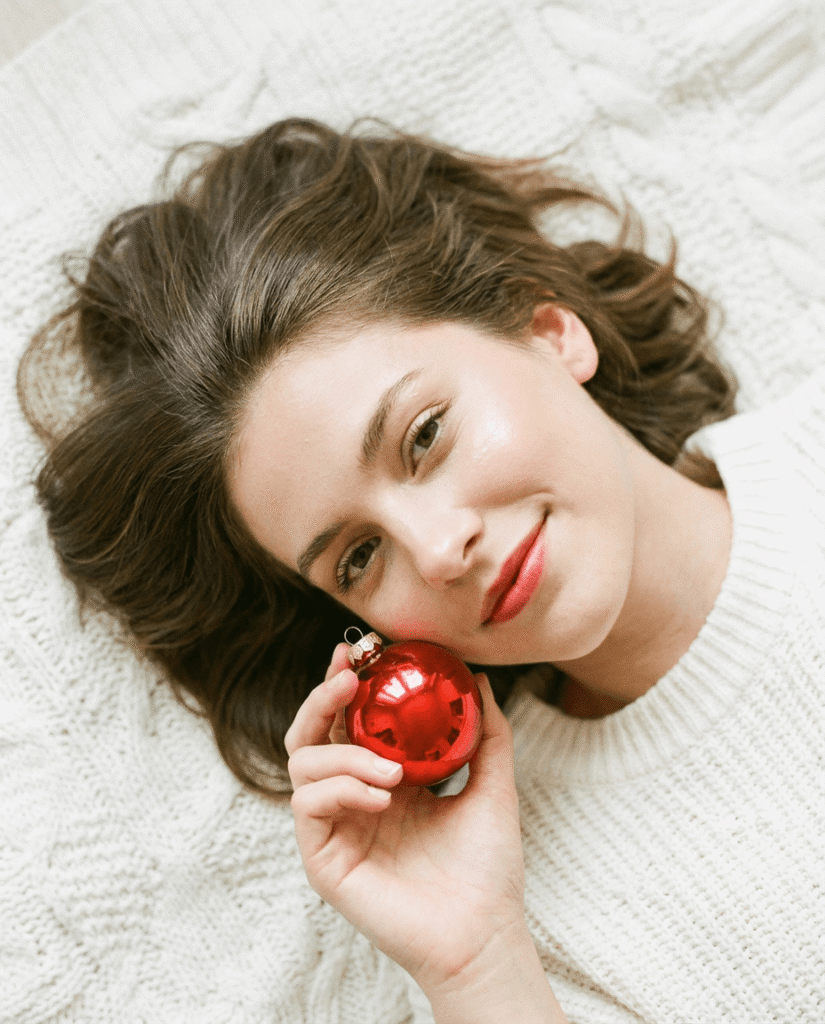
2. Minimal Beauty With Holiday Accent
Create a clean Christmas beauty portrait photographed from above. A young woman lies on a white textured surface with her hair spread naturally around her head. She holds a single red Christmas ornament near her cheek. Her expression is peaceful with direct eye contact. Makeup is minimal and elegant. The mood is bright, soft, and refined. Aspect ratio 4:5.
3. Gift Surprise Moment
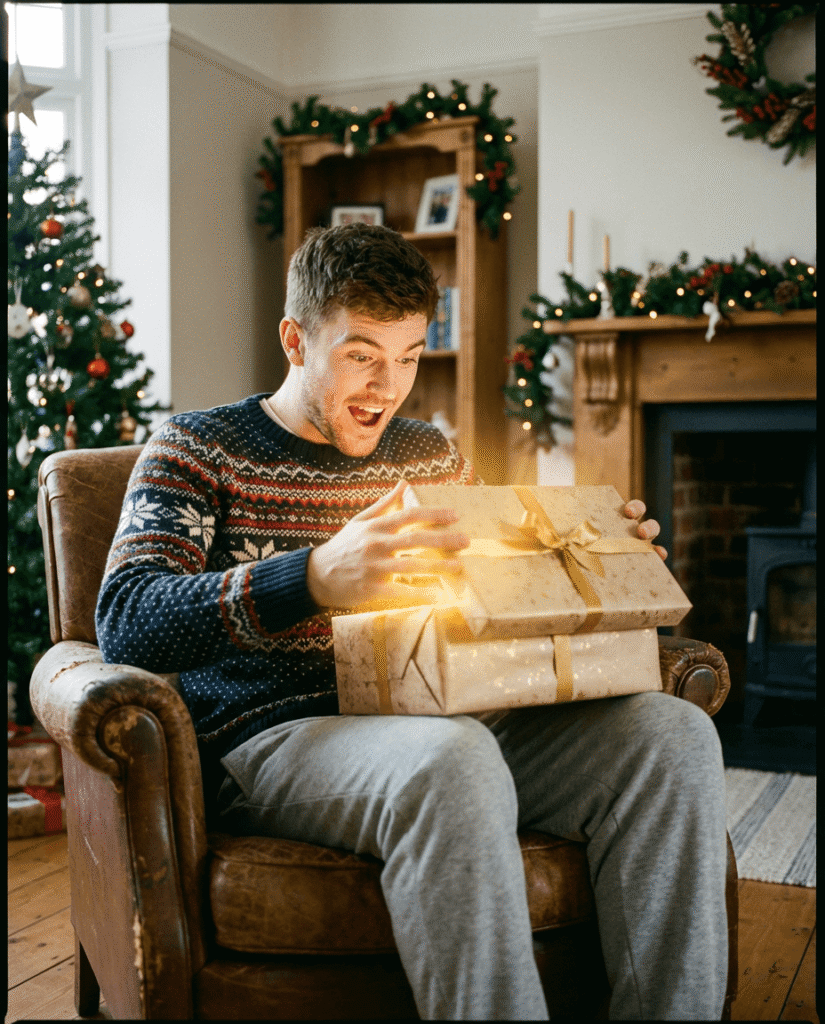
Create a lifestyle Christmas portrait of a young man sitting comfortably in a cozy living room chair. He is opening a wrapped gift on his lap and reacting with genuine surprise. Warm golden light spills from the box, lighting his face and hands. He wears a festive knit sweater and relaxed lounge pants. The scene feels candid and joyful. Aspect ratio 4:5.
4. Over-the-Shoulder Holiday Glam
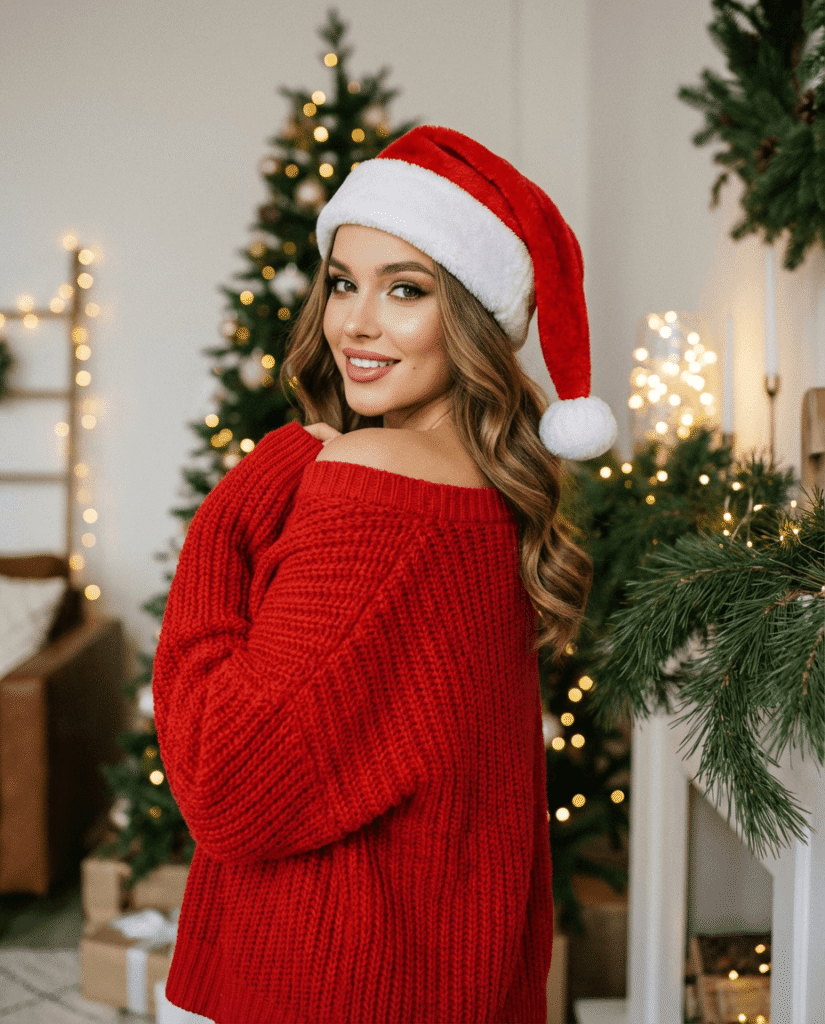
Create a stylish Christmas portrait of a young woman captured mid-turn, looking back over her shoulder toward the camera. She wears a red knit sweater slightly draped off one shoulder and a Santa hat. Her hair is styled in smooth flowing waves. Expression is confident and polished. Lighting is soft with gentle highlights. Aspect ratio 4:5.
5. Classic Car Winter Portrait
Create a festive winter portrait of a young man leaning out of the window of a vintage car parked during snowfall. He smiles warmly at the camera. He wears a plaid winter coat, gloves, and a dark turtleneck. Snowflakes fall naturally through the scene, adding movement and depth. Aspect ratio 4:5.
6. Indoor Wreath Portrait
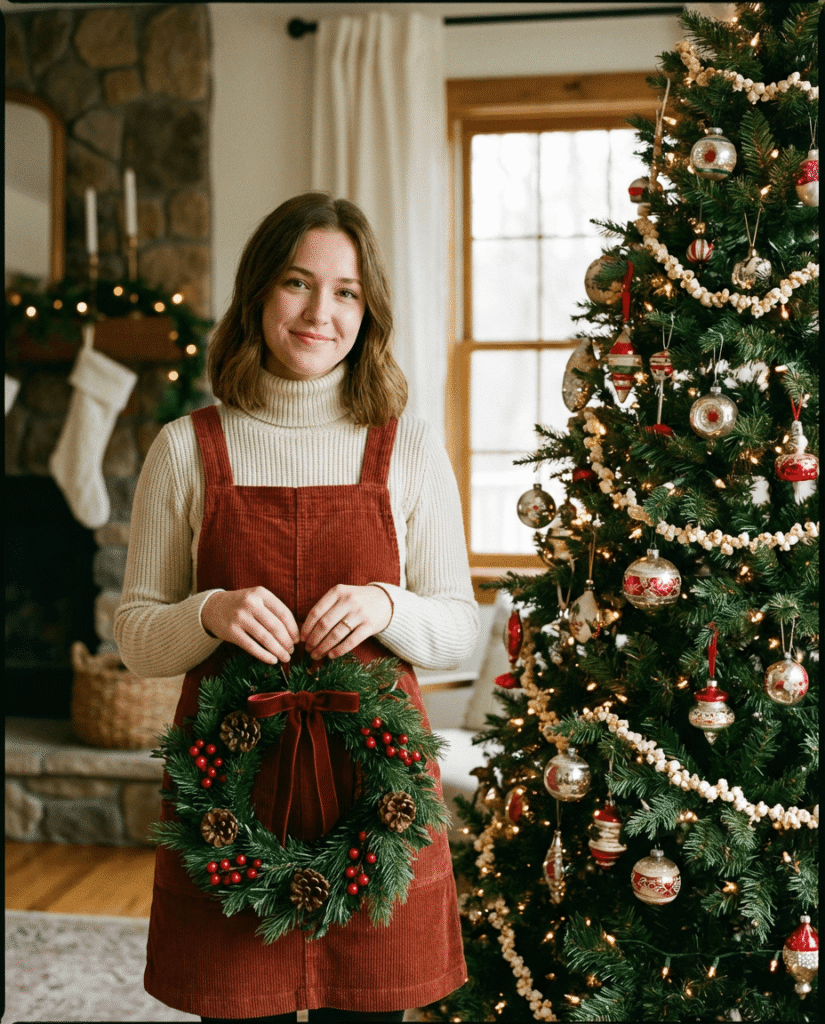
Create a cozy indoor Christmas portrait of a young woman standing beside a decorated tree. She holds a small green wreath with red accents at waist height. She wears a fitted turtleneck layered under a simple pinafore dress. Her posture is relaxed and welcoming. Lighting is warm and natural. Aspect ratio 4:5.
7. Snow Globe Magic Moment
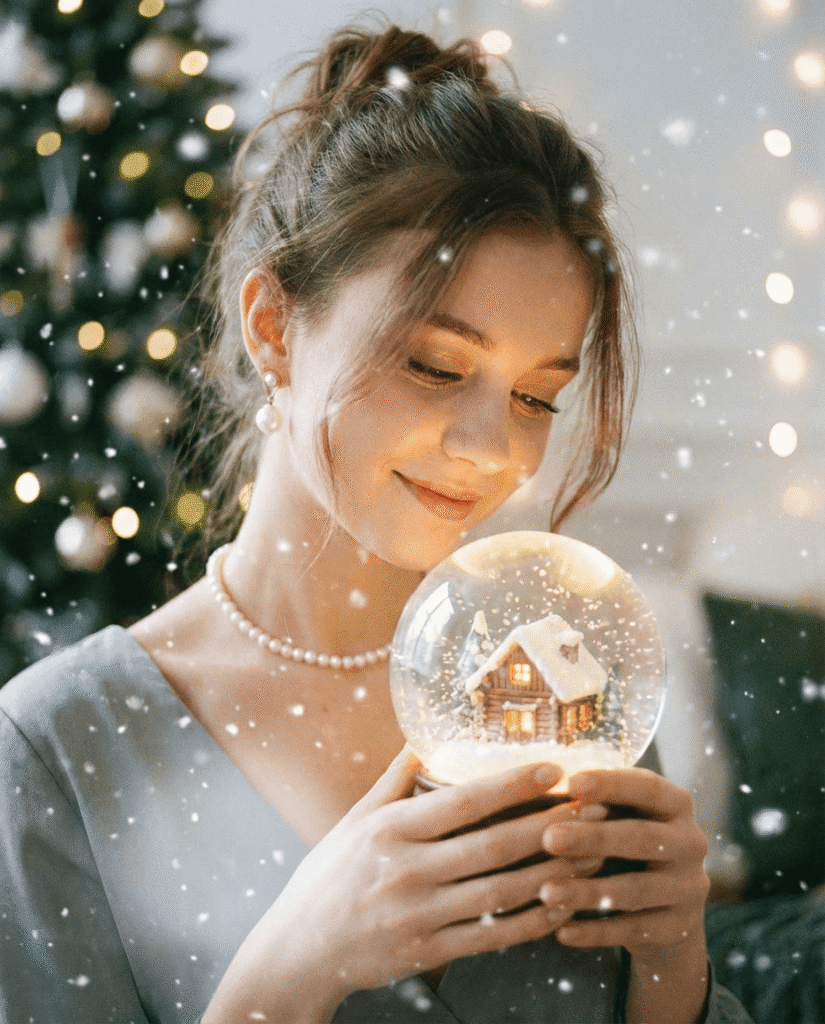
Create a dreamy Christmas portrait of a young woman holding a softly glowing snow globe close to her chest. Inside the globe is a tiny winter cabin scene lit from within. She looks down at it with a gentle smile. Soft floating snow particles surround her. She wears elegant pearl accessories. Aspect ratio 4:5.
8. Playful Snow Day Scene
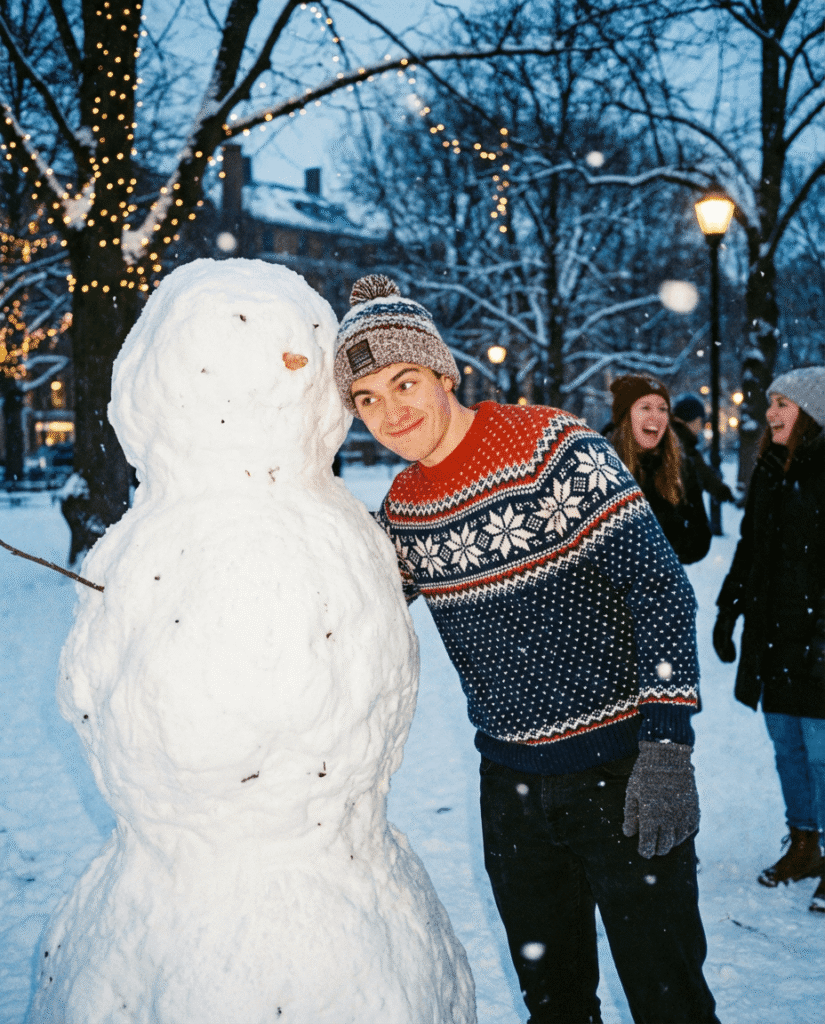
Create an outdoor Christmas portrait in a snowy park during early evening. A young man leans playfully toward a snowman and smiles with a mischievous expression. He wears a patterned Nordic sweater and winter accessories. The scene feels lighthearted and fun. Aspect ratio 4:5.
9. Hygge Lifestyle Portrait
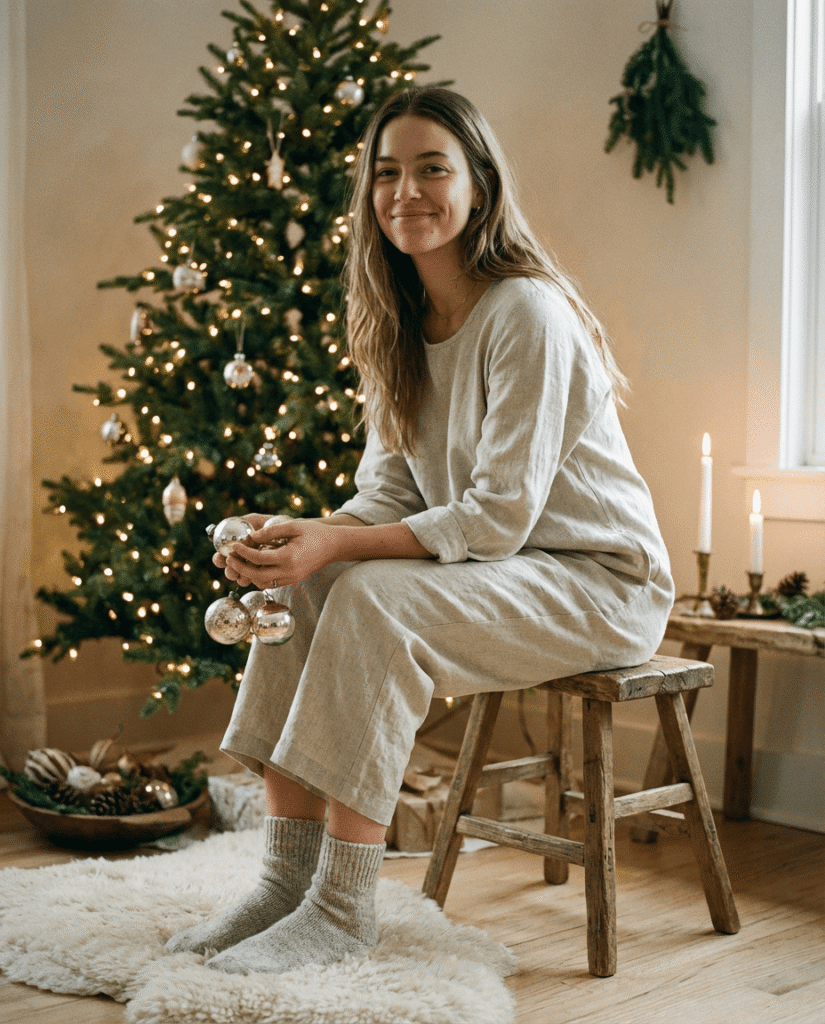
Create a calm Christmas lifestyle portrait of a young woman seated on a small stool beside a softly lit Christmas tree. She wears loose neutral clothing with knit socks. She holds a few ornaments casually in her hands. Expression is relaxed and content. Lighting is warm and minimal. Aspect ratio 4:5.
10. Candlelit Window Scene
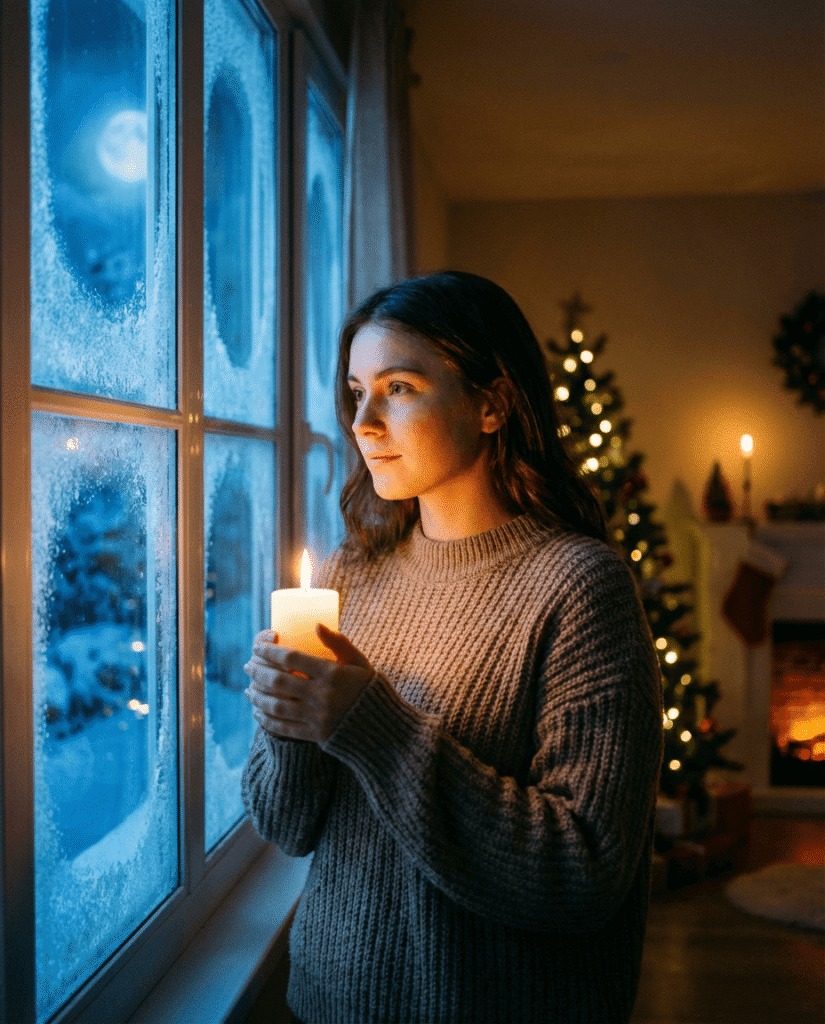
Create an intimate Christmas portrait of a young woman standing near a frosted window at night. She holds a lit candle that softly illuminates her face. Cool winter light contrasts with warm candle glow. Her expression is thoughtful and peaceful. Aspect ratio 4:5.
11. Fireplace Reading Portrait
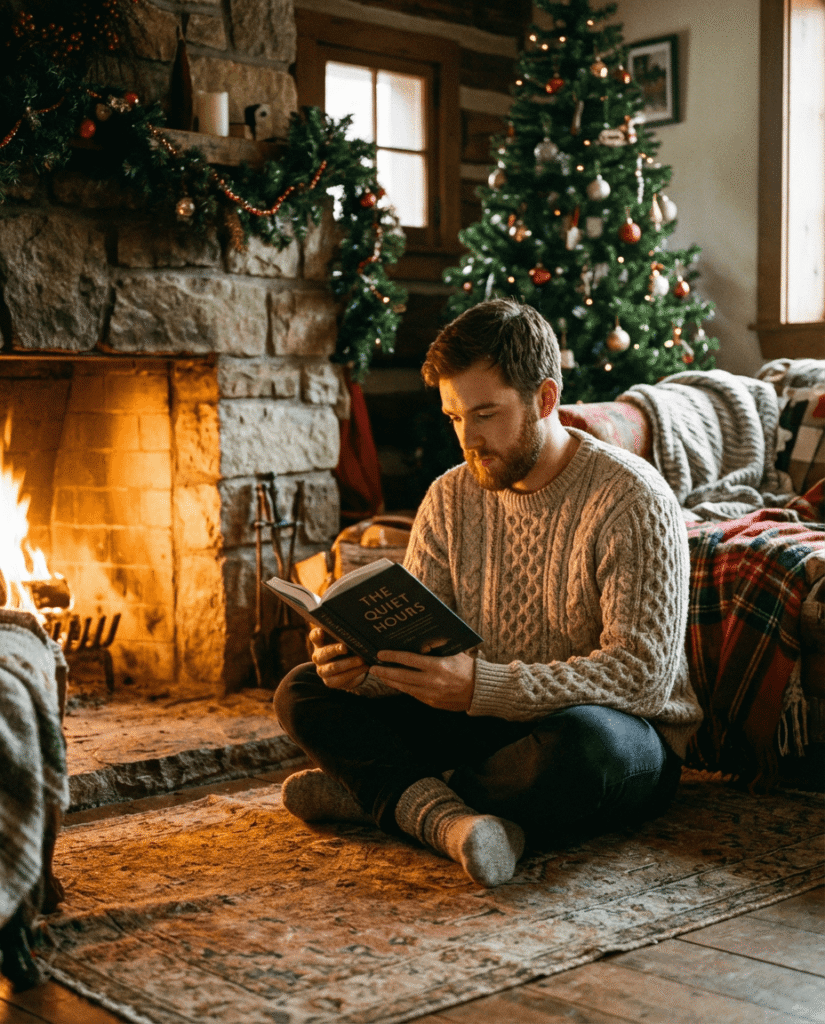
Create a cozy Christmas portrait of a young man sitting on the floor near a fireplace, reading a book. Firelight casts warm highlights on his face. He wears a thick knit sweater and socks. The scene feels quiet and reflective. Aspect ratio 4:5.
12. Cozy Couple Holiday Moment
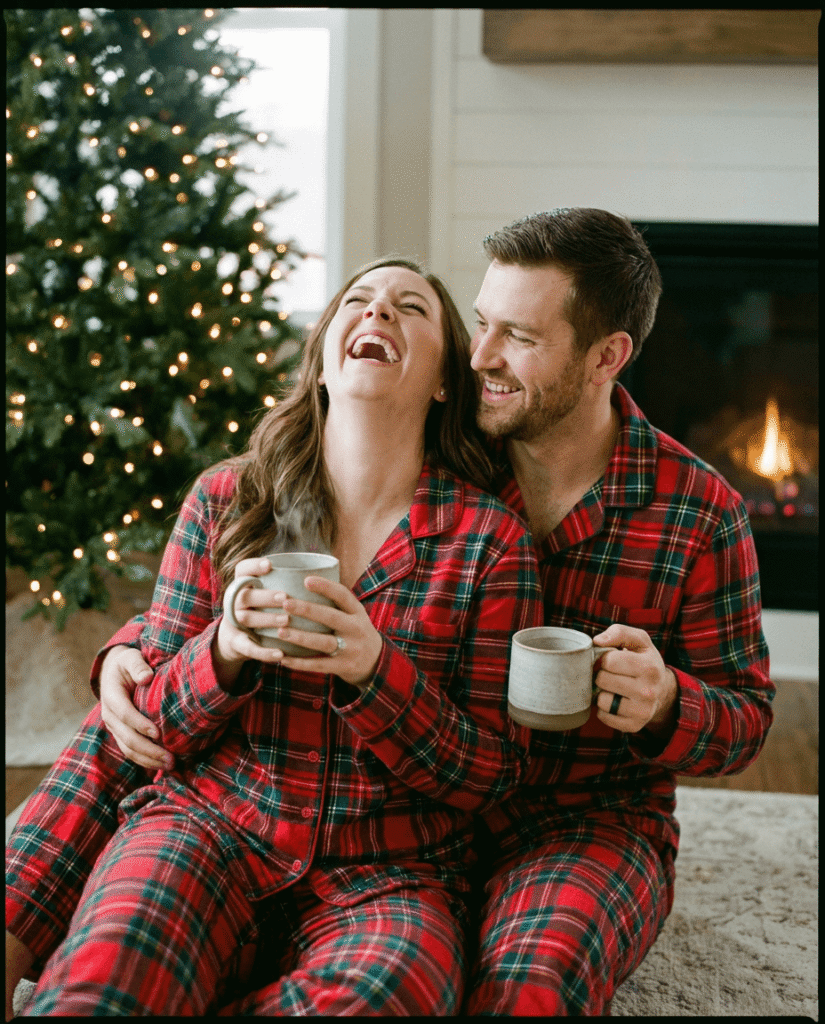
Create a natural Christmas couple portrait of two people sitting near a Christmas tree wearing matching holiday pajamas. They laugh together while holding warm drinks. The moment feels candid and intimate. Soft tree lights glow in the background. Aspect ratio 4:5.
13. Elegant Evening Christmas Look
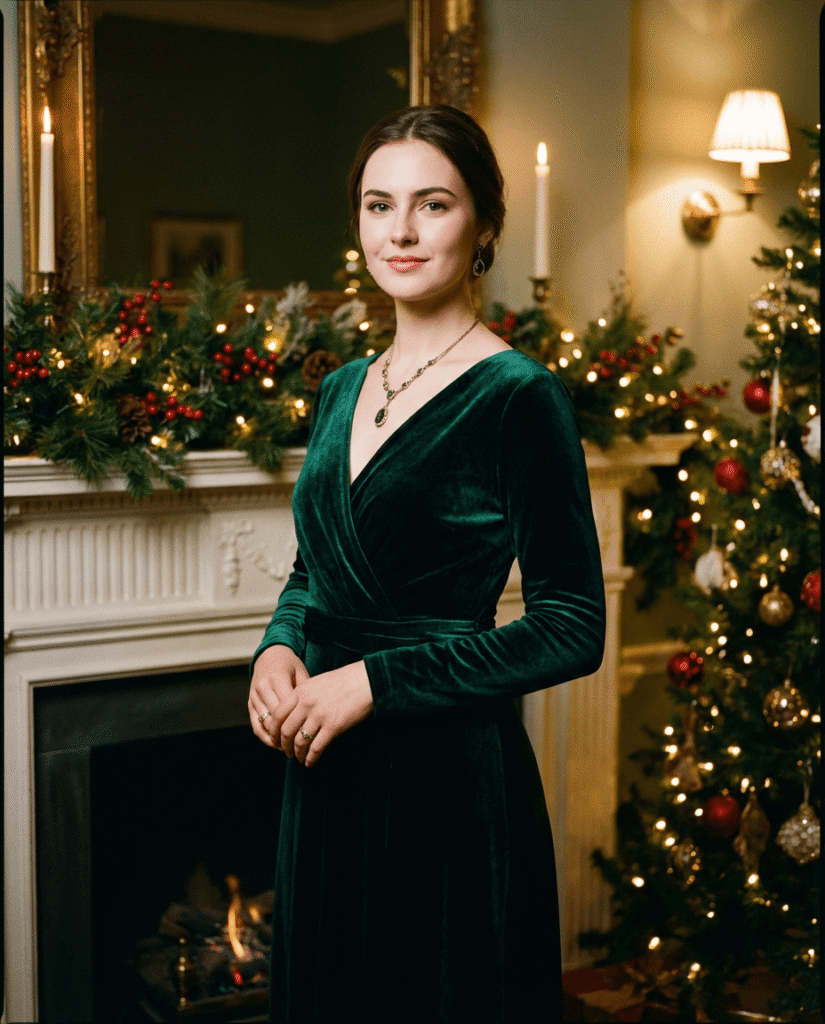
Create a refined Christmas portrait of a young woman dressed in a dark velvet evening outfit. She stands in front of softly lit holiday decorations. Her expression is poised and confident. Lighting is dramatic but soft. Aspect ratio 4:5.
14. Child Wrapped in Lights
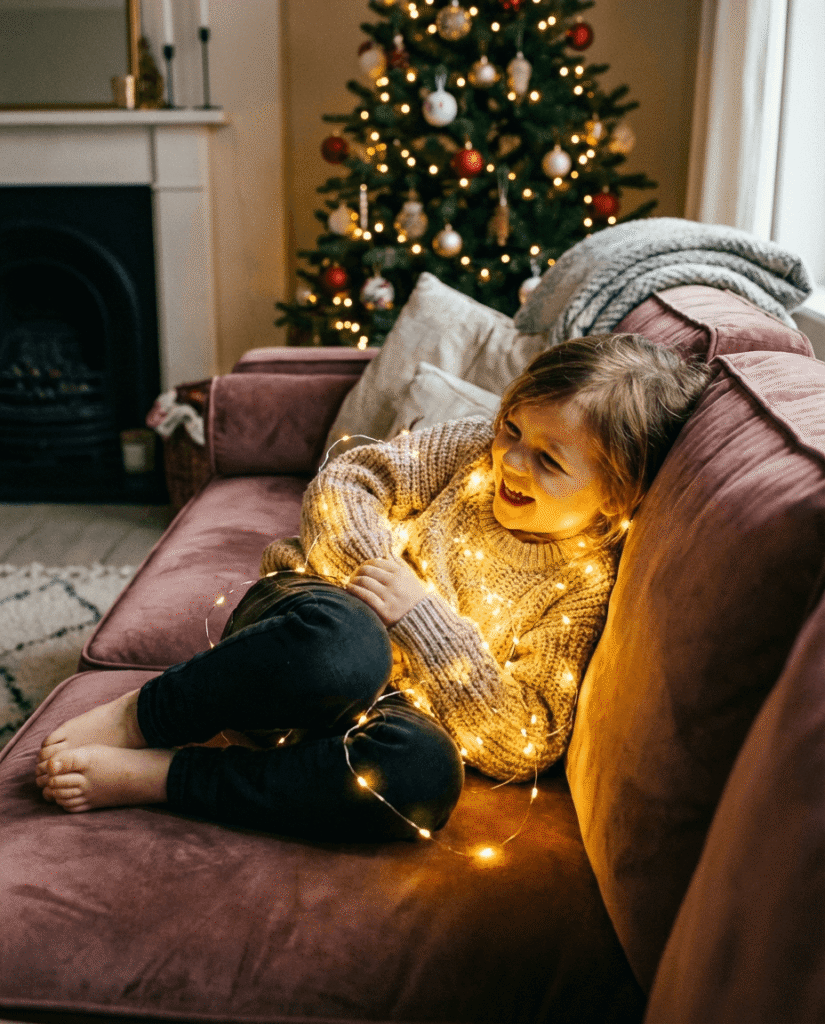
Create a heartwarming Christmas portrait of a child sitting comfortably on a couch, gently wrapped in warm white string lights. The lights softly illuminate their face. Expression is joyful and curious. The background feels cozy and safe. Aspect ratio 4:5.
15. Winter Morning Balcony Portrait
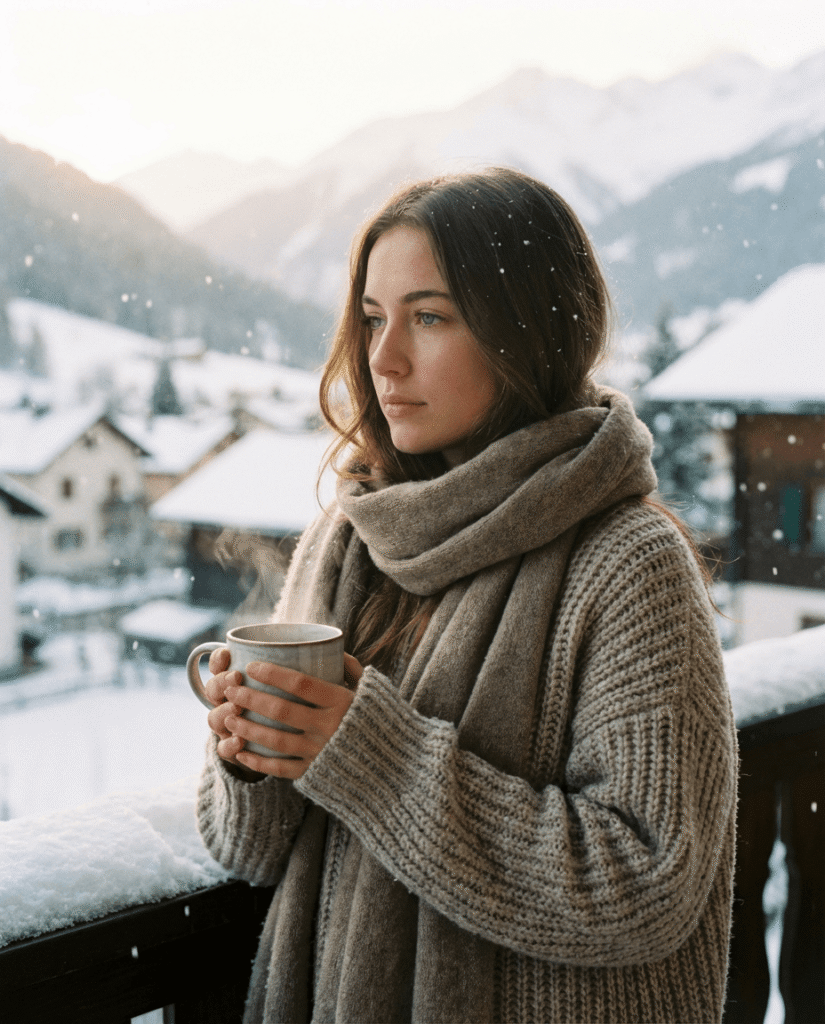
Create a peaceful Christmas morning portrait of a young woman standing on a snowy balcony holding a warm mug. Steam rises gently. She wears a thick sweater and scarf. Snow falls lightly around her. Mood is quiet and reflective. Aspect ratio 4:5.
What Makes These Prompts Work
Natural language instead of technical clutter
Clear lighting direction
Emotional cues built into posture and expression
No over-styling or exaggerated effects
This is how you get portraits that feel real instead of AI-generated.
Conclusion
Good Christmas portraits are not about props. They are about mood, light, and subtle emotion.
Gemini can produce stunning results if you guide it with intention instead of overloading it with instructions. Use these prompts as-is, tweak gently if needed, and let the model handle the rest.
This is how you create holiday portraits people actually want to keep.
FAQs
1. Can I change outfits or colors in these prompts?
Yes. Change one detail at a time to avoid breaking realism.
2. Should I always upload a reference photo?
If you want facial accuracy, yes. For generic portraits, it is optional.
3. Why is 3:4 aspect ratio recommended?
It works best for portraits, prints, and social platforms.
4. Can these prompts work outside Christmas?
Yes. Remove holiday elements and keep lighting and emotion.
5. Do these prompts work on other AI models?
They are optimized for Gemini but can be adapted elsewhere.
If you’ve ever used an AI image or video generator and felt like you were pulling a lever on a slot machine, this guide is for you. Most beginners hit “generate,” hope for a good output, then regenerate until something decent shows up.
That approach kills quality, wastes time, and makes you think AI tools are inconsistent.
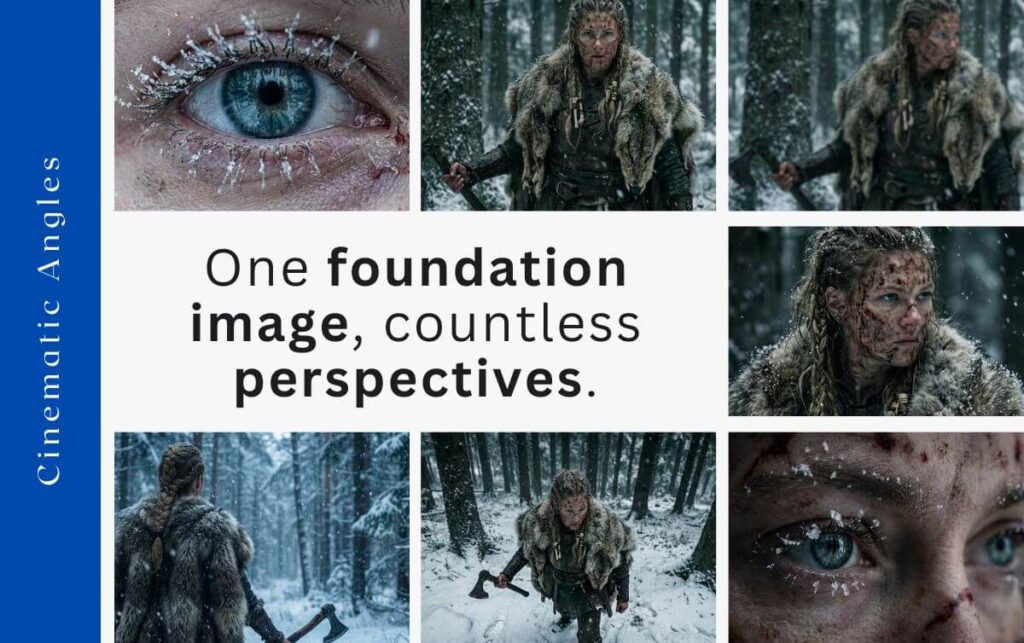
This complete beginner’s guide shows you how to direct AI tools instead of gambling with them. You’ll take a single image and generate infinite camera angles, all with character consistency and full aesthetic control using Nano Banana Pro and other modern AI tools.
Let’s turn luck into a predictable creative workflow.
In This Post
What Is Nano Banana Pro Camera Control?
Nano Banana Pro camera control lets you create new camera angles, perspectives, and cinematic shots from a single foundation image. You direct the movement — not the model.
With the right workflow, you can generate:
Bird’s-eye views
Dutch angles
Macro close-ups
High angles
Over-the-shoulder shots
Dolly movements
Rack focus transitions
Slow zooms …and many more.
The key is starting with one strong foundation image, then guiding your variations through simple, precise prompts.
Step 1: Create the Foundation Image
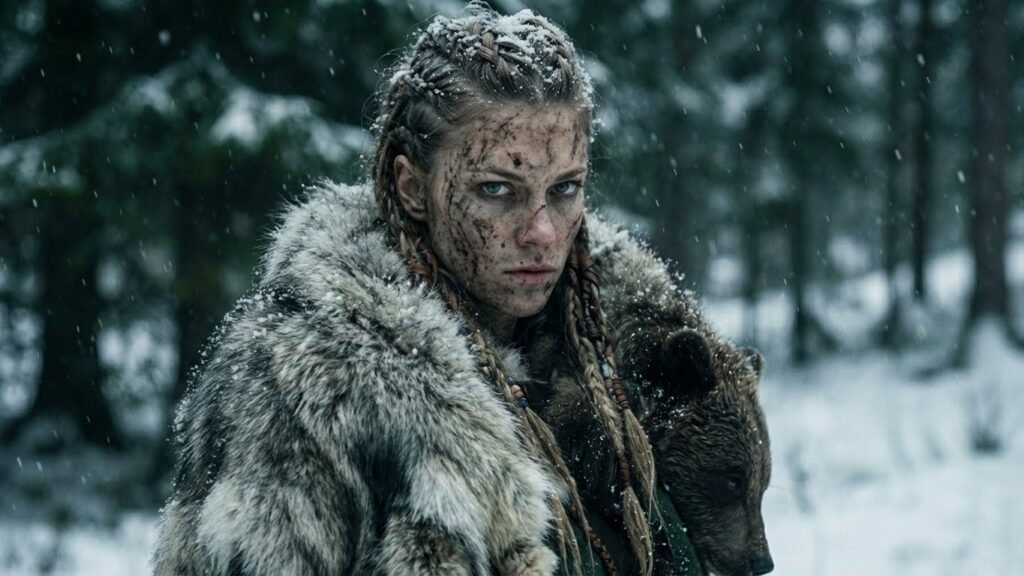
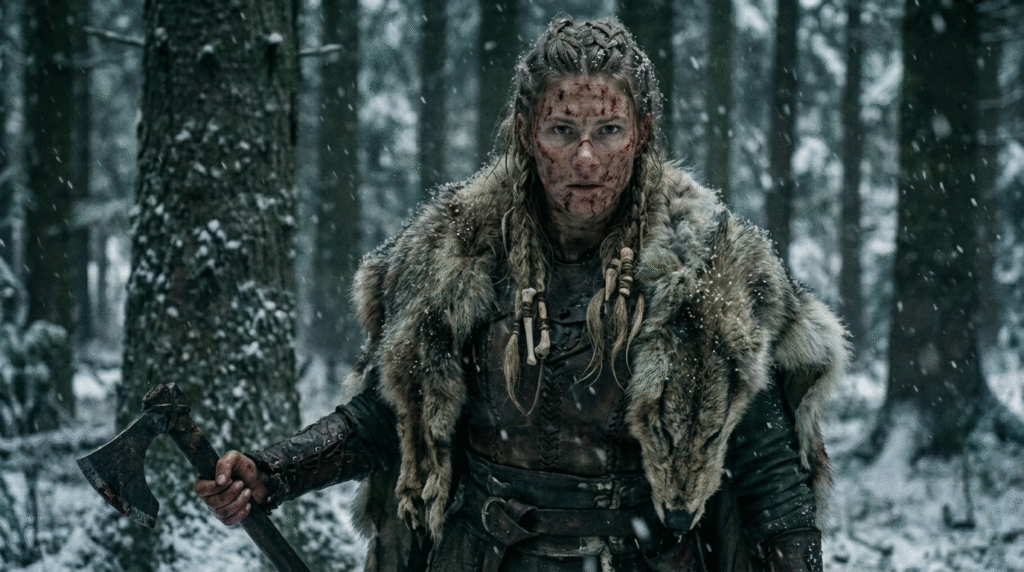
Prompt: Frontal medium shot of image 1 designed for a dolly-in effect. Centered, balanced, snowy environment consistent
The foundation image is the DNA of your project. Every future shot and video will inherit its:
Character identity
Aesthetic and vibe
Lighting style
Color palette
Environment
If your foundation image is weak or inconsistent, all later angles will break.
Craft a clear vision: Who is your character? What world? What mood? What aesthetic?
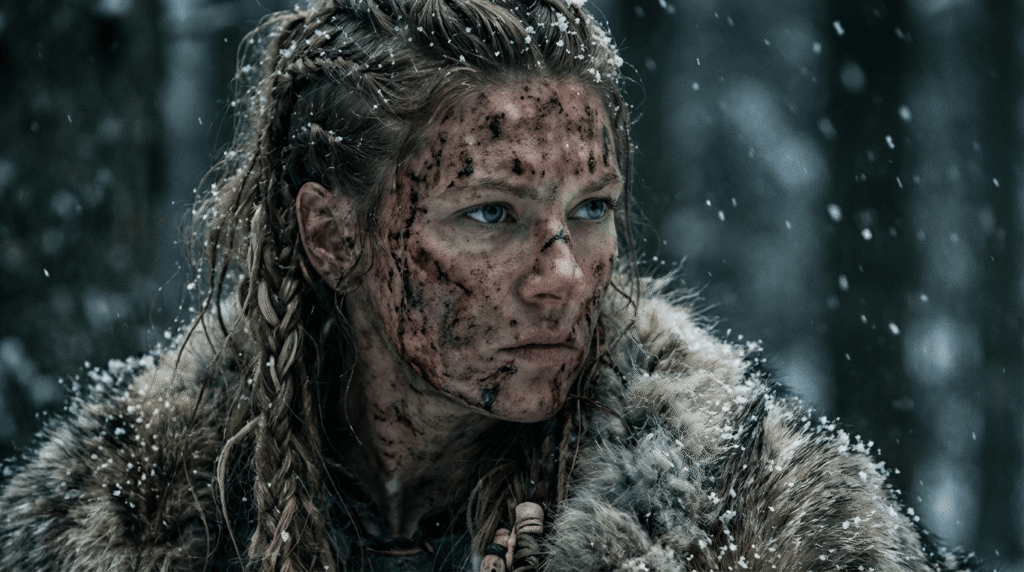
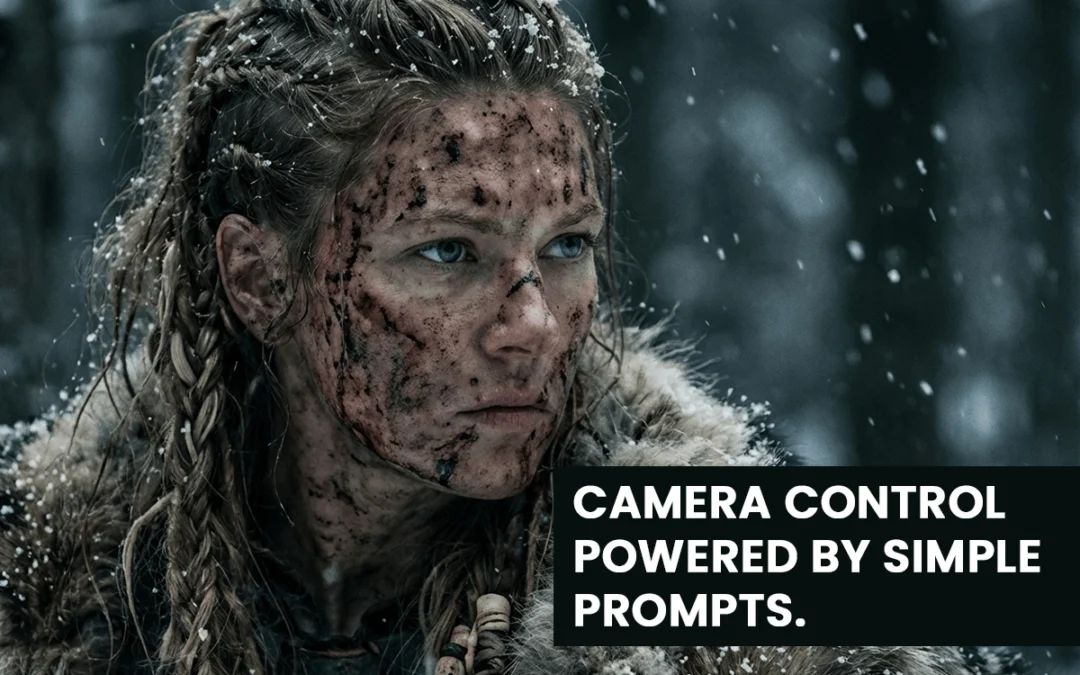
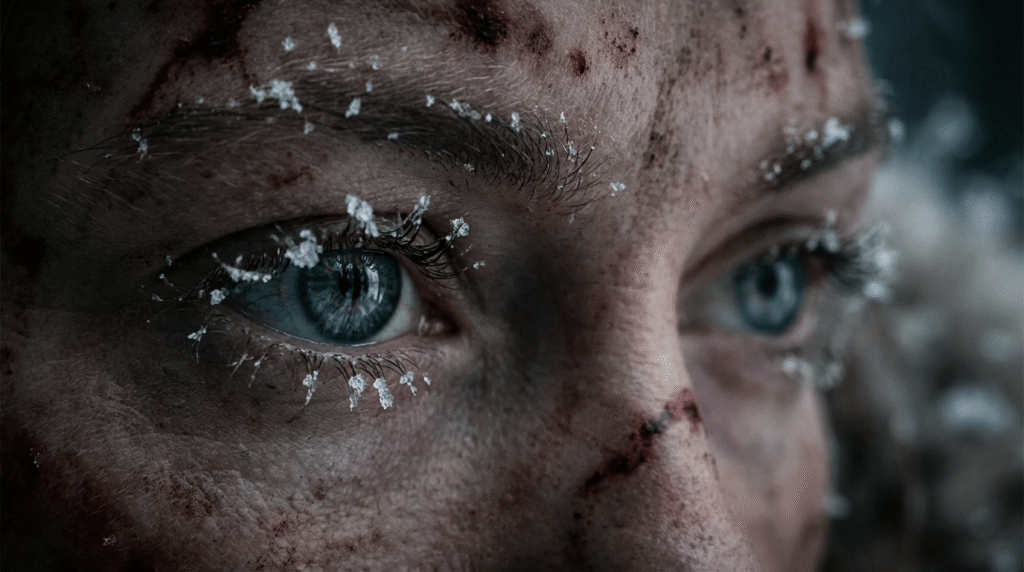
Example Prompt: A hyper-realistic female Viking in snowy woods — gritty, dark, green/white/gray tones.
Your prompt should define:
Character
Setting
Aesthetic
Tone
Once you get the perfect image, lock it in. That image now becomes your “reference” for every other shot.
Step 2: Generate Infinite Variations With Consistency
This is where most beginners fail.
They try to create new angles by rewriting huge prompts. That breaks character consistency.
Instead, you use the foundation image + a simple camera-angle prompt.
Why Simple Prompts Work
Nano Banana Pro already understands:
Lighting
Texture
Character features
Environment details
Color palette
Your job is not to restate all this.
Your job is to tell it the camera angle.
The Prompt Library (Over 40 Shots)
The creator in the video uses a free prompt library with 40+ camera angles. You don’t need to reinvent terminology like:
Dutch angle
Bird’s-eye view
Macro shot
High angle
Over-the-shoulder
Static wide
Dolly in/out
Handheld
Just pick the camera type → copy prompt → paste → attach foundation image.
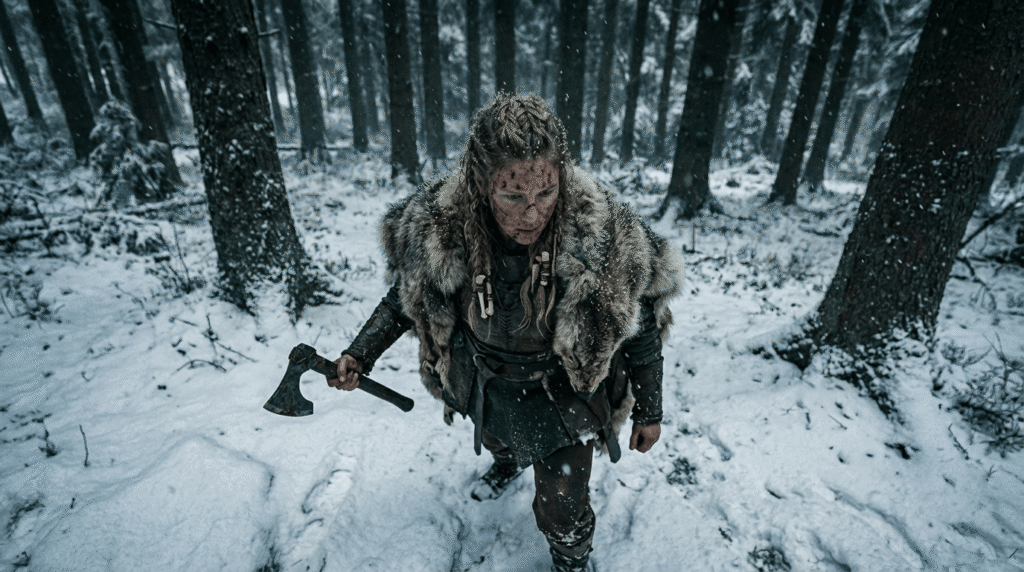
Example: High Angle View Prompt
High-angle shot of image 1. Camera positioned above the subject, looking downward. Keep the same snowy environment and gritty style.
Attach your foundation image as image 1.
That’s it.
Example: Dutch Angle Prompt
Create a Dutch angle shot of image 1. Tilted horizon, subject in foreground, background slightly blurred, same lighting and environment
Nano Banana knows the term “Dutch angle,” so you don’t need technical descriptions.
Example: Macro Shot Example
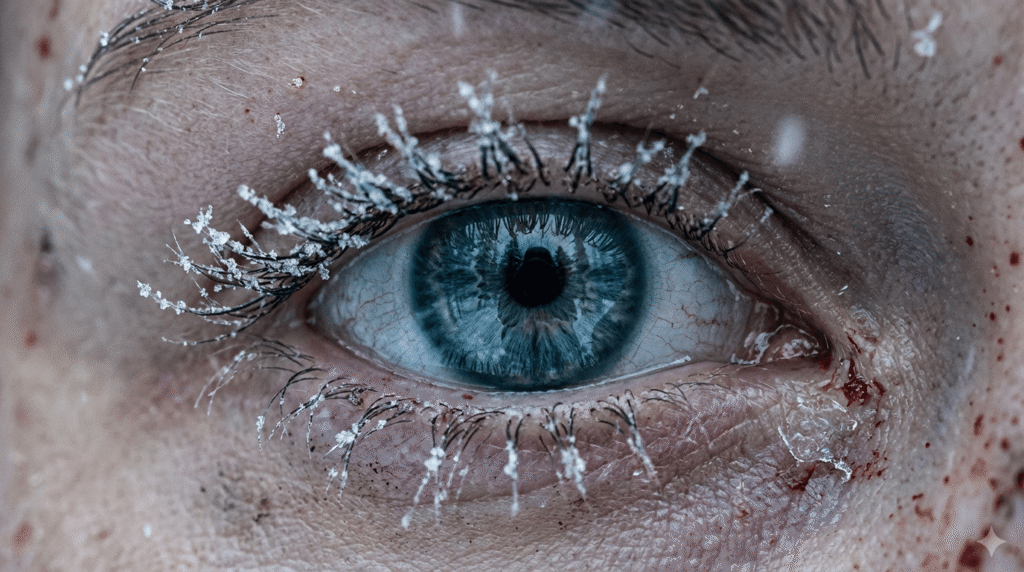
Macro close-up shot of image 1 focusing on the eyes. Ultra-detailed skin texture, snow reflections, shallow depth of field.
Example: Bird’s-Eye View
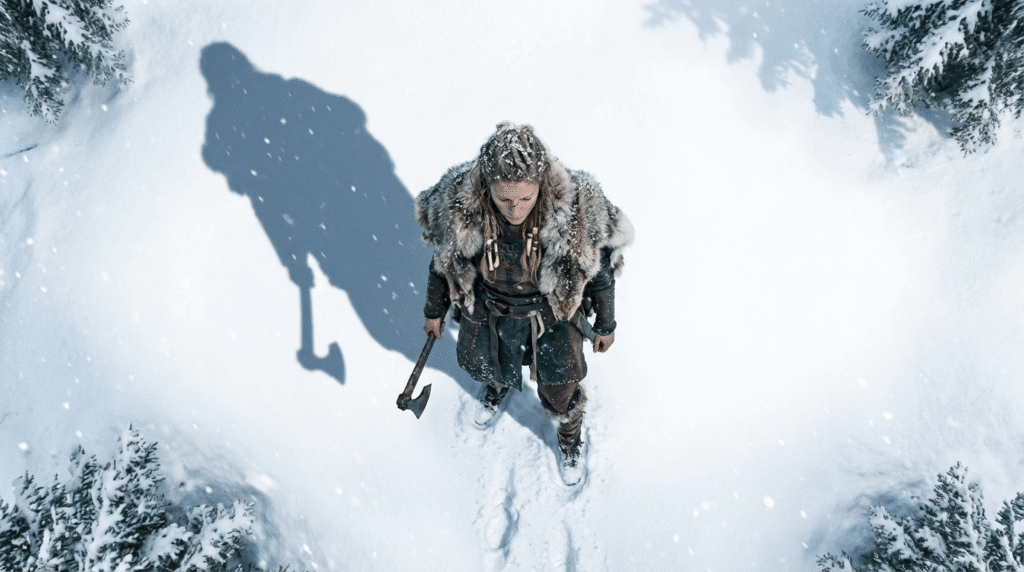
Direct overhead bird’s-eye view of image 1 standing in the snow. Camera top-down, showing long shadow on the ground.
Nano Banana knows the term “Dutch angle,” so you don’t need technical descriptions.
Example: Macro Eye Prompt
Macro cinematic close-up of image 1’s eyes. Snowflakes clinging to eyelashes. Extremely shallow depth of field. Dramatic lighting.
Why This Works
The foundation image carries:
Character
Details
Clothing
Textures
Lighting
Scene aesthetics
You only describe:
Camera angle
Small contextual differences (snow, trees, direction of light if needed)
This gives you clean, consistent outputs every time.
Step 3: Turn Variations Into Cinematic AI Videos
Now that you have multiple angles, you can turn them into videos using tools like:
VO 3.1 (recommended)
VO 3.1 Fast (cheaper + nearly identical quality)
Nano Banana Pro also supports video editing workflows
Why VO 3.1 Fast Works Best
High cinematic quality
Supports first frame + last frame
Fast rendering
Low cost
Consistent movement
When You Need a First Frame Only
Example: slow zoom in on the Viking’s eyes.
Slowly zoom in.
Attach the macro-eye shot as the first frame.
When You Need First + Last Frame
Use both frames if:
There is a focus shift
The character moves dramatically
The environment must match exactly
You want to avoid character drift
Example: Rack Focus Scene
Blurry → sharp transition on the Viking’s face.
If you only provide the blurry first frame, the model invents a random Viking woman at the end.
But with both frames, the output matches perfectly.
How to Generate Perfect Video Prompts
You can use AI to help you write prompts.
Simple Workflow
Upload first frame
Upload last frame
Tell AI: Give me a text prompt for an image-to-video generator that moves from the first frame to the last frame.
Models like Claude, Gemini, or ChatGPT will generate a perfect camera-movement prompt.
Example Output
“A slow cinematic rack-focus pull from blurred foreground trees to the woman’s sharp, detailed face.”
That phrasing is correct — and you didn’t need to know the term “rack focus.”
How It All Comes Together
By now you understand the three steps:
1. Create a strong foundation image
The project’s visual DNA.
2. Create infinite variations using simple camera-angle prompts
The foundation carries the style. You describe only the camera.
3. Generate cinematic videos using first/last frame control
This gives you the exact movement and consistency you want.
This workflow lets beginners produce professional-level AI videos with zero guesswork.
Conclusion
Nano Banana Pro camera control changes everything for beginners. Instead of rolling the dice with AI generation, you now have a clear workflow that gives you predictable, cinematic, consistent results.
You can turn one foundation image into:
Dozens of photographic angles
Controlled cinematic movements
First-frame and last-frame–driven video scenes
Fully consistent characters across every shot
The limit truly does not exist. Once you master foundation images and camera-angle prompting, you can create entire AI films with complete control.
Your next step is simple: choose a vision, build your foundation image, and start experimenting.
Camera control is powerful, but it only works when your character stays consistent across every angle.
If your character changes from shot to shot, the entire scene breaks.