
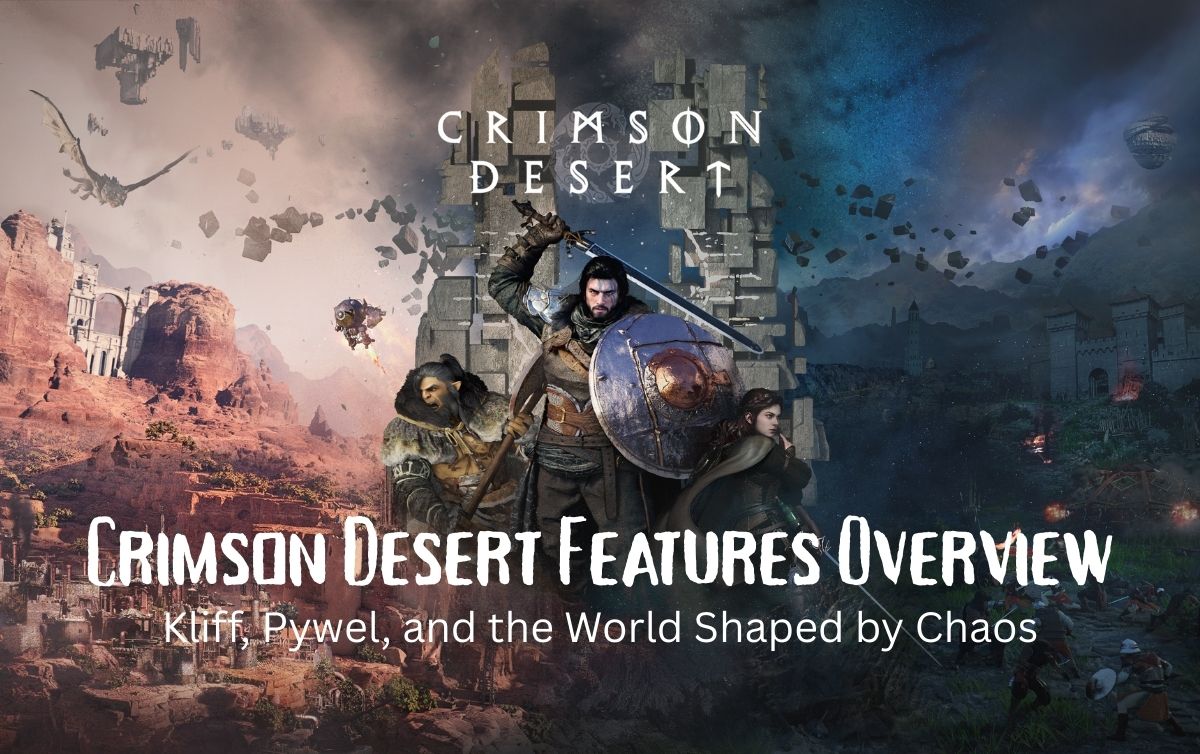

Crimson Desert features define more than just another open-world RPG. It is a story-driven experience built around conflict, freedom, and a living world that reacts to your actions.
At the center of it all stands Kliff, a warrior bound by loyalty, loss, and responsibility. Around him stretches Pywel, a seamless open world filled with beauty, danger, and unanswered questions.

This guide breaks down everything revealed so far. The story. The factions. The Abyss. Exploration. Quests. And why Pywel feels like a world worth getting lost in.
In This Post
The Continent of Pywel: A Seamless Open World
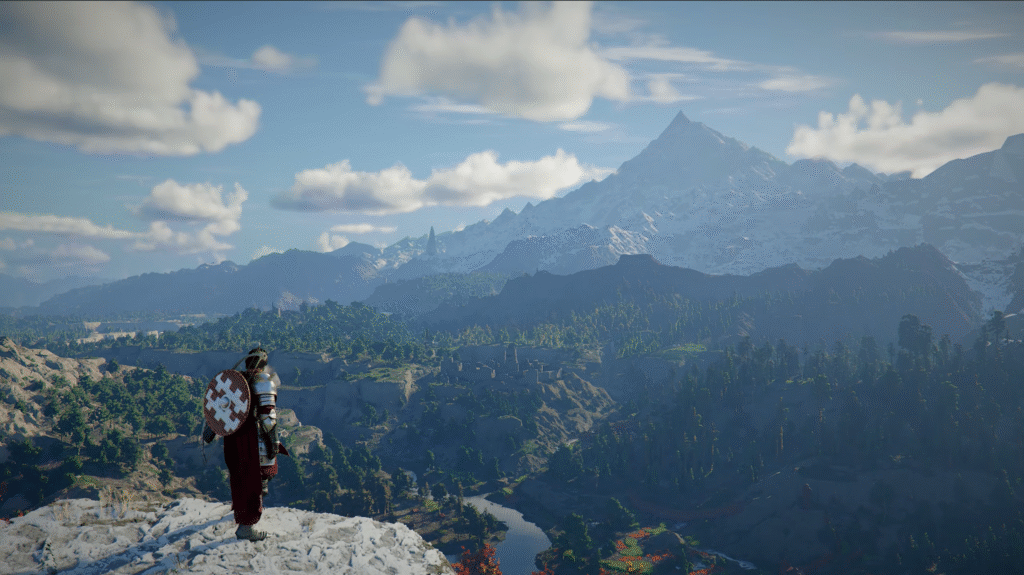
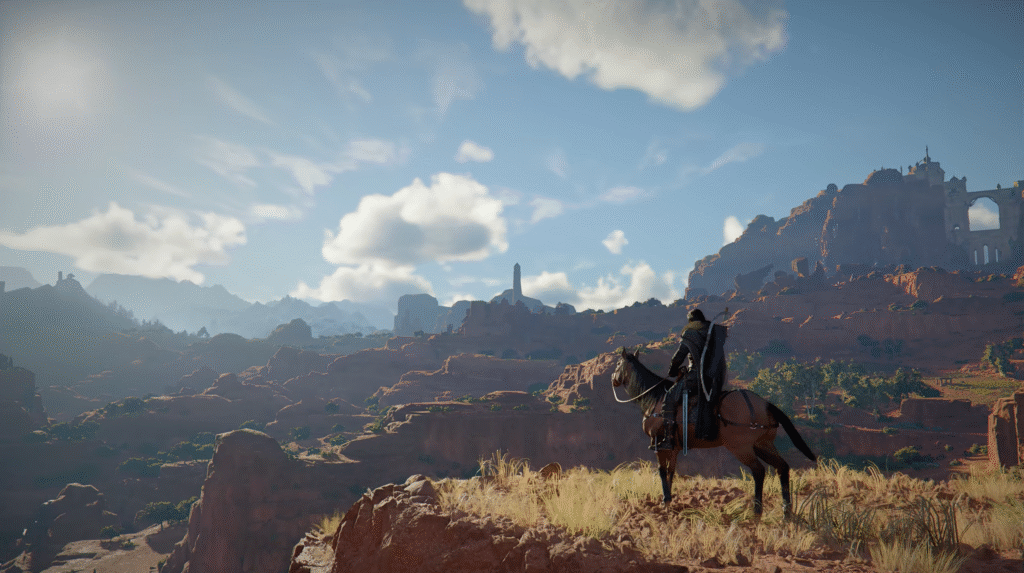
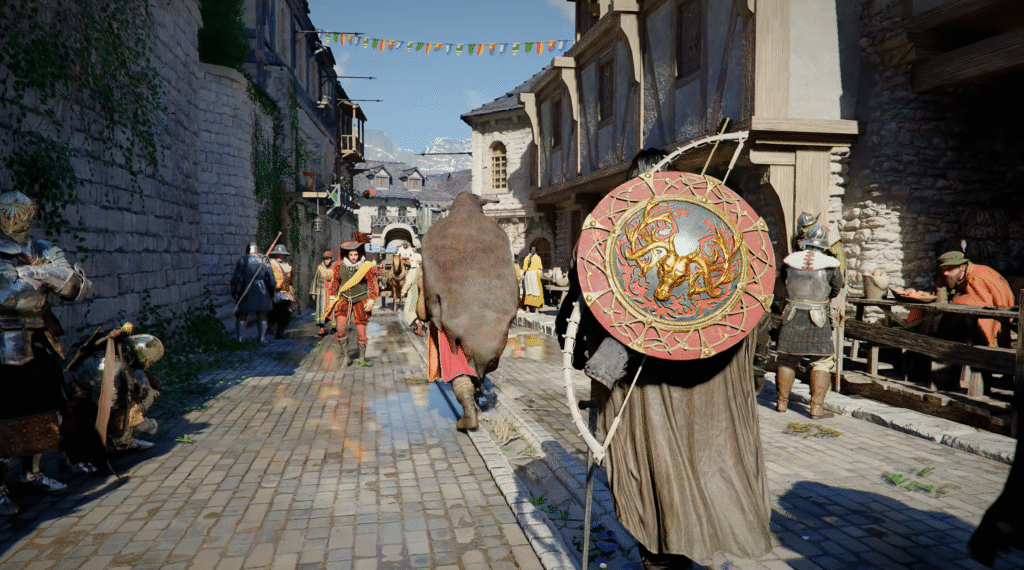
Pywel is a vast, uninterrupted continent. No loading zones. No artificial barriers. Just land stretching as far as the eye can see.
You’ll move through dense wilderness, open plains, mountain ranges, and cities alive with activity. Residents from different cultures go about their lives while conflicts quietly brew beneath the surface. Ancient ruins dot the landscape, remnants of forgotten eras waiting to be uncovered.
But Pywel is not a safe place.
Rival factions clash across regions. Hostile forces patrol roads and strongholds. And looming over everything is a growing threat that originates far beyond the physical world.
Kliff: The Warrior at the Heart of the Story
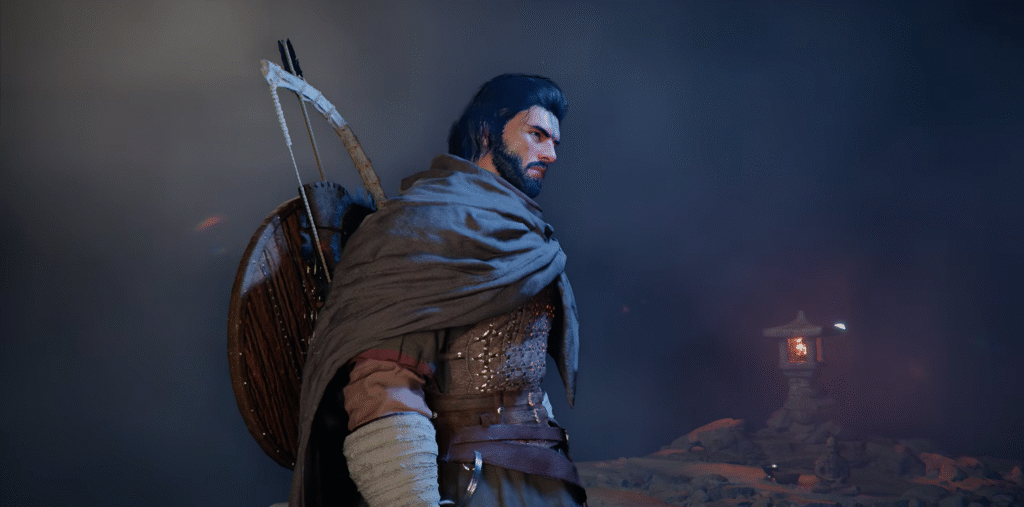
You play as Kliff, a seasoned fighter from the Greymanes. This faction hails from Paloon, a land once unified under strong leadership.
The Greymanes are known for their commitment to peace and order. They protect the innocent. They fight to keep their homeland whole. To Kliff, they are not just comrades. They are family.
That bond is tested when their leader falls.
With his death, Paloon descends into chaos. Old alliances fracture. War breaks out. The Greymanes are scattered, hunted, and pushed to the brink.
Your journey begins with survival. It grows into reunification. And it ends with reclaiming a homeland that has been torn apart.
Factions, War, and a World in Conflict
Pywel is shaped by its factions. Houses, organizations, and armies all fight for control, influence, or survival.
Some factions will be friendly from the start. They offer quests, resources, and support. Others are openly hostile, occupying regions and fortresses that must be reclaimed through force.
Liberating areas is not cosmetic. Once enemy forces are driven out, regions become safer to travel. Homes are restored. Merchants return. Resources open up. Your actions leave visible marks on the world.
Faction quests also fuel progression. New equipment. Unique merchants. Access to materials like stone and lumber. Everything feeds into rebuilding the Greymanes and strengthening your position.
The Abyss: Power Beyond Control
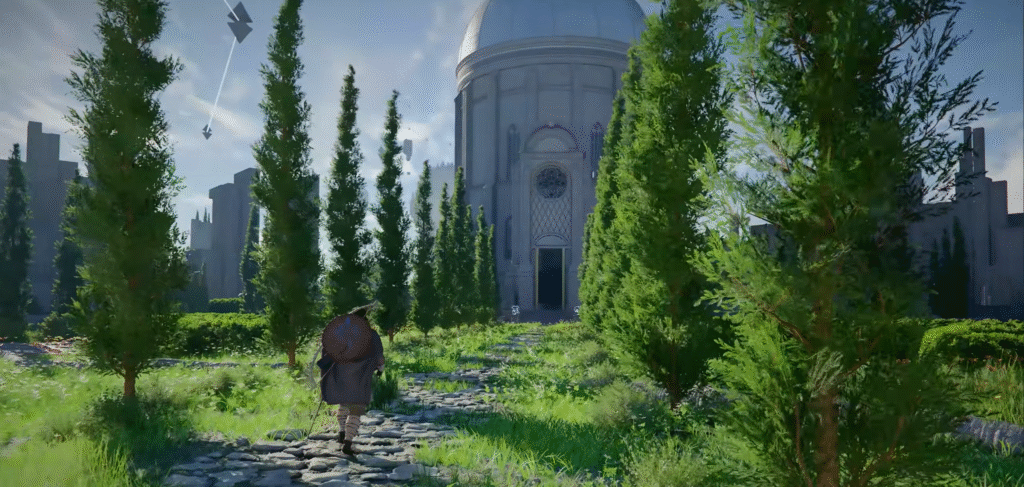
High above Pywel lies the Abyss. A mysterious realm overflowing with raw, untamed power.
Something has gone wrong.
Fragments of the Abyss have begun falling into the world below. These remnants warp the land and attract those hungry for power. Dark forces seek to open a gate to the Abyss itself, risking total collapse.
This threat goes beyond any single faction.
Restoring balance to the Abyss becomes a core pillar of the journey. Track down its fragments. Defeat those who abuse its power. And eventually, step into the Abyss itself.
Failure is not an option. If the gate opens, the cost will be measured in lives.
Multiple Playable Characters and Combat Styles
While Kliff remains the central figure, he does not fight alone forever.
As the story progresses, new playable characters join your journey. Each brings a distinct combat style, skill set, and weapon focus. You can explore Pywel freely with these characters, taking on side quests and challenges outside the main story.
This flexibility allows you to approach combat and exploration in different ways, without breaking narrative immersion.
Crimson Desert Features That Redefine Quest Design
Pywel does not force you down a straight line.
The main story follows Kliff’s struggle and the fate of the Greymanes, but the continent is filled with optional paths. Side stories. Hidden encounters. World events. Quiet personal quests.
Some missions are massive in scale. Reclaiming fortresses. Defeating elite commanders. Turning the tide of regional conflicts.
Others are smaller, grounded moments. Helping villagers. Escorting caravans. Solving local disputes.
All of them shape your adventure.
Exploration That Rewards Curiosity
Exploration in Crimson Desert is built on freedom.
If you see a mountain, you can climb it. If a ruin catches your eye, you can reach it. There is no strict route, no artificial funneling.
Travel options evolve over time. Horses provide reliable movement across land. Kliff can climb and glide to cross gaps and vertical terrain. Later, advanced machines and dragons open up the skies, letting you traverse Pywel from above.
Every path holds potential rewards. Hidden treasures. Artifacts. Knowledge. Or simply a view worth stopping for.
Artifacts, Knowledge, and Progression
Artifacts play a critical role in progression. These powerful items unlock and upgrade skills, enhance combat, and expand traversal options.
Some artifacts are earned through quests and battles. Others are hidden deep in the world, rewarding players who explore thoroughly and take risks.
Knowledge is just as important.
By observing enemies, interacting with characters, and exploring new regions, you gather information about Pywel’s people, wildlife, items, and history. This knowledge can unlock new quest paths, provide tactical advantages, and reveal secrets others might miss.
The more you learn, the stronger you become.
Why Pywel Feels Alive
Crimson Desert succeeds because its world reacts.
Regions change after liberation. Factions respond to your actions. Travel becomes safer or more dangerous based on your progress. Exploration is not filler. It is the core of the experience.
Pywel is not just a backdrop for combat. It is a living continent shaped by war, ambition, and the consequences of power.
Conclusion
Crimson Desert sets out to deliver a story-driven open-world RPG where every system connects. Kliff’s personal struggle mirrors the collapse of Pywel itself. Factions rise and fall. The Abyss looms as an existential threat. Exploration, combat, and knowledge all feed into a single cohesive journey.
This is a world that rewards curiosity, patience, and commitment.
And this is only the beginning.
If you’re tracking the future of open-world games, don’t miss our full breakdown of the Top 30 New Open World Games of 2026 (Ranked & Reviewed) and see where Crimson Desert fits among the most anticipated releases.
Link – Top 30 New Open World Games of 2026 (Ranked & Reviewed)
Frequently Asked Questions
What is Crimson Desert about?
Crimson Desert is an open-world action RPG focused on the story of Kliff, a warrior trying to reunite his fallen faction while confronting a growing supernatural threat.
Is Pywel fully open world?
Yes. Pywel is a seamless open world with no loading screens between regions, allowing free exploration across the entire continent.
What is the Abyss in Crimson Desert?
The Abyss is a mysterious realm filled with immense power. Its fragments have fallen into Pywel, disrupting balance and driving the main conflict.
Are there multiple playable characters?
Yes. In addition to Kliff, other playable characters join later, each with unique combat styles and abilities.
Does exploration affect gameplay?
Absolutely. Exploration rewards players with artifacts, knowledge, fast travel points, and hidden quests that directly impact progression.



0 Comments